

About us
Walls and ceilings are the whole job here, not the gap between two trades
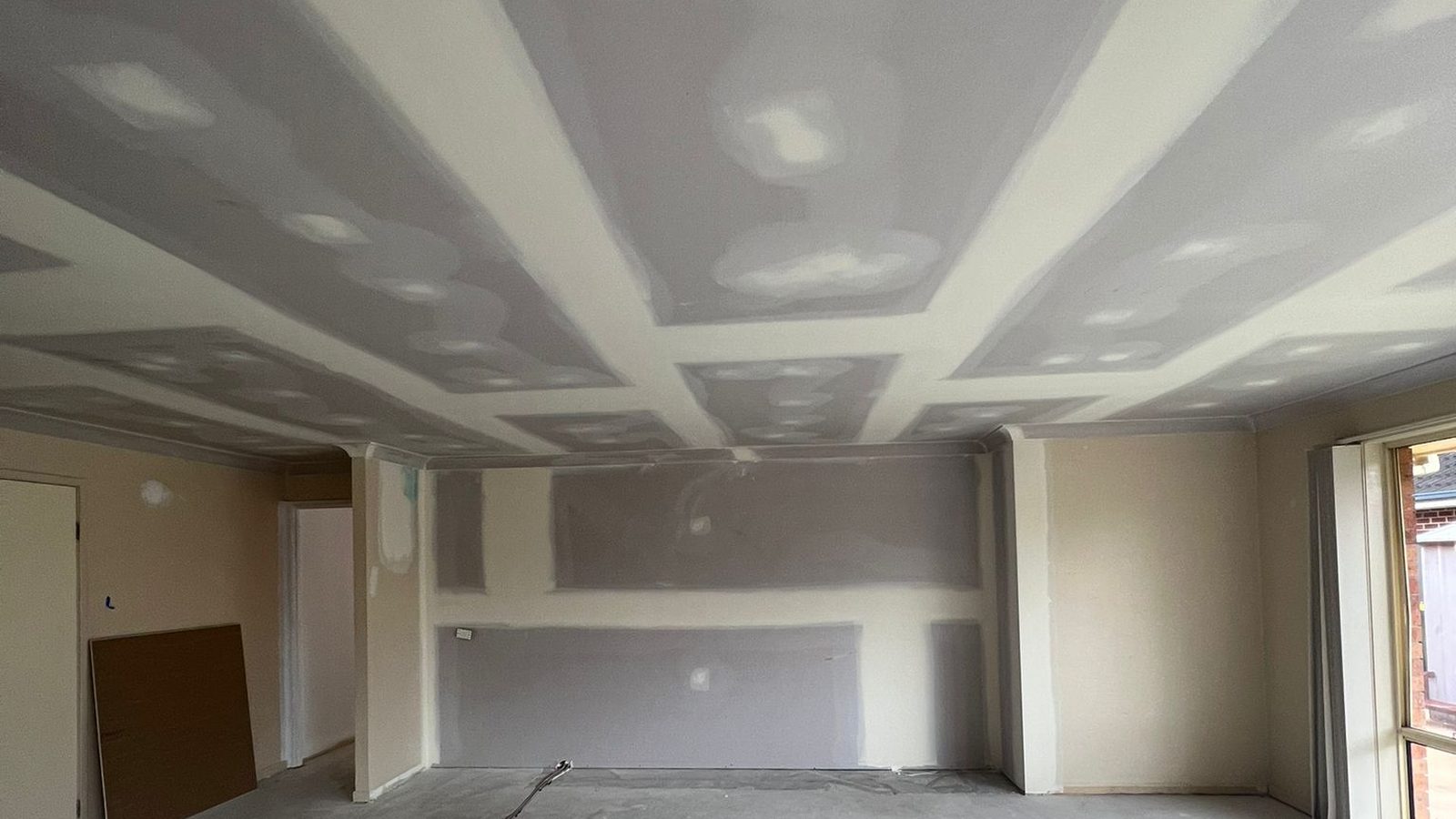
A licensed Sydney plastering business that does one thing: the walls and the ceilings, from a strip-out back to the joists through to a plane flat enough to paint.
On a lot of building jobs plaster gets treated as the space between the trades that matter, something to get through quickly so the painter can start. That is why so many ceilings crack along the same joint a year later, and why so many walls look fine on handover day and wrong the first time afternoon sun comes across them.
We work the other way round. The plaster is the job rather than the interval before the next one, and the part that decides whether it holds is what happens before the first coat goes on. That is what this page is about.
- NSW licence 244708C
- Greater Sydney
- Walls and ceilings only
Licensed in New South Wales
Contractor licence 244708C, issued under NSW Fair Trading, held in the trading name.
Greater Sydney
One service area, across the metropolitan councils and the suburbs inside them.
Assessed, then quoted
We work out what caused it first. A number that ignores the cause is not really a quote.
Told straight when it is not ours
If the job belongs to a roofer, a plumber, a waterproofer or an engineer, you hear that first.
Why only plaster
What specialising in walls and ceilings actually changes
Plenty of trades will plaster. The difference is less about skill than about where the plastering sits in their week.
A builder who also plasters is always balancing the plastering against everything else on the job. When the programme slips, the part that gets compressed is the part with drying time in it. That is the plaster, every time, and compressing it is the most common single reason a finish fails later.
Doing only walls and ceilings means the drying schedule is the programme rather than an inconvenience sitting inside somebody else's. It also keeps the awkward work in one pair of hands: the cornice, the square set junctions, the bulkheads, the raked ceilings, and the patches that have to disappear into a surface that is already there.
It changes what we can tell you as well. A plasterer who looks at cracked ceilings all week can usually say from a photograph whether you have a joint that has opened, a sheet that has let go, or something that is not a plastering problem at all.
How we approach it
Four things that happen the same way on every job
No founder story here and no year count, because neither tells you what will happen at your place. The method does, and it does not change with the size of the job.
Find the cause, not just the crack
Cracking, staining and sagging are symptoms. Until you know what moved and why, any number on the repair is a guess. The assessment is the part nobody sees and the part that decides whether it holds.
Say when it belongs to somebody else
An active leak is a roofer or a plumber. Structural movement is a builder or an engineer. We would rather lose a job than set plaster over a live cause.
Build in coats and let each one dry
Compound shrinks as it dries. A deeper repair needs more coats, which means more visits rather than more hours in one day. Drying time sets the programme.
Check it under raking light
Sanded flat, checked with the light running across the surface rather than into it, dust cleaned up and the room handed back paint ready. What that looks like is on the our work page.
First contact to hand-over
How a job actually runs
Five stages, same order every time, whether it is one bedroom ceiling or a floor of partitions.
- 01
Photos and a description
Two photographs, one with the light raking across the surface and one from further back, plus the suburb and what the room is used for. Most jobs narrow down from that before anyone drives anywhere.
- 02
Assessment
We look at the fixings, the frame where it can be seen, the direction the cracking runs and whether anything above or outside the room explains it. If the cause sits with another trade, you hear that first.
- 03
A written scope and a quote
What is included, what is not, and how the work will be staged. Where a job has more than one sensible answer, such as patching against a full skim, both get priced so the choice is yours.
- 04
The work, staged around drying
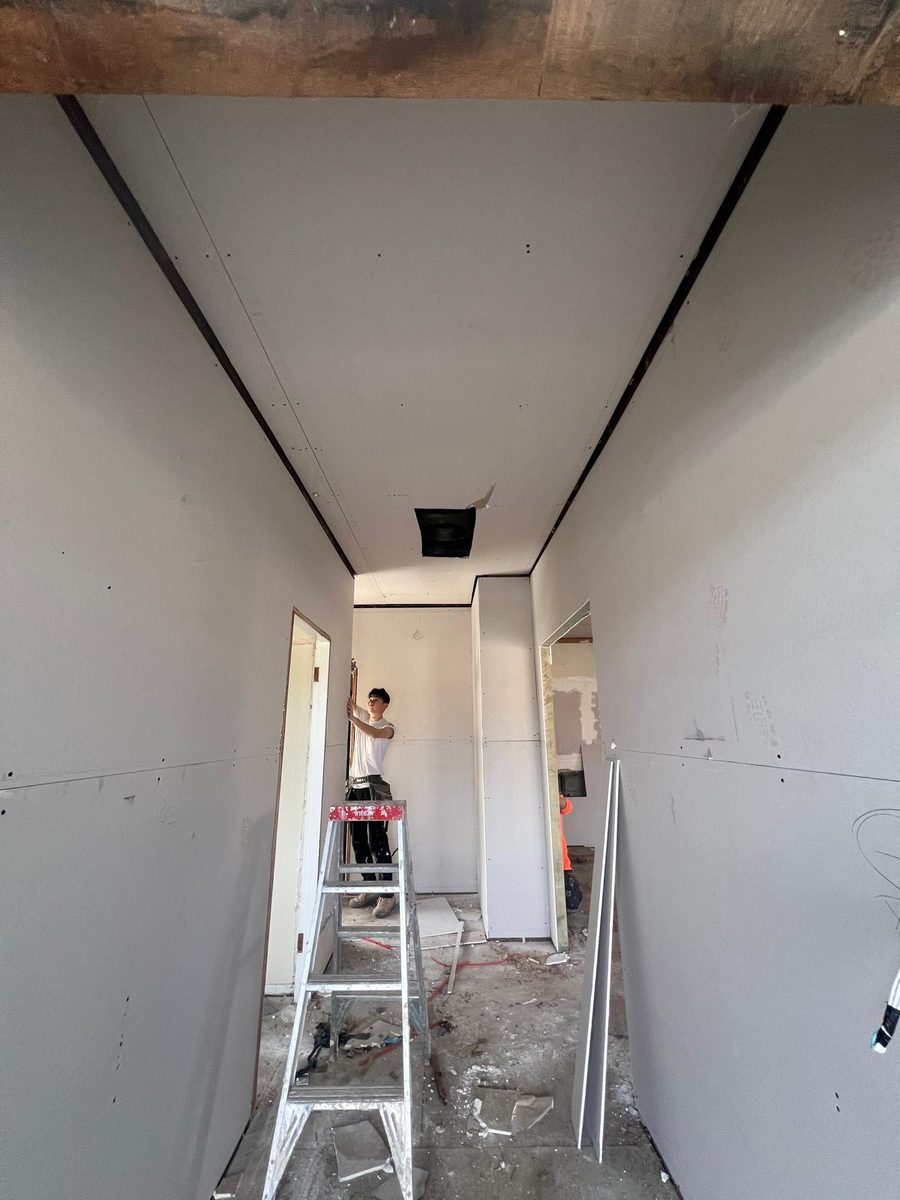
Protection, cutting back, sheeting or patching, then setting in coats with drying time between them. On a bigger job the sequence works around the other trades rather than across them.
- 05
Sand, check, clean, hand over
Final sand, a raking light check, dust cleaned up and the room handed back ready for paint. If something is not right it gets fixed before anyone calls it finished.
Assessment Work and hand-over
The things we will tell you not to do
Plastering over an active leak, resetting a ceiling that is still moving and patching a wall while the cause is still there all end the same way: you pay for the same surface twice. So does an older sprayed or textured ceiling coating, which has to be assessed before it is disturbed rather than scraped to see what is underneath.
There are also jobs where a repair has stopped being the economical answer. A ceiling carrying years of separate patches at slightly different levels keeps throwing shadows no matter how well the next one is done. We will say so, even though the larger job is the one nobody wants to hear about.
Boundaries
What we do not do
Being clear about this early saves a site visit and keeps the scope honest.
- Painting. The surface is handed over flat and paint ready, and your painter takes it from there.
- Waterproofing. Membranes are licensed work by others. We line the walls so the waterproofer has a flat, correctly specified substrate, which is covered under wet area linings.
- Asbestos and other hazardous materials. Assessment and removal are licensed work by others, and a stop-work point rather than a judgement call.
- Structural work. Load-bearing walls, beams, roof framing and anything holding the building up belong to a builder or an engineer.
- Electrical and plumbing. We frame around services and make good the openings afterwards, but the services themselves are not ours.
- Leak detection and roofing. The water has to be stopped and the space properly dried before the plaster goes back.
About the business
What people ask before they book
If yours is not here, ask it. We would rather answer it on the phone than have you guess.
Are you licensed, and how do I check it?
Yes. The business holds NSW contractor licence number 244708C, issued under NSW Fair Trading. The number sits in the footer of every page on this site so it is easy to find.
You can check it yourself through the public licence search run by NSW Fair Trading, using either the number or the trading name. Worth doing for any trade you are about to let into your house, not only this one.
What area do you cover?
Greater Sydney: the metropolitan councils and the suburbs inside them, from the inner suburbs out through the west, the south, the north and the hills. The areas we serve page lists what we publish pages for.
If you are on the edge of that and not sure, ask before you go further. Travel and access affect a small job more than most people expect, so it is better sorted before a quote than after one.
Will you tell me if I do not need a plasterer at all?
Yes, and it happens regularly. A crack that keeps reopening in exactly the same place is a movement problem rather than a plaster one, and repairing it again buys a season at best. A stain with an edge that is still growing means water that has not stopped.
In both cases the right first call is a builder, an engineer, a roofer or a plumber. We would rather say that at the quote than take the job twice and leave you wondering why the same line came back.
Do you work on strata and commercial as well as houses?
Yes. The plastering is much the same; what differs is how it is scoped, staged and approved. In a strata building one person reports the problem, another authorises it and a third pays, so the scope has to be written down and the invoice readable by a committee.
In an office fitout or a shop that cannot close, the constraint is the access window and the programme rather than the plastering. Commercial work needs a different kind of quote from a bedroom ceiling.
Start with a photo
Tell us what the surface is doing
Send a picture and a line about the room and you will get an honest read on what it is, including whether it belongs to another trade first. What to send is set out on the contact page.