
Square set and shadowline
The junction with no cornice on it at all: flush square set, and recessed shadow details formed with a bead.
Square set
Plastering Gyprock Ceilings
Cornice
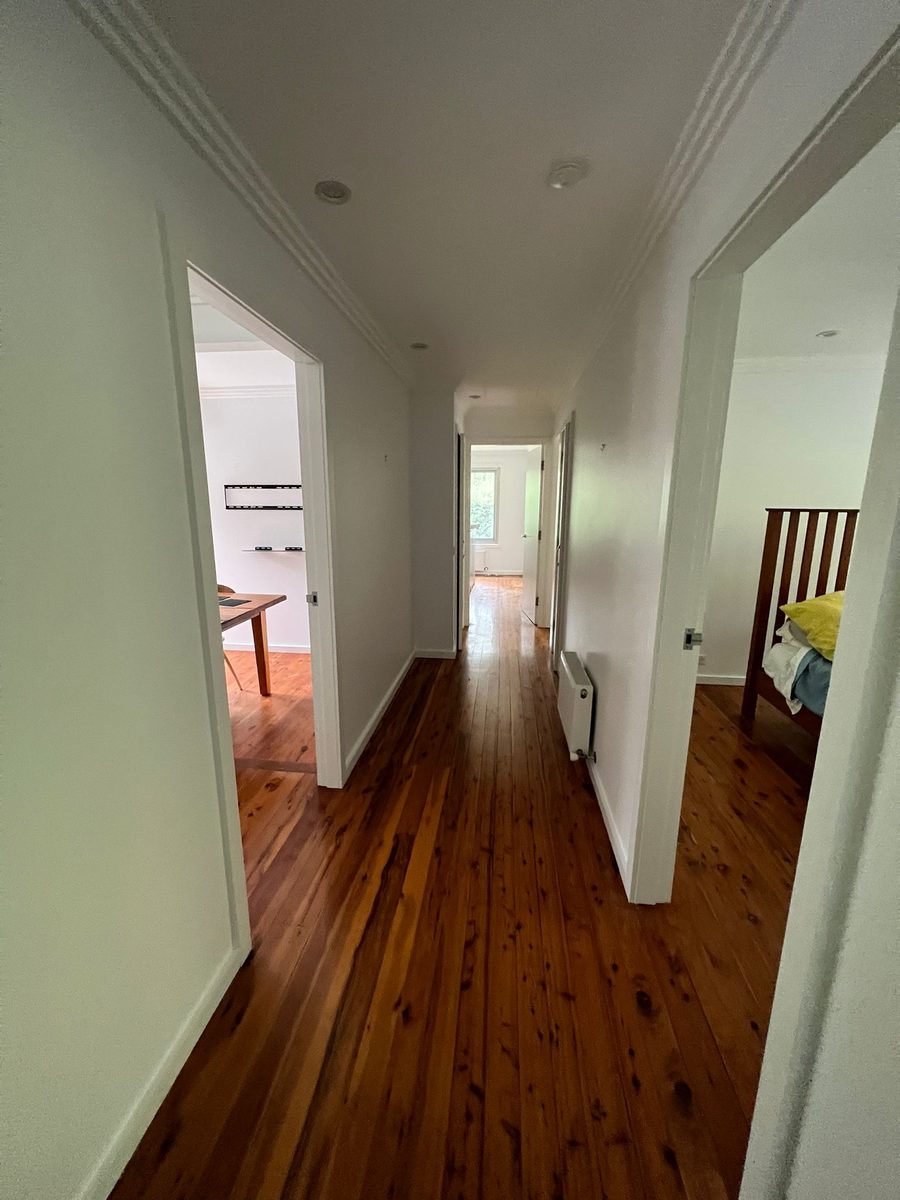
Cove and decorative cornice fitted to new work, damaged lengths pieced in, and old runs matched so the join stops being the first thing you see when you walk in.
Cornice is a length of profiled plaster doing two jobs at once. It closes the junction between two surfaces that will never be perfectly square to each other, and it gives the room a line that carries the eye around it. When it is right you do not notice it. When it is wrong you notice nothing else.
So most of a cornice job is not the fixing. It is the measuring, the profile match and the corners. Get those settled and the rest is a day of careful work. Get them wrong and no amount of compound will hide a mitre that does not line up.
Priced by the metre
A cornice quote is a length, a profile and a corner count, not a guess at the size of the room.
Profile settled first
What you already have, or what the room can carry, gets decided before anything is ordered.
Corners cut, not filled
Internal and external mitres cut to fit so the line carries around without a bump at the change.
Repaired where it can be
A damaged length usually comes out on its own. The rest of the run stays exactly where it is.
Know what you have
Most Sydney rooms carry one of a handful of profiles. Working out which one you are looking at decides whether a damaged section can be matched from stock, matched approximately, or has to be made.
| Profile | Where it usually turns up | What it means for the job |
|---|---|---|
| Plain cove, the common sizes | Project homes, unit blocks and most renovation work from the 1970s onwards | A stock item in several girths. A replacement length is matched by measuring the face and the two lines it sits against. |
| Stepped and banded profiles | Renovations chasing a sharper line than a plain cove gives | The flat faces catch light along their whole length, so the wall and the ceiling have to be straighter than a cove would forgive. |
| Colonial and Federation profiles | Terraces, semis and cottages through the inner and middle ring | Sometimes still available as a run, sometimes not. Where it is not, you choose between the closest stock match and having the section replicated. |
| Enriched and ornamental plaster | Grand older rooms, usually with a ceiling rose that belongs to the same scheme | Matching a moulded enrichment is a different craft and sits on the restoration page, not here. |
| No cornice at all | Contemporary builds and renovations using a flush or a recessed junction | There is nothing to match. The junction is formed in the set instead, which is square set and shadowline work. |
Reading the damage
Cornice almost never fails along its whole length. It fails at the joins, at the corners, and wherever something behind it moved. Each of those is a different amount of work, and from the floor they can look identical.
The most common fault is a fine line along the top or the bottom edge of the cornice rather than in the cornice itself. That is the junction opening, not the profile failing. The cornice and the sheet either side of it move at slightly different rates as the building warms and cools, and the thin band of compound along the edge is the first thing to give. It is raked out, reinforced and re-set, and the cornice itself is left alone.
The second is a corner that has opened. A mitre carries two lengths into each other at an angle, and any movement at all shows up there first because that is where the profile changes direction. A hairline at a mitre is normal work. A mitre that has stepped, where one length now sits proud of the other, means something has dropped and it gets refixed before it is re-set.
The third is a section that has come away from the wall or the ceiling and is hanging on the paint. You can usually find it by running a hand along the run and feeling for a length that gives. That section comes off, the surfaces behind it are cleaned back, and it goes up again with mechanical fixing as well as adhesive.
Scope
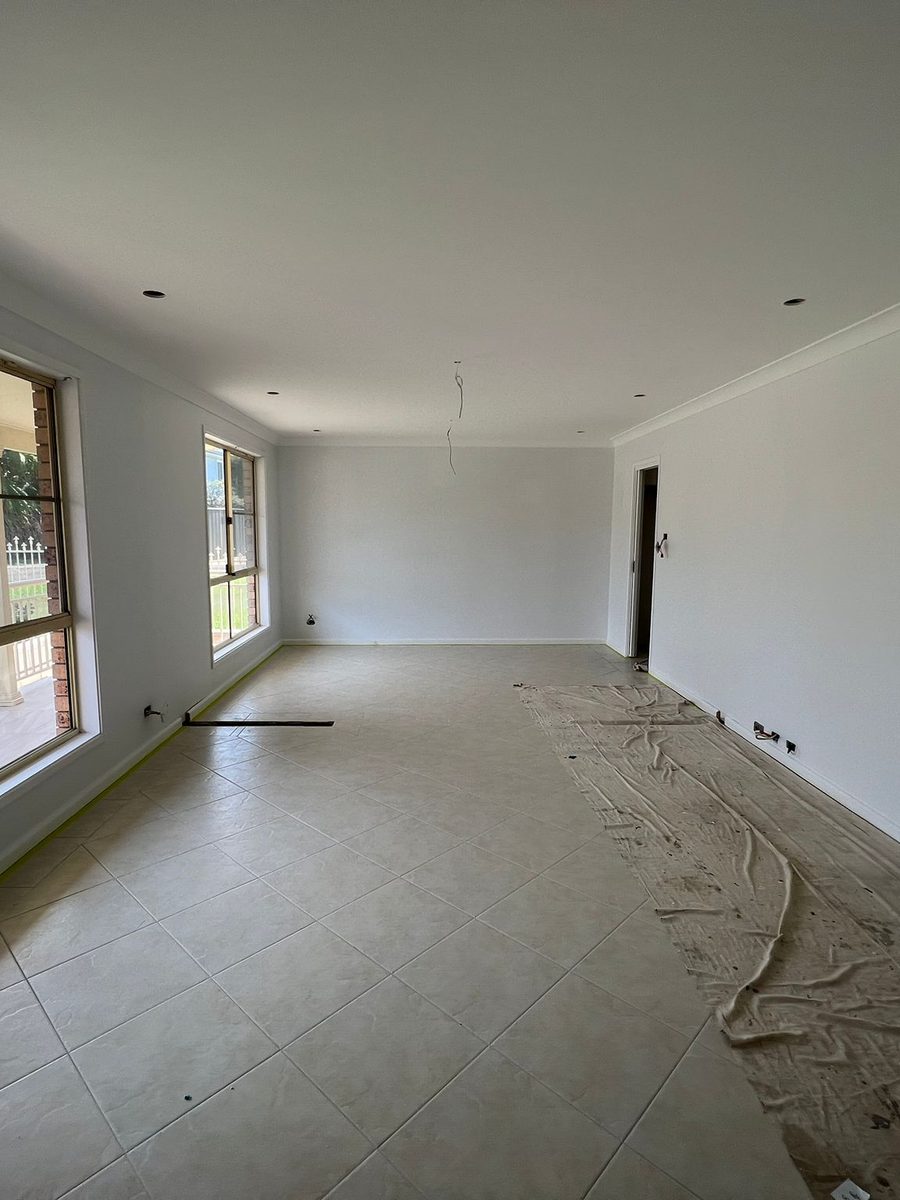
This page owns the projecting cornice: supplying and fitting it, repairing it, replacing it and matching it into what is already there. The junctions that carry no cornice at all, and the ornamental work that has to be replicated rather than bought, have their own pages.
If the profile you have cannot be bought any more, you will hear that at the quote along with the two honest options, rather than finding out when a length arrives that nearly matches. Where a length has been pieced into an existing run, plan on repainting the whole run: fresh compound and aged paint will not match however flat the join is.
Before you ring
Cornice is one of the easier things to quote accurately from a distance, as long as we get the right few pieces of information. Most of it you can gather in five minutes with a phone and a tape.
How the job runs
A cornice job is front-loaded. Nearly everything that decides whether it looks right happens before a length goes up, which is why the measuring and the ordering get more attention than people expect.
Every wall is measured along the line the cornice will actually follow, then the corners are counted separately. Offcuts are part of the calculation, because a mitre eats length and a short piece in the middle of a wall is a join you did not need.
On a repair, the existing profile is measured and photographed and checked against what can still be bought. On new work, the profile is chosen against the ceiling height and the rest of the house, so one room does not sit oddly against the next.
The cornice needs something straight and clean to sit against. High spots come off, loose paint and old adhesive come back to a sound surface, and anything that will stop the cement grabbing is dealt with first.
The internals and externals are cut and fitted before the straight lengths get their final cut, because a corner that is a degree out has to be absorbed somewhere and it is easier in the middle of a wall than at the change of direction.
Cornice cement along both contact faces, pressed home to the set-out line, with mechanical fixing where the length is heavy, the run is long, or the surface behind it is not something adhesive can be trusted to.
The mitres and the butt joins are filled and worked until they read as one continuous profile, then the top and bottom edges are set and sanded. That is the part that decides whether anyone can see where one length stopped and the next began.
Set-out and supply Fix and finish
The quote
Two runs of the same length can be very different jobs. These are the things that actually move the number, roughly in the order they tend to matter.
The base of every cornice quote. It is the length of the run, measured along the walls it follows, not the floor area of the room.
A plain cove in a common size is the cheapest thing on the list. A deep or stepped profile costs more per metre, handles heavier, and takes longer to set.
Corners are where the time goes. A long straight hallway run is quick per metre. A room with a bay window, an angled wall and three returns is the same metres and a much longer day.
Running cornice onto freshly set walls is the straightforward case. Cutting a length out of an existing run, matching it and making both joins disappear takes longer per metre than running a whole fresh wall.
Cornice hides a small amount of difference between a wall and a ceiling and no more. Where the wall bellies or the ceiling dips, that has to be brought in first or the cornice will telegraph it.
A run you can reach off a pair of trestles is one rate. A stair void, a raked ceiling or a high entry needs staging, a second person for the long lengths, and more time to do the same metres.
A stock match is straightforward. Where the profile has been out of production for decades, the options are a close match or replication, and those are different prices.
An empty room before the floors go in is quick. A furnished living room, a tenanted unit or a shop still trading changes how the work is staged and how much of the day goes on covering up.
Before it goes up
Cornice is the last thing to go on and it gets blamed for everything that happened before it. Most runs are simply a run. A few need a question answered before anyone orders material.
Either side of the job
Cornice usually arrives at the end of something else, or instead of something else. These four are the pages it hands over to most often.
The junction with no cornice on it at all: flush square set, and recessed shadow details formed with a bead.
Square setEnriched profiles, ceiling roses and moulded detail that has to be replicated rather than bought by the length.
RestorationWhen the ceiling comes out, the cornice usually comes with it. The run is reinstated once the new sheet is up and set.
ReplacementBoxed drops and curtain recesses, which change where the cornice run starts, stops and turns.
BulkheadsQuestions
If yours is not here, ask it. We would rather answer it on the phone than have you guess.
Usually, and the answer comes from a photograph taken square on plus a measurement across the face of the profile. Plain and deep coves in the common girths are stock items, so a replacement length is a straightforward match. A number of the older Sydney profiles are still produced as well.
Where it cannot be matched from stock, there are two honest paths and we will put both to you. Either the closest available profile goes in, which is often acceptable in a room where the new work is not next to the old, or the section is replicated, which is restoration work and priced accordingly. What we will not do is fit something that nearly matches into the middle of an original run and leave you to discover it.
By the lineal metre of run, with the corner count and the profile as the two things that adjust it. That is why we ask for room sizes or a rough metre figure rather than a floor area: a long thin hallway and a square room of the same floor size carry very different lengths of cornice.
On a repair the metres matter less and the joins matter more. Cutting one length out of a run, matching it and setting both joins invisibly takes longer per metre than running a whole fresh wall, so short repairs carry a minimum rather than a metre rate.
Nine times in ten it is the junction rather than either surface. The cornice is fixed to the wall and the ceiling, and those two move independently with seasonal change in the frame. The thinnest material in the whole assembly is the band of compound along the cornice edge, so that is what opens first.
It is raked out, reinforced and re-set, and the cornice itself is not touched. What is worth watching for is a crack that has opened in the same place after a proper repair, or one that carries on down the wall past the cornice. That is movement in the structure rather than a finishing fault, and it wants understanding before anyone fills it again.
Yes, and that is normally the right answer. The damaged section is cut back to a clean line at both ends, ideally at a point where the join will fall somewhere the eye does not naturally rest, and a new length is fitted and set into the existing run.
Two things make it harder. One is a profile that is no longer available, which turns a piecing-in job into a matching decision. The other is a run that has already been patched several times at slightly different levels, because each of those old joins reads as a shadow under a wall light. At that point taking the run off and starting again often costs less than chasing it length by length.
Cornice cement does most of the holding on a normal run. It is applied to both contact faces, the length is pressed home to the set-out line, and the cement grabs while the joins are being filled. Done onto sound, clean, straight surfaces it holds for the life of the building.
Mechanical fixing goes in as well where the length is heavy, the run is long, the surface behind it cannot be trusted, or the cornice is going back onto something that has already let go once. Deep profiles in particular want holding while the cement takes, which is part of why they cost more per metre to run.
It depends on the house and on how much you want to spend on the surfaces behind it. Cornice is forgiving: it closes the junction and absorbs a small amount of difference between a wall and a ceiling. Going without means the junction itself becomes the finish, and everything behind it has to be straighter.
That cornice-free junction is its own job with its own set-out and its own tolerances, and it is covered on the square set and shadowline page. In an older house with walls that are nowhere near plumb, cornice is very often the sensible answer even when the look you want is the other one.
Get a number
One picture square on to the cornice, one from further back, and a rough length. That is usually enough to tell you whether it can be matched and what the run will cost.