

Northern Beaches
Plastering the Northern Beaches, Manly through Dee Why up to Avalon Beach
The longest run of any area we cover, and the one where the drive, the age of the house and the way things dry near the water shape how a job is planned.
There is no quick way across this council. Manly, Balgowlah and Freshwater sit at one end, Dee Why, Cromer, Collaroy and Narrabeen through the middle, Warriewood, Mona Vale, Newport and Avalon Beach at the top, with Frenchs Forest, Belrose and Forestville inland behind them. A morning job at Manly and an afternoon one at Avalon Beach is most of a day in a vehicle.
So beaches work gets booked in runs rather than one call at a time. If you are north of Mona Vale we will usually offer a day that already has work near you on it, and we will say plainly if that is a few days out. It is a better answer than a date that quietly does not happen.
- Booked in runs up the peninsula
- Drying time allowed for properly
- Postcodes 2084 to 2100
Grouped, not squeezed in
Work north of Mona Vale gets scheduled in runs, so the travel is not paid for twice.
Drying respected near the water
Coats are given the time they need rather than the time that suits the diary.
Unknown surfaces get identified
Older sheeting and coatings are established before anything is cut or sanded.
Handed back paint ready
Sanded flat, checked in raking light, dust cleaned up before we leave.
Coverage
The Northern Beaches, end to end
- Council area
- Northern Beaches
- Postcodes covered
- 2084, 2085, 2086, 2087, 2093, 2094, 2095, 2096, 2097, 2099 and 2100
- Common housing
- 1960s to 1980s brick and fibro-era houses, coastal renovations, holiday and rental stock
- Nearest covered areas
- Willoughby, Mosman, Ku-ring-gai, North Sydney
How it runs
How a job this far up the peninsula gets scheduled
Distance is the honest constraint here, and pretending otherwise just produces dates that slip.
- 01
Photos, suburb, and what it is for
Send a photo with the light raking across the surface, one from further back, and tell us the suburb. Say too whether it is your own home, a rental between tenants or a place being sold, because that sets the deadline.
- 02
Priced, then grouped
Most repairs can be quoted from photos. Once a price is agreed, the job is slotted into a day with other work near it, which is how a small repair at Avalon Beach stays a sensible price.
- 03
Identify before disturbing
On older houses the first job on site is establishing what the surfaces actually are. Nothing gets cut, scraped or sanded until that is clear.
- 04
Cut back, reinforce, build up
Failed material taken down, damage cut back to firm edges and clean board, joints reinforced, then built up in coats with proper drying between each one.
- 05
Sand, check, clean up
Sanded flat and checked with light across the plane before it is called done, then the dust cleaned up and the room left usable.
Before the visit On site
Sort it first
Ordinary beaches work, and what needs someone else first
Coastal houses get a particular set of plaster problems. Most are routine. A few mean the plaster is the last thing to deal with, not the first.
Straightforward plastering
- Joint cracking, screw pops and tired ceilings in 1960s to 1980s brick houses, which is ceiling repair work
- Holes, knocks and worn wall lining in a rental between tenants, which is wall plastering and repairs
- A ceiling with a decade of separate patches, usually one skim rather than more patching
- New linings for a renovation, a deck enclosure or a reworked layout
- Making good after an electrician or a plumber
Needs another trade or an assessment first
- An active roof or window leak, which is a roofer or a plumber before it is a plasterer
- A ceiling that has visibly dropped, which is sagging until proven otherwise
- Any unidentified fibro sheet or sprayed ceiling coating
- Rust staining or blown render tracking out of a wall
A local shape
Raked ceilings, and why they change the job
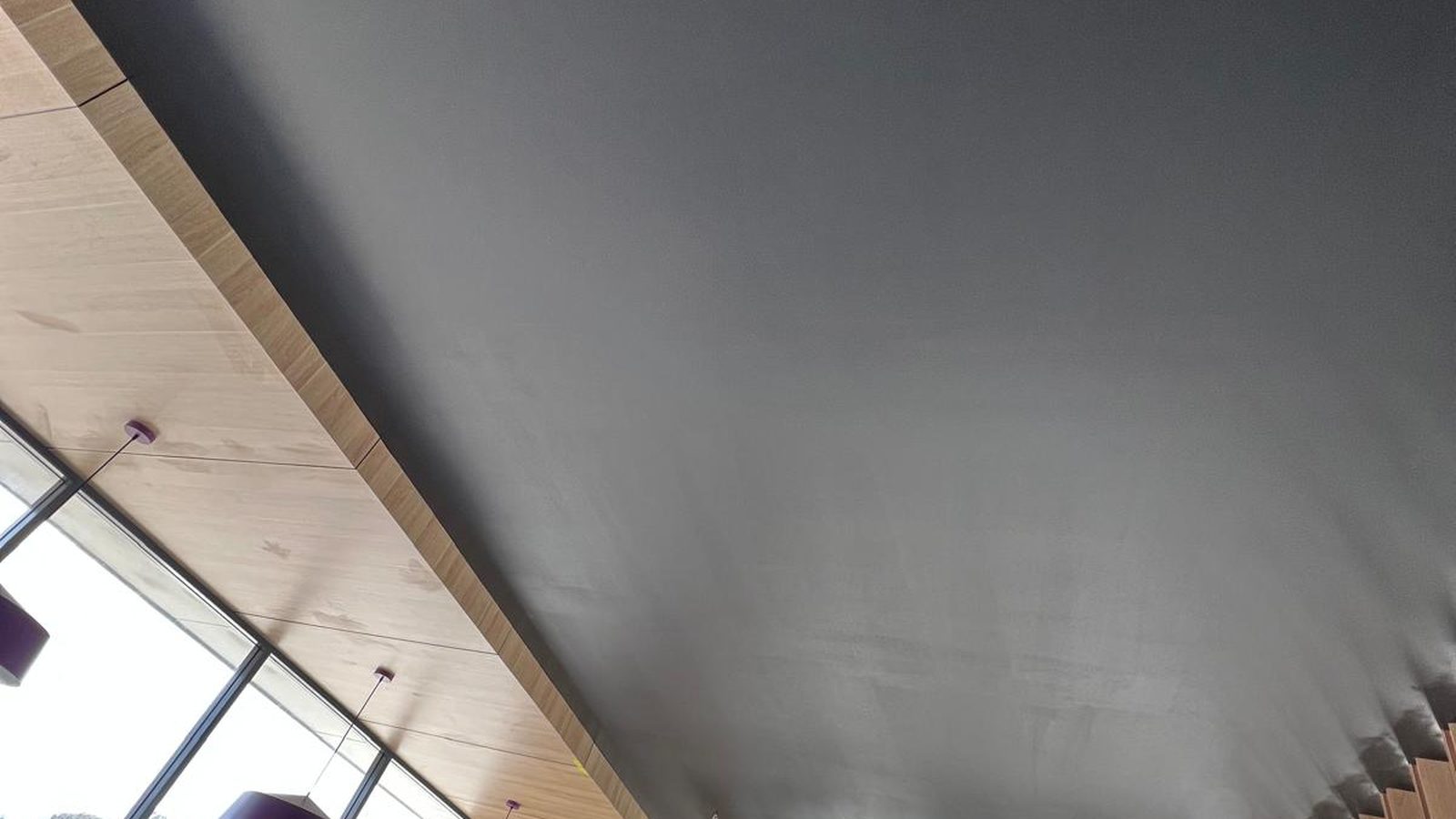
A lot of houses built here between the sixties and the eighties opened the roof space up: cathedral ceilings, exposed beams, clerestory windows and a long unbroken plane pointed at the view.
Those ceilings are the best thing about the houses and the least forgiving surface to plaster. The plane is long, often lit from one end by a wall of glass, and light travelling along a surface shows every join, every fixing and every difference in level.
That means more setting out, wider feathering and more sanding than the same square metres of flat ceiling. It usually means staging rather than a step ladder as well, because the high end of a raked ceiling is genuinely high.
Cracking along the ridge or where the rake meets a wall is common and repairable. What matters is checking whether the movement is seasonal or ongoing before it is filled, because a ceiling that size is not one you want to repair twice. If a whole plane has been patched repeatedly, a skim across the lot is usually the cheaper answer over time.
Fibro-era houses: know the material before touching it
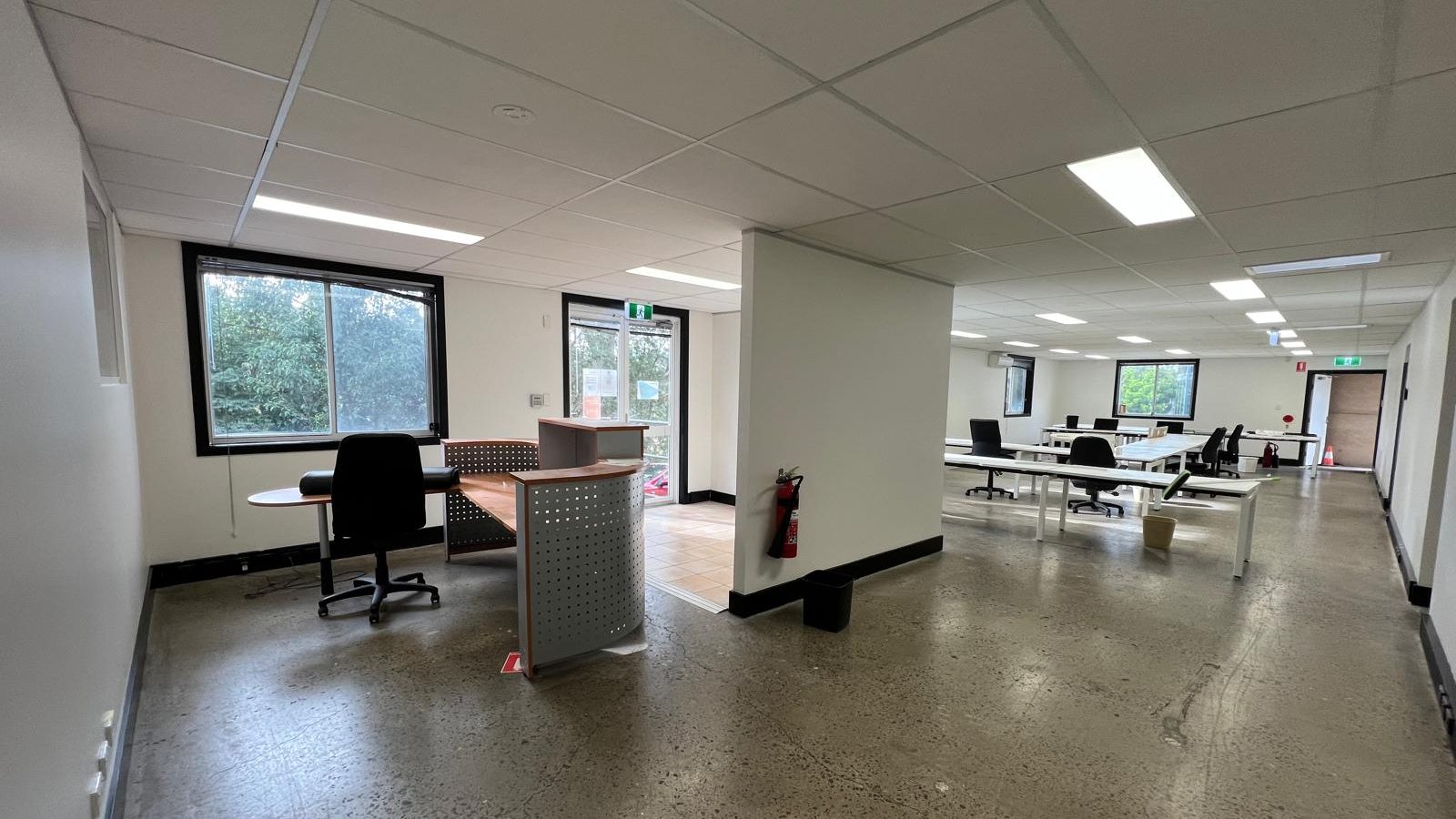
A lot of housing here dates from the fibro era. Older fibro sheeting and some sprayed ceiling coatings of that period may contain asbestos. Suspect material must be assessed by a competent person before it is disturbed, and nothing should be cut, drilled, scraped or sanded until that has happened. We do not carry out removal.
This matters most on the jobs people treat as small: hanging a shelf, cutting in a new light, sanding a ceiling back before painting. If you do not know what the sheet or the coating is, finding out is the next step, not starting. Once it is identified and the work is safe, the options are set out on the vermiculite and textured ceilings page.
The numbers
What moves a price on the beaches
Square metres are only part of it. Location, the era of the house and the shape of the ceiling do most of the work here.
How far north it is
A repair at Balgowlah and the same repair at Avalon Beach are not the same day. Grouping work keeps that reasonable on a small job.
The era of the house
A 1970s brick house lined in gyprock is predictable. One of the same age with unidentified sheeting needs that settled before it can be priced.
Flat, raked or double height
A flat ceiling in a bedroom is the simple case. A long raked plane lit from one end takes more setting out, more feathering and much more sanding.
Drying conditions
Compound dries slower in a humid, closed-up house near the water. That shows up as more visits, not more hours.
Tenancy and turnover
A rental between tenants has a hard deadline and an empty room. A holiday place booked for the weekend is a different constraint.
Access and parking
Narrow streets, steep driveways, long stairs to a house below road level and nowhere to stop all add time before work starts.
Finish and lighting
A ceiling under downlights or beside a wall of glass has to read perfectly flat. That standard costs more than a hallway ceiling, and it is worth knowing which you are paying for.
Where to start
Services that suit this stretch of coast
Ordered by how often the calls come in from here.
- Ceiling repairs for joint cracking, screw pops, access cuts and patches that show under the light
- Wall plastering and repairs for holes, knocks and worn lining in rentals and family homes
- Water-damaged ceilings once a roof or window leak has been stopped and the space has dried
- Skim coating to bring a much-patched ceiling or wall back to one flat plane
- Renovation plastering for extensions, enclosed decks and reworked layouts
- Sagging ceiling repairs where a sheet has dropped away from the frame
- Gyprock and plasterboard for new linings in an existing house
- Vermiculite and textured ceilings where a sprayed coating has to be understood before anything else
Nearest councils we also cover
Also covered nearby
Beaches questions
What people up here actually ask
Most of these are about distance, the age of the housing, or living close to the water.
Do you really come past Mona Vale, or is that just on the website?
We do go up to Newport and Avalon Beach, and the rest of the council. What we will not do is pretend a small repair up there can happen tomorrow. It gets booked into a day that already has work near it, which is what keeps the price sensible.
If you need something sooner than we can get there, we would rather tell you at the first call than hold the job. Say when you make contact whether there is a real deadline, such as a settlement or a tenant moving in.
Does being near the water affect the plaster itself?
Inside a closed-up house near the coast, the main practical effect is drying. Compound gives up its water more slowly in humid air, so coats take longer to be ready for the next. A repair here is often three short visits rather than two, particularly in winter.
The other effect is indirect. Salt air is hard on the outside of a building, and where a roof or a window has been letting go for a while, the plaster inside is usually what shows it first. Worth checking before the inside is made good.
Our 1970s house has a textured ceiling. Can it be flattened out?
Possibly, but not before anyone knows what the coating is. Some sprayed ceiling coatings from that era contain asbestos, and suspect material has to be assessed by a competent person before it is disturbed. Nothing gets sanded or scraped until that is settled, and we do not do removal.
Once the material is known and the work is safe to carry out, there is a real choice between overlaying, relining and a full skim, and each has a different cost and result. That is set out on the vermiculite and textured ceilings page.
There is a crack running along the ridge of our cathedral ceiling. Is that fixable?
Usually. A line following the ridge or the junction where the rake meets a wall is typically the structure moving a little with the seasons rather than the ceiling failing. It gets raked out, reinforced and re-set in coats so the join is not simply refilled.
Two things make it bigger than the same crack in a flat ceiling. The high end needs staging, and the plane is long and often side-lit, so the repair is feathered much wider and sanded far more carefully than the crack suggests.
Can you patch fibro walls?
Not until the sheet has been identified. Older fibro sheeting may contain asbestos, and suspect material must be assessed by a competent person before it is disturbed. That applies to drilling and cutting as much as to sanding, and we do not offer removal.
Where a wall has been confirmed as safe to work on, or where the old lining is being replaced under a properly managed process, what goes back is ordinary plasterboard and it is set like any other wall. That side of it is covered on the gyprock and plasterboard page.
Get it in the run
Send photos and tell us how far north you are
That is enough to price most beaches repairs and to tell you which day we can realistically be near you, rather than one that sounds good on the phone.