

Make-good
Commercial make-good plastering: handing a tenancy back the way the lease describes
Partitions out, ceilings reinstated and walls brought back to a base building finish, scoped against the make-good clause and the condition report rather than guessed at.
A make-good is not a renovation and it is not a repair job. It is a defined piece of work, described in a document you signed years ago, measured against a condition report that may or may not still exist, and due on a date that does not move. Most of the cost sits in how accurately that scope gets defined.
Our part of it is the plastering: taking tenant walls out, closing the openings they leave, reinstating ceilings, patching every fixing hole and bringing the linings back to a flat, sound, paint-ready surface. What we can price is the work. What the clause actually requires of you is a question for your own adviser.
- Scoped off the documents
- Priced item by item
- Timed to the expiry date
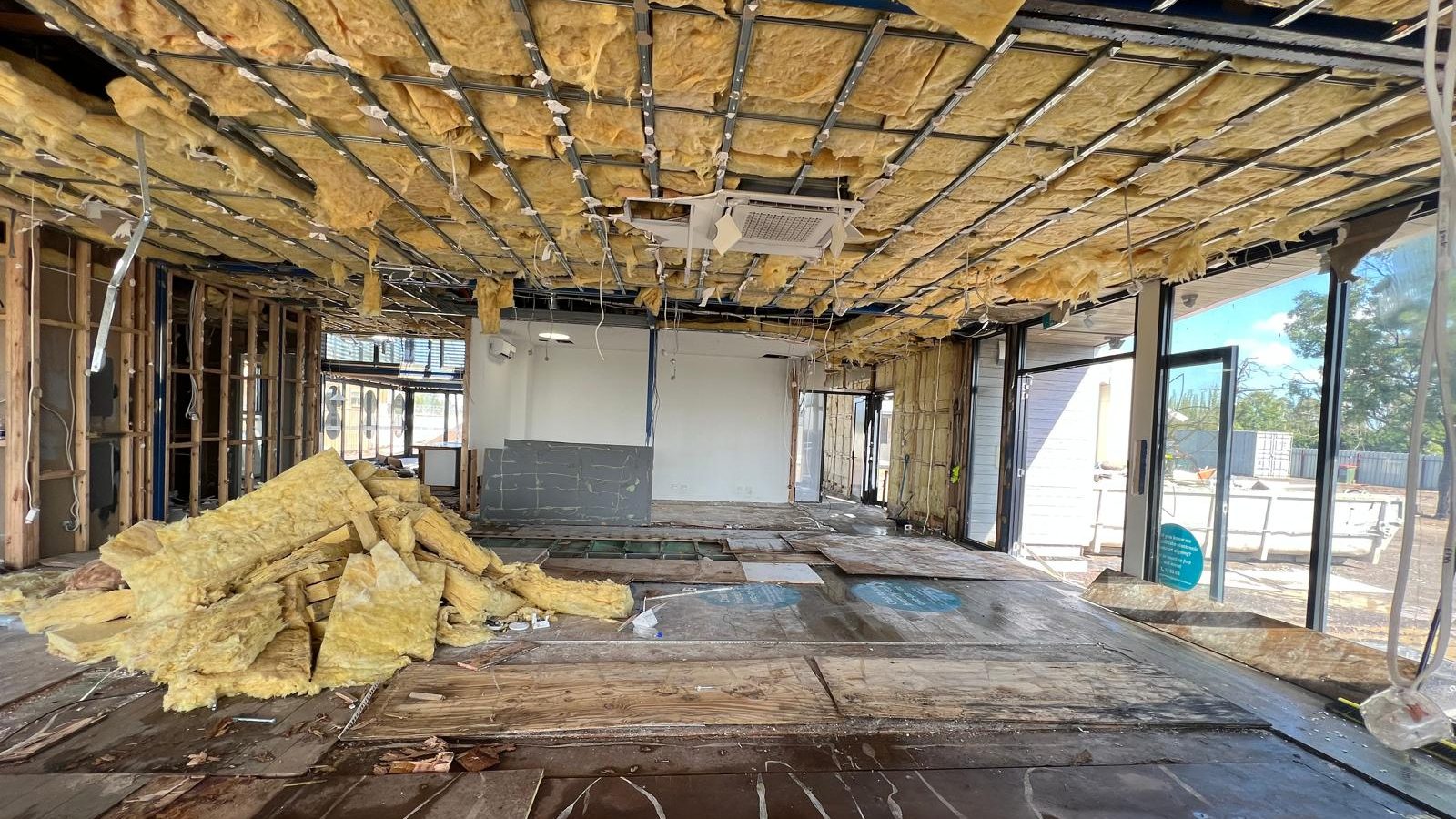
Documents before opinions
We read the make-good wording and the condition report you hold before we price anything.
Itemised, not lump sum
Partitions, ceilings, patching and finishing listed separately so each item can be discussed on its own.
Worked back from the date
Access, approvals and inspection allowances planned backwards from the day the keys are due.
Clear about our lane
We quote plastering. The lease, the negotiation and the sign-off sit with you and your adviser.
We price the plastering, not the lease
Nothing on this page is legal advice and none of it is an interpretation of your lease. What a make-good clause obliges you to do is a contractual question for your solicitor, lease adviser or tenant representative. What we can do is read the documents you already hold, walk the space with them, and tell you what the plastering described would involve and what it would cost.
We also cannot tell you how a discussion with a landlord or agent will end, and anyone who offers to is guessing. What an itemised plastering scope gives you is something specific for that discussion: a list of work, priced line by line, instead of a single figure with nothing visible behind it.
How it runs
How a make-good gets scoped and worked through
The order matters more here than on most jobs, because the expensive mistakes are made at the start. Scoping the wrong thing is worse than building it slowly.
- 01
Gather what you have
The make-good wording from the lease, the condition report or handover photographs from when you moved in, the fitout drawings if the space was fitted out, and any approvals the landlord gave for alterations along the way.
- 02
Walk the space against the documents
On site we compare what is standing now with what the documents describe. Tenant walls, ceiling changes, bulkheads, feature linings and every fixing point get identified, and so do the things that were already there when you arrived.
- 03
An itemised plastering scope
You get the work listed item by item with a price against each: walls to be removed, openings to close, ceilings to reinstate, areas to patch, surfaces to finish. Items we think are arguable are flagged as such rather than quietly included.
- 04
Agree access, approvals and dates
Building access hours, lift bookings, protection of common areas, waste removal and any landlord approval needed before work starts. Most buildings have rules about all of this, and they are easier to satisfy early than to argue about late.
- 05
Strip, close and reinstate
Partitions taken out in a controlled way, openings closed back to the surrounding lining, ceilings made continuous again, and every fixing point cut back, backed up and filled properly rather than smeared over.
- 06
Pre-inspection and close-out
We walk the work before the landlord or agent does, under the lighting the space actually has, so obvious items get fixed on our time. Anything raised at the formal inspection that belongs to us gets closed out and re-walked.
Scoping On site
Reading the scope
Clause wording, and what it usually means for plaster
These phrases turn up constantly in make-good documents. The middle column is what each one commonly points at in plastering terms, so you can picture the work. It is not a reading of your lease, and the right column is where the real answer comes from.
| Wording you often see | What it commonly points at in plaster terms | What has to be confirmed before pricing |
|---|---|---|
| Return the premises to base building condition | Tenant walls and ceilings removed, and the shell linings brought back to a flat, finished surface | What the base building actually included, which the condition report or original handover should show |
| Remove all tenant fixtures and fittings | Every bracket, mount, screen fixing and signage hole cut back, backed up and patched into the lining | Whether the lining a fixture sits on stays or comes out with it |
| Make good all damage | Patching and finishing rather than replacement, unless a surface is genuinely past patching | What is treated as damage and what is treated as fair wear and tear, which is your adviser's call |
| Reinstate alterations made by the tenant | Openings closed, removed walls rebuilt, ceiling changes put back to the original layout | Whether the landlord would rather keep a particular alteration than have it reversed |
| Leave the premises clean and tenantable | Surfaces flat, sound, dust-free and ready for a paint system to go straight on | Whether painting sits in your scope or the landlord intends to repaint anyway |
| Fair wear and tear excepted | Generally keeps ordinary marking and minor surface wear out of the plastering scope | The definition written into your own lease, which is not ours to interpret |
On site
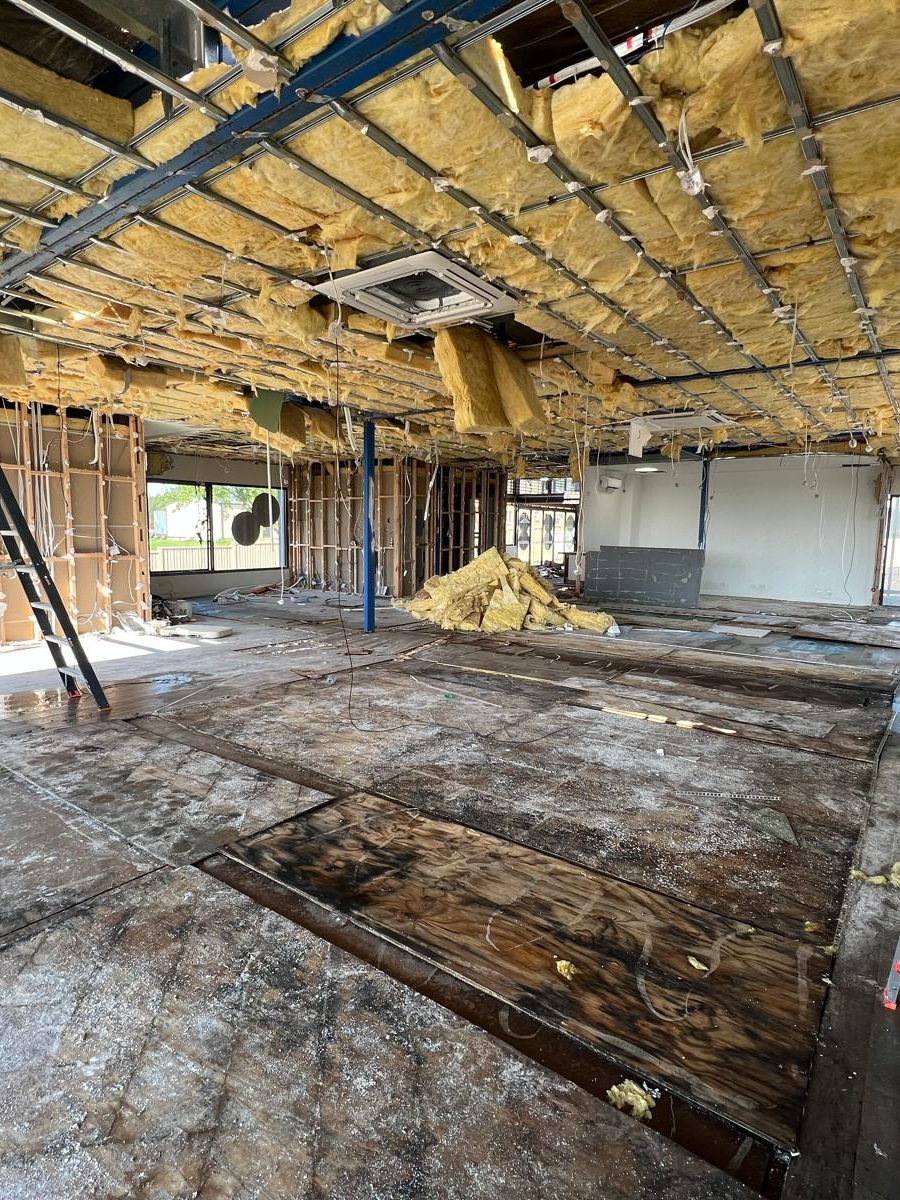
What comes off the walls and out of the ceiling
Most of the plastering on a handback is repetitive rather than difficult. The work is in the count: how many walls, how many ceilings, and how many holes somebody put in something over the life of the lease.
- Tenant partitions removed, including the track, the studs and any insulation inside them
- The scar the wall leaves in the ceiling and the floor lining closed and set back flush
- Openings cut through base building walls closed with framing behind the patch, not just filler
- Bulkheads, feature linings and reception walls taken down and the surface behind them reinstated
- Ceiling tiles and grid made complete again where a tenant wall interrupted the layout
- Fixing holes from screens, brackets, whiteboards, shelving and signage cut back and filled properly
- Patched areas feathered wide enough to disappear under the lighting the space actually has
- Everything sanded, dusted down and handed over ready for a paint system
Scope
What our part of a handback covers
This page owns the plastering side of a commercial handback: removing tenant linings, closing what they leave behind, reinstating ceilings and bringing surfaces back to a finished state. It does not own the lease, the negotiation, or the trades either side of us.
What this covers
- Removal of non-load-bearing tenant partitions, including framing, insulation and linings
- Closing the openings, scars and junctions left where a wall met a floor, wall or ceiling
- Reinstating set plasterboard ceilings where a tenant wall or bulkhead interrupted the plane
- Making a tile and grid layout continuous again after partitions come out, with tiles supplied or free issued
- Patching fixing holes from brackets, screens, shelving, signage and services
- Closing penetrations made through base building linings during the tenancy
- Reinstating cornice or shadowline runs where they were cut or removed
- Skimming a wall or ceiling back to one plane where patching alone would still read unevenly
- A pre-inspection walk under the lighting in the space, and close-out of plastering items raised after it
What this is not
- Ordinary nail holes and a handful of small marks in a residential or light commercial space, which is wall repairs
- Full demolition, asset stripping, floor covering removal and disposal, which belong to a stripout contractor
- Building a new fitout after the handback, which is office fitout plastering
- Commercial lining work outside a lease handback, which is commercial plastering
- Work to common property in a strata building, which is strata plastering
- Advice on what your lease requires, negotiation with the landlord, and the final sign-off itself
Where an item is genuinely arguable, we would rather price it and mark it as arguable than hide it in a total. You can then take it to your adviser as a number instead of a maybe.
Before a quote
What we ask for before pricing a make-good
A make-good priced from a phone description is almost always wrong in one direction or the other. Anything on this list makes the number closer to real, and most tenants hold more of it than they think.
- The make-good or reinstatement wording from the lease, and any schedule attached to it
- The condition report, handover schedule or photographs from when the tenancy started
- Fitout drawings for any work the tenant carried out during the term
- Any landlord or agent approval given for alterations along the way
- A current floor plan marked with which walls are tenant walls and which came with the space
- Photographs of each room, with close-ups of ceilings and any heavily fixed wall
- The lease expiry date and the date access to the space ends
- Building rules: access hours, lift bookings, protection requirements and waste routes
- Whether a stripout contractor is engaged, and where their scope stops and ours starts
- Whether repainting is in your scope, the landlord's, or still being discussed
The usual list
The items that turn up on nearly every handback
Whatever the space was used for, the same six items tend to make up the bulk of the plastering. Recognising yours is usually enough to know whether this is a short job or a long one.
Tenant partitions
Offices, meeting rooms and store rooms built during the fitout, coming out again. The removal is quick. The work is in the line each wall leaves across the ceiling and down the adjoining walls, which has to be closed and set so the surface reads as one plane.
Ceilings interrupted by walls
Where a partition met a set plasterboard ceiling there is a cut line and often a change in level. Where it met a grid, the layout has a hole in it. Both need reinstating, and the grid case is covered further on grid ceilings.
Fixing holes, by the hundred
Screens, brackets, shelving, whiteboards, cable trays and signage all leave fixings, and in an older tenancy they leave layers of them. Each one is cut back, backed up where the hole goes through, filled in coats and sanded rather than smeared.
Reception and branded linings
Reception walls, raked feature linings, timber or acoustic panelling on a plasterboard substrate. Once the finish comes off, what is behind it is rarely flat, so the wall usually needs skimming rather than patching to read properly again.
Penetrations through base linings
Holes cut for data, air-conditioning, plumbing or signage power during the tenancy. They are often behind joinery and only appear once it is removed, which is why a walk after the stripout matters as much as the one before it.
Cornice and junction runs
Cornice cut for a partition, shadowline interrupted by a bulkhead, or a square set junction broken where a wall landed. Matching an existing profile is its own task and sits on cornice.
Pricing
What decides the size of a make-good number
Two tenancies of the same floor area can be very different to hand back. These are the things that change the figure.
How much was built during the term
A tenancy that took the space as it was and added nothing is a patching job. One that built twenty rooms, a reception and a boardroom is a removal job with a patching job behind it.
Whether the base condition is documented
A condition report or handover photographs settle what was there at the start in minutes. Without them, everything becomes a judgement call, and judgement calls get priced with a margin for being wrong.
The number and depth of fixings
Surface holes fill quickly. Fixings driven through the lining into the framing behind, or into masonry, need backing and building up in coats, and a wall can carry hundreds of them.
Whether the surface is patched or skimmed
Scattered patches on a wall that is otherwise sound is the cheap answer. A wall carrying dozens of repairs at slightly different levels usually needs skimming to look right, and that is priced by area.
Ceiling type and what is above it
A tile layout is quick to make whole again. A set plasterboard ceiling cut by partitions takes framing, sheeting, setting and drying time between coats.
Access hours and building rules
After-hours only, a booked lift, protected common areas and a long route to the bin all add time that has nothing to do with the plastering itself.
Time left before expiry
Compound needs drying time between coats. A scope handed over with six weeks to run is straightforward. The same scope with eight days is a different programme and sometimes a different price.
Where the stripout scope stops
If another contractor removes walls and leaves the edges rough, we are patching what they left. If we handle the removal as well, the edges are cut for the repair from the start.
Two piles
Plastering we can price, and items to settle with the landlord first
We can scope and price this
- Removing tenant partitions and closing what they leave behind
- Reinstating set ceilings and completing an interrupted tile layout
- Patching fixing holes, brackets and signage points across walls and ceilings
- Closing penetrations cut through base building linings during the tenancy
- Skimming a surface back to one plane where patching alone will still show
- Reinstating cornice, shadowline and square set junctions that were cut
Settle these before pricing
- Whether an alteration has to be reversed at all, which the landlord may prefer to keep
- What the base building condition actually was, if there is no condition report
- Whether marking is damage or fair wear and tear under your own lease
- Whether repainting sits with you or with the landlord after our work
- Anything that looks structural, which is a builder or engineer question before it is ours
- Any older ceiling or wall material that needs assessing before it is disturbed
Tenants and agents ask
Make-good questions tenants and agents ask
If yours is not here, ask it. We would rather answer it on the phone than have you guess.
What does make-good actually mean for the plastering?
In plastering terms it usually means the tenancy comes back to the surface condition it was in when you took it: tenant walls and ceilings gone, the shell linings continuous and flat, and every hole somebody put in something over the years filled and sanded out.
The precise obligation comes from your lease rather than from a general definition, and two leases in the same building can read differently. We price the work that the wording describes once you or your adviser tells us what it covers.
Do the partitions have to come out, or can they stay?
Sometimes a landlord would rather keep a fitout than have it stripped, particularly if the rooms suit the next tenant. It happens often enough to be worth asking before anything is demolished, because leaving a wall standing is always cheaper than removing it and patching the scar.
That is a conversation between you, the landlord or agent, and your adviser, and it needs to be confirmed in writing rather than agreed in a corridor. If it lands that way, we simply re-scope to whatever stays.
When should a make-good be scoped?
Earlier than most people do. Scoping it while there is still real time on the lease gives you a number to plan around, room to discuss items you think are arguable, and the option of doing the work in stages rather than all at once.
The practical reason is drying time. Compound has to dry between coats, and a large patching scope is therefore measured in visits rather than hours. A scope that arrives with a week to run limits what any plasterer can do properly.
Can you price it from photographs and a floor plan?
We can give you an indicative range from good photographs, a marked-up plan and the make-good wording, which is often enough for early budgeting or for a discussion with your adviser.
A firm price needs a walk-through. The items that move a make-good number are the ones photographs hide: how deep the fixings go, what is behind the joinery, whether the ceiling changes level where a wall lands, and how flat the base building linings actually are.
What if the landlord asks for more than we think the clause requires?
It happens, and it is not a plastering question. We can price the additional work as its own item so you can see exactly what the difference is worth, and you can then take that number to your adviser and to the landlord.
What we will not do is tell you whether the request is fair or predict how the discussion will end. Our part is to keep the scope itemised and honest so the conversation is about specific work rather than a gap between two lump sums.
Who decides that the make-good is finished?
The landlord or their agent inspects and forms their own view, usually against the make-good documents and whatever condition record exists. That decision is not ours and we do not control it.
What we can do is reduce the number of items raised: walking the work under the lighting the space actually has before the inspection, fixing what we find on our own time, and closing out anything raised afterwards that belongs to the plastering.
Does the space have to be repainted after the patching?
Usually, and it is worth confirming early because it affects how the plastering is finished. Fresh compound and aged paint will never match, so a patched wall that is not repainted reads as a map of repairs no matter how flat the work is.
Where the landlord intends to repaint anyway, we hand over sanded and paint ready and that is the end of our part. Where painting sits in your scope, plan the plastering to finish with enough time for a full coat rather than a touch-up, and tell us at the quote so the sequence allows for it.
Start with the paperwork
Send the clause, the plan and the expiry date
The make-good wording, a marked-up floor plan and the date you hand the keys back are enough to start. We will walk the space, price the plastering item by item, and flag anything we think belongs with your adviser rather than with us.