
Sagging ceilings
The sheet has come away from the frame and dropped. Assessed before anyone decides between refixing and replacing.
Sagging ceilings
Plastering Gyprock Ceilings
Repairs
Cracks along the joints, screw heads lifting, old patches showing under the light and holes cut in by another trade. Repaired properly, then set and sanded back to one flat plane.
Most ceilings do not fail all at once. They tell you something is happening first, usually with a hairline that follows a sheet joint, a row of small round bumps where the screws sit, or a patch from years ago that has started to read as a shadow whenever the afternoon light comes across it.
The repair itself is the easy part. The part that decides whether it stays repaired is working out what moved and why before anything gets filled. That is where we start.
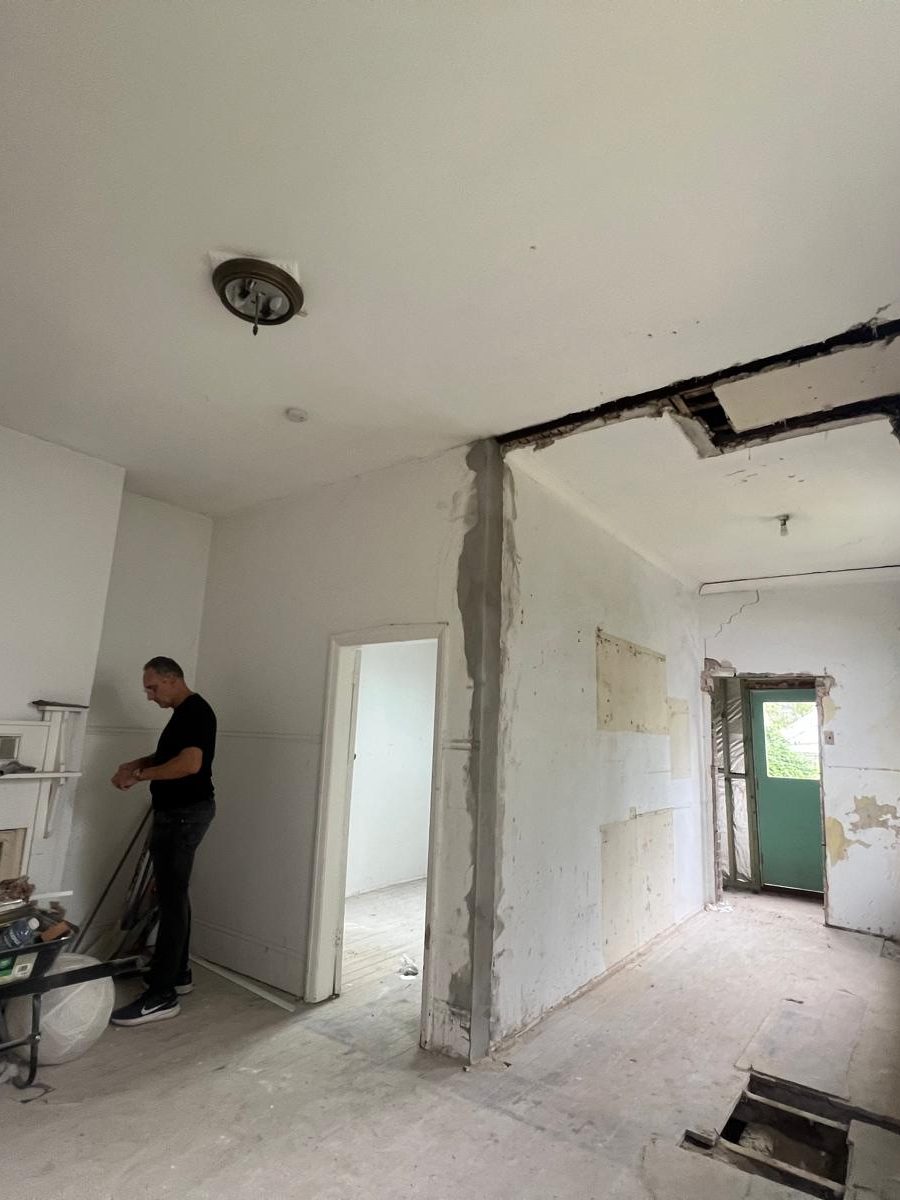
We look before we fill
A crack is the symptom. What we price is the reason it opened.
One trade, start to finish
Cut back, patched, set, sanded and cleaned up by the same people.
Matched to the ceiling you have
Flat sheet, raked, cornice line or textured, the repair has to disappear into it.
Honest about replacement
If patching is throwing money at it, we will say so before you spend it.
Start here
Almost every ceiling call we take is one of these six. They look similar from the floor and they are not the same job, so it is worth knowing which one you are looking at before you ring anyone.
A hairline that runs dead straight, usually parallel to the walls or following the cornice. That is a sheet joint or a cornice junction opening slightly, and it is the most repairable thing a ceiling does.
Screw pops. The fixing has worked loose against seasonal movement in the frame and pushed a disc of compound proud. The fix is to refix nearby, remove the old head and re-set, not to sand the bump off.
The repair itself is sound, but it sits a fraction above or below the surrounding plane. Under a downlight or a window that difference reads as a shadow, which is why it looks worse at some times of day.
Broken edges where a light, a fan or an air-conditioning outlet was removed or moved, and square access cuts left behind by an electrician or a plumber who had to get above the ceiling.
Repaired once, reopened in the same place. That is movement, not plaster. Something is loading or shifting the frame and it has to be understood before the ceiling is repaired a third time.
Visible sag, a soft or heavy feel, or a stain with an edge to it. Those belong to sagging ceilings and water-damaged ceilings, not to a general repair, and they are linked below.
Scope
This page owns the everyday ceiling faults: cracking, fixings, failed old repairs, impact damage and access cuts. Related problems have their own pages because they need a different assessment, not just a different patch.
If what you have turns out to be one of the jobs on the right, we will tell you at the quote rather than patch it and leave you with the same ceiling in six months.
Reading the ceiling
You can get a long way with a torch held flat against the ceiling so the light rakes across it. That shows the shape of the problem far better than looking straight up at it.
| What you can see | What is usually behind it | What it normally needs |
|---|---|---|
| A fine straight line following a joint | The paper-tape joint has moved slightly with seasonal expansion in the frame | Rake out, reinforce the joint, re-set in coats, sand flush |
| A line where the ceiling meets the cornice | The cornice and the sheet are moving independently at the junction | Rake and re-set the junction, or refix the cornice first if it has let go |
| Rows of small round bumps | Screw fixings backing out of the batten or joist | Refix beside each one, cut the old head out, spot and re-set |
| A shadow around an older repair | The patch is sound but sits off the plane of the ceiling around it | Cut back, feather the patch wider, or skim the ceiling if there are many |
| Cracking that returns in the same place | Structural or frame movement, not a plaster failure | Understand the movement first; plastering it again on its own will not hold |
| A soft, heavy or bulging area | The sheet has separated from the frame, or it has taken on water | Stop, keep the room clear, and treat it as sagging or water damage |
The decision at the quote
Four different amounts of work get described on the phone in the same three words. Which one your ceiling needs depends on whether the board is still sound, whether it is still properly fixed, and how flat the whole plane is rather than how bad the damage looks.
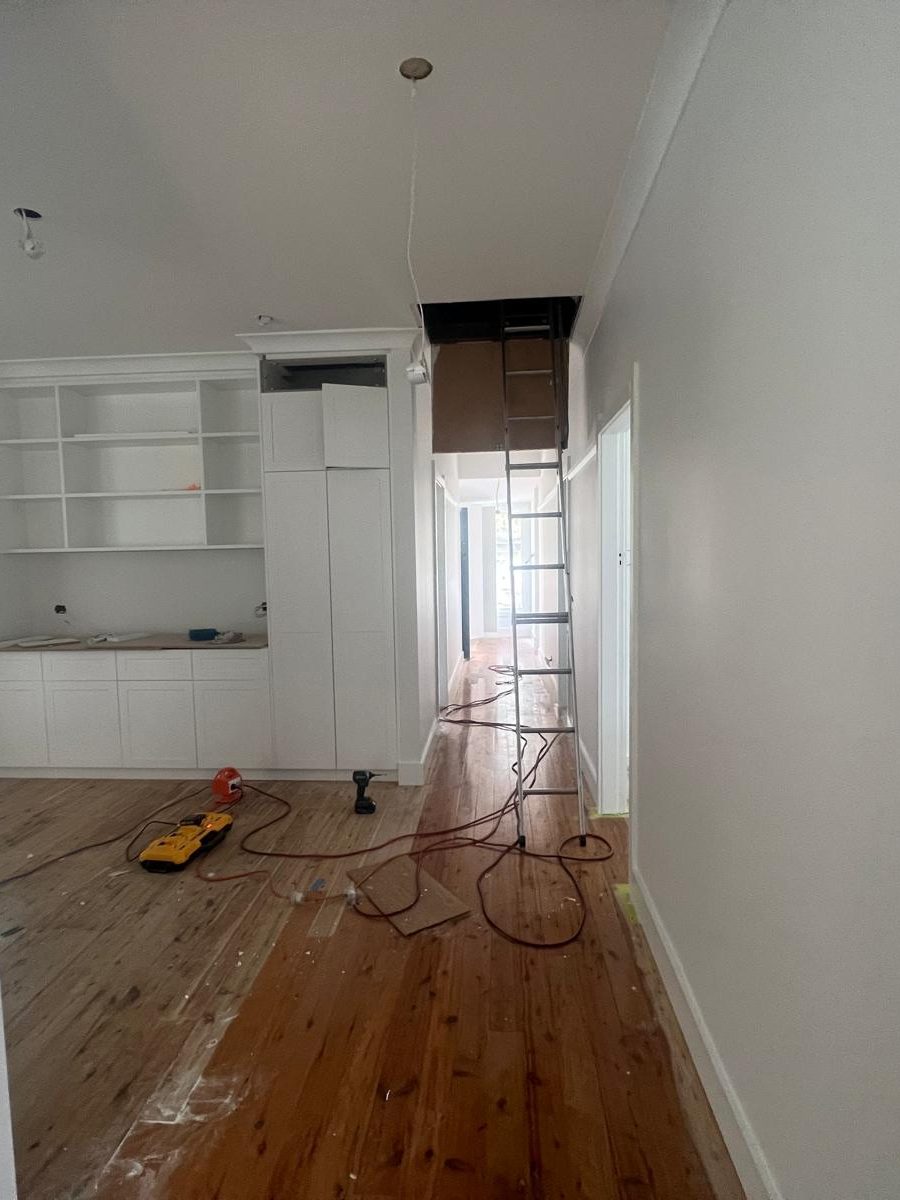
How the job runs
A ceiling repair is mostly waiting for compound to dry, which is why it is usually two or three short visits rather than one long day. Here is the order and roughly what each step involves.
Send a photo taken with the light raking across the ceiling and a second from further back showing the whole room. Nine times out of ten that is enough to tell you what it is and roughly what it costs.
On site we check the fixings, the frame above where we can, the direction the crack runs and whether anything upstairs or outside explains it. If it belongs to a roofer, a plumber or an engineer, you hear that first.
Floors and furniture covered, loose and failed material taken down in a controlled way, and the damage cut back to firm board and clean edges. Nothing sound gets set over the top of something that has already let go.
Joints taped, fixings spotted, then built up in coats with proper drying time between them. Compound shrinks as it dries. A job rushed into one thick coat is the reason so many old repairs read as a line later.
Sanded back and checked under a raking light before we call it done, then the dust cleaned up and the room handed back usable, flat and ready for your painter.
Assessment Repair and finish
Before the quote
Two ceilings that look identical in a photo can be very different to repair. These are the things that actually change the number.
One patch in the middle of a room is priced differently from cracking along every joint, and differently again from every ceiling in the house.
If there is still a leak above it or the frame is still moving, repairing the surface costs you twice. That has to be sorted first.
A ceiling you can reach off a small platform is one job. A stairwell void, a raked ceiling or a double-height entry needs staging and that changes the day.
A deep repair needs more build-up, and each coat needs drying time. More coats means more visits rather than more hours in one hit.
A crack at the cornice junction is straightforward. Matching a damaged decorative profile so the repair disappears into the original run is not.
A flat painted ceiling is the simple case. Matching an existing texture, or a ceiling that has to read perfectly flat under downlights, takes longer.
An empty room is quick to protect. A furnished living room, a tenanted unit or a shop that has to keep trading all shape how the work is staged.
Parking, stairs, lifts and building access hours matter more in apartments and commercial buildings than most people expect.
Related work
These four pick up where a general ceiling repair stops. Each one owns a different problem, so you land on the right assessment rather than the nearest word.
The sheet has come away from the frame and dropped. Assessed before anyone decides between refixing and replacing.
Sagging ceilingsPlaster that failed after a leak. Reinstated once the water is stopped and the space has dried out properly.
Water damageWhen the board has stopped doing its job. The ceiling comes out, new sheet goes back and the cornice is reinstated.
ReplacementOne flat plane again across a ceiling carrying years of separate patches at slightly different levels.
Skim coatingA ceiling that is visibly bulging, that feels soft when you press it, or that has dropped at one edge should be treated as unsafe rather than untidy. Keep people and furniture out from under it, do not poke it to see how bad it is, and ring us or another plasterer to look at it.
The same goes for a stain that is still growing. Replastering over water that has not stopped means paying twice for the same ceiling.
Common questions
If yours is not here, ask it. We would rather answer it on the phone than have you guess.
A repair is almost always enough and it is what we would rather do. Cracks that follow a sheet joint or a cornice line get raked out, reinforced, re-set and sanded so the join does not reopen.
The exception is a ceiling that has been patched repeatedly over many years. Every one of those repairs sits at a slightly different level, and under a ceiling light it shows as shadowing that no further patching will fix. At that point a skim over the whole ceiling, or re-sheeting, is the cheaper answer over time. We will tell you when we think you have reached it.
Because the plaster was never the problem. If a crack reopens in the same place after a proper repair, something is still moving: the frame, the roof load above it, or the building itself. Recutting and refilling it will buy you another season at best.
Wide, stepped or diagonal cracking, cracks that run through brickwork as well, or doors and windows that have started sticking at the same time are the signs worth taking seriously. That is a question for a builder or an engineer before it is a question for a plasterer, and we would rather tell you that than take the job twice.
Screw pops. The fixing has gradually worked back out of the timber as the frame moves with the seasons, pushing a small disc of set compound proud of the surface. They usually appear in a line because the fixings follow the batten.
Sanding the bump off does not fix it, because the screw is still loose and will do it again. The repair is to fix the sheet properly beside each one, take the old head out, then spot and re-set the holes so the ceiling reads flat again.
Yes, and it is a large part of what we do. Access cuts are usually clean rectangles in otherwise sound board, which makes them one of the more straightforward repairs.
It helps if the other trade leaves the offcut, and it helps more if the opening was cut back to the joists rather than between them. If it was not, we piece in a support behind the patch so the new section has something to fix to.
On a flat painted ceiling, yes, that is the standard we work to. The repair is feathered well past the damage, sanded back and checked under a raking light before we leave.
Two things make it harder. One is a heavily textured ceiling, where matching the texture is its own skill and a full skim is sometimes the better answer. The other is a ceiling that is not being repainted, because fresh compound and aged paint will not match no matter how flat the repair is. If you are only repairing one section, plan on painting at least the full ceiling plane.
The hands-on work is often only a few hours. The drying is what sets the timeline. Each coat of compound has to dry properly before the next one goes on, so a typical repair is two or three short visits across several days rather than one long day.
Trying to compress that is the single most common cause of repairs that shrink, crack or show as a line later. We would rather come back than rush the build-up.
No. We protect the floor and whatever cannot easily be moved, and we work room by room so the rest of the house stays usable. It does help if you can clear the area directly under the work and move anything fragile.
Sanding creates fine dust, so we seal the room off where we can and clean up at the end of each visit. If someone in the house is sensitive to dust, tell us at the quote and we will plan the sanding around it.
Sometimes, and it depends what the texture is. Many older Sydney ceilings have a sprayed or trowelled finish that can be approximated over a small repair, and on a larger area the honest answer is usually that a full skim to a flat finish will look better than a patch that nearly matches.
If the ceiling has a sprayed vermiculite or popcorn coating, stop before anything is scraped or sanded. Older coatings of that type need to be assessed before they are disturbed, and that work sits on the vermiculite and textured ceiling page.
Get it looked at
One picture with the light raking across it usually tells us what it is and roughly what it costs. If it belongs to another trade first, we will tell you that instead of quoting it.