
Office fitout plastering
Partitions, bulkheads, ceiling linings and reinstatement on commercial floors, staged around building access.
Fitout work
Plastering Gyprock Ceilings
City of Parramatta
Ten minutes apart in this council you can be lining an office floor, patching a tower corridor, refixing a 1920s ceiling or cutting shrinkage cracks out of a four year old apartment.
Parramatta has been building upward for a decade, and the plastering that comes with that is office floors, corridors, partitions, bulkheads and reinstatement after services have been moved. Very little of it is decided by square metres. It is decided by lift bookings, dock windows, induction paperwork and the hours a building will let a trade work in.
Walk a few streets out of the centre and the job changes completely. Harris Park, Westmead, North Parramatta and Northmead are older brick houses still carrying their original ceilings, Carlingford and Epping run larger and later, and Wentworth Point, Newington, Rydalmere and Ermington are newer apartments where cracking is the building drying out rather than the building ageing.
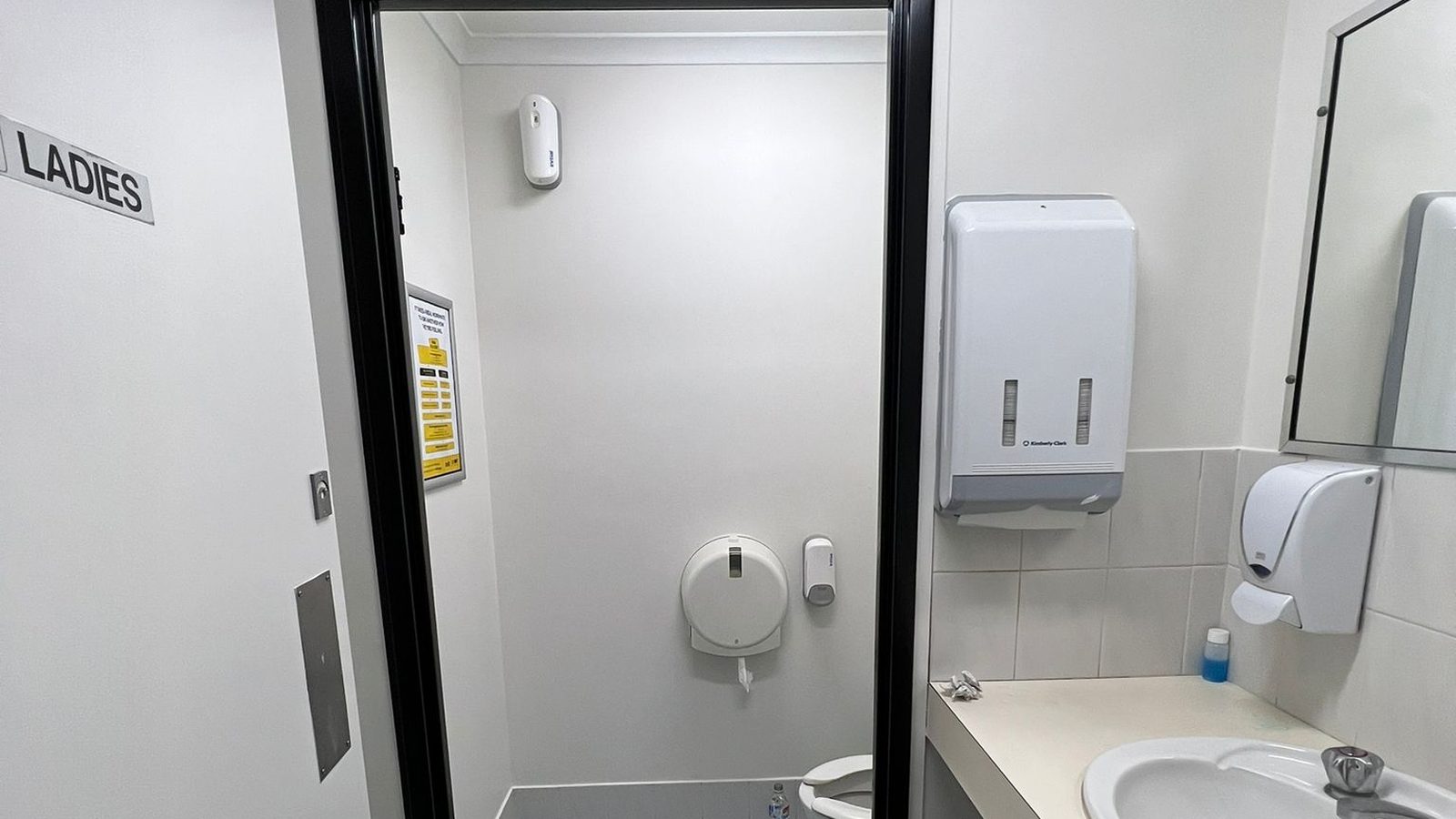
Access sorted before the sheets
Lift times, dock windows and induction are settled before the first delivery.
The age of the building sets the method
A 1925 ceiling and a 2021 ceiling crack for opposite reasons.
Edge details matched
Square set and shadowline junctions get matched, not covered with a cornice.
Unknown coatings left alone
An old sprayed ceiling texture is identified before anybody sands or scrapes it.
Where you are
The commercial work and the hundred year old housing sit almost on top of each other here. Which of the three you are in tells us most of what we need.
Parramatta itself and the office belt around it. Partitions, bulkheads, ceiling linings, and patching where a sprinkler, a duct or a data run has been moved. A good share of it is a tenancy being brought back to condition at the end of a lease, which is make good plastering.
Harris Park, Westmead, North Parramatta and Northmead hold a lot of pre-war and post-war brick. Original ceilings on timber battens, hairlines following the joints, fixings pushing discs of compound proud, and cornice runs that have to be matched if a ceiling comes down.
Wentworth Point, Newington, Rydalmere and Ermington. Modern board, square set and shadowline edges, and fine cracking through the first summers as the structure loses its build moisture. Common property brings strata plastering into it.
What actually changes
Two ceilings with identical cracking can be a two visit job in one building and staged access in another.
| Where the job is | What we are usually plastering | What sets the timeline |
|---|---|---|
| An office floor or tower corridor | Partitions, bulkheads, ceiling linings, patching after services move | Lift and dock bookings, induction, and other trades on the floor |
| A tenancy being handed back | Penetrations closed up, walls and ceilings returned to base condition | The lease dates and what the make-good schedule actually asks for |
| A pre-war or post-war brick house | Original ceilings refixed or re-sheeted, wall patching, cornice reinstated | How much of the ceiling is still properly held to the frame |
| A 1960s to 1980s brick and tile house | Joint cracking, loose fixings, older textured ceiling surfaces | Whether a coating has to be identified before anything is disturbed |
| A newer apartment or townhouse | Shrinkage cracking cut out and re-set, square set and shadowline edges matched | Building hours, lift protection and strata sign-off on common property |
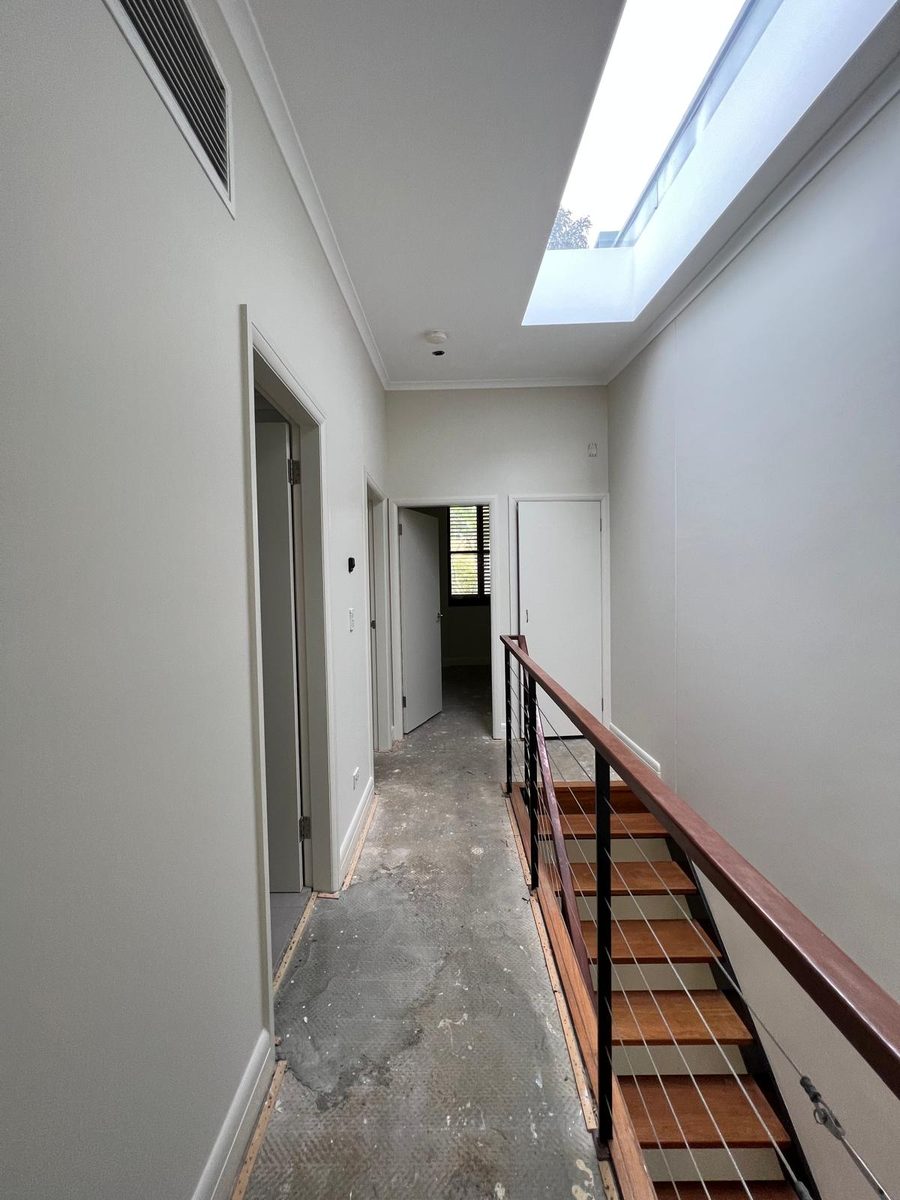
The same crack, two causes
A hairline along a ceiling joint looks the same in a 1925 cottage and a 2021 apartment, and it is telling you two different things.
In an older house the frame has been through a hundred seasons. Timber takes up and gives off moisture every year, and each cycle backs a nail or an early screw out a fraction. Eventually fewer fixings are holding the sheet than it was built with, so the joints move and open. That is a fixing problem first.
In a new apartment the same hairline is usually the building drying out. Joints take up that movement, so it often opens once, gets cut out, reinforced and re-set, and then stays put. Doing it after the first full summer rather than in the first month means doing it once.
Both are ordinary ceiling repair work. What differs is what we check before quoting, how wide we cut back, and whether the plane around it needs bringing back together with skim coating instead of another separate patch.
How it runs
In a house you park in the driveway and start. In a tower or a managed block there are several things to settle first, and sorting them early keeps the job to the visits it was quoted for.
Send a photo with the light raking across the surface, plus the address and the kind of building. A unit in a managed block, an office floor and a house are quoted differently from the same photo.
Induction, insurance documents, approved hours, lift protection, dock times and whether a building manager has to approve the work at all. Most delays on this side of Sydney start here, not with the plaster.
In a tower the lift, the lobby and the corridor are part of the site. Stock comes up and rubbish goes down without marking anything on the way.
Damage cut back to firm edges, joints reinforced, fixings spotted, then built up in coats with proper drying time between them. Sanded flat, checked under a raking light, and the route left as we found it.
Access and assessment Plaster and finish
Before the quote
Plastering is priced off the work and the access together. Here the access side swings it further than people expect.
A ceiling reached off a small platform is one job. A stairwell void, a tall entry or a raked ceiling needs staging, and staging changes the day rather than the hour.
Bookings, protection, narrow windows and long carries from a dock all add time before anything gets plastered. It is the biggest difference between a tower and a house.
Work that has to run after hours or in stages so a floor keeps trading is priced differently from a job that runs straight through a weekday.
A live leak above a ceiling, or a frame that is still moving, means paying for the surface twice. That gets resolved before we set anything.
A painted cornice junction is straightforward. A square set or shadowline edge has to be matched exactly, and it is far less forgiving.
In the centre there is often nowhere to stand a vehicle. On the older streets there usually is. That difference shows up in the quote.
Where enquiries land
Pick whichever sounds closest. If it turns out to be a different job once we look, you hear that at the quote.
Partitions, bulkheads, ceiling linings and reinstatement on commercial floors, staged around building access.
Fitout workJoint cracking, loose fixings, access cuts and failed old patches in houses, units and townhouses.
Ceiling repairsWork on common property in apartment blocks, arranged with the building manager or committee rather than around one owner.
Strata work
Around Parramatta
If yours is not here, ask it. We would rather answer it on the phone than have you guess.
Yes. Partitions, bulkheads, ceiling linings, patching after services have been relocated and bringing a tenancy back to condition are all normal commercial work and all of it is in scope.
The plastering is not the complicated part. Induction, insurance documents, approved hours, lift protection and dock bookings need settling before the first delivery, and we would rather sort that at the quote than on day one. A whole floor being reconfigured sits with commercial plastering.
Usually not. A new building sheds moisture for a year or two and settles slightly as it does. Fine cracking along joints and wall junctions is the common way that shows up, and it is normally repairable and normally the last time it happens.
Separate two things. Inside your lot it is generally yours to fix. If it is in common property, or it is wide, stepped or reopening in the same line after a proper repair, raise it with the building manager so it is recorded, because that is a defect question before it is a plastering one.
Often, and it is the outcome we would rather reach. If most fixings are still holding, the ceiling is refixed beside the ones that have let go, old heads are cut out and spotted, joints are reinforced, and the plane is set and sanded flat.
That is tested on site by checking fixing lines across the whole ceiling rather than only where cracking shows. Where whole areas have released, refixing shifts load onto the next weakest fixings, and ceiling replacement becomes the cheaper answer over time.
The owners corporation or its building manager. It is worth checking which side of the boundary the damage sits on before anything is booked: inside a lot is generally the owner, while structural walls, ceilings between lots and anything in a corridor usually are not.
We will quote in a form that can go in front of a committee or a strata manager, setting out the scope and how access would be handled. We will not start on common property on a verbal go-ahead from one resident.
Not before it is identified. Sprayed and trowelled ceiling coatings were used widely through the middle decades of last century, and suspect material has to be assessed by a competent person before it is disturbed in any way, including sanding, scraping or wetting it.
Once the coating is known, the options are generally a skim over the top to a flat finish or removal followed by a new surface, both set out on the vermiculite and textured ceilings page.
Get it priced
A raking-light photo, the rough age of the place and whether it is a house, a unit or a tenancy tells us what the job is.