
Ceiling repairs
Joint and cornice-line cracking, screw pops, old patches showing as shadows and the access cuts other trades leave.
Ceiling repairs
Plastering Gyprock Ceilings
Penrith City
Penrith holds three clear generations of housing inside one council, and a ceiling built in 1965 does not fail the same way as a wall built in 2019.
The established parts, Penrith itself, St Marys, Emu Plains, Kingswood and Cambridge Park, are largely post-war and 1960s brick with some fibro-era construction still in use. Around those sit the big 1980s and 1990s estates: Glenmore Park, Cranebrook, St Clair, Erskine Park, Colyton and South Penrith. Newer again are Jordan Springs and Claremont Meadows.
The other thing that shapes work out here is the weather. Western Sydney swings a long way between a hot dry summer and a cold wet winter, and timber framing moves with it. That movement shows up first along a ceiling joint or a cornice line, which is why so many calls from this council are about a ceiling.
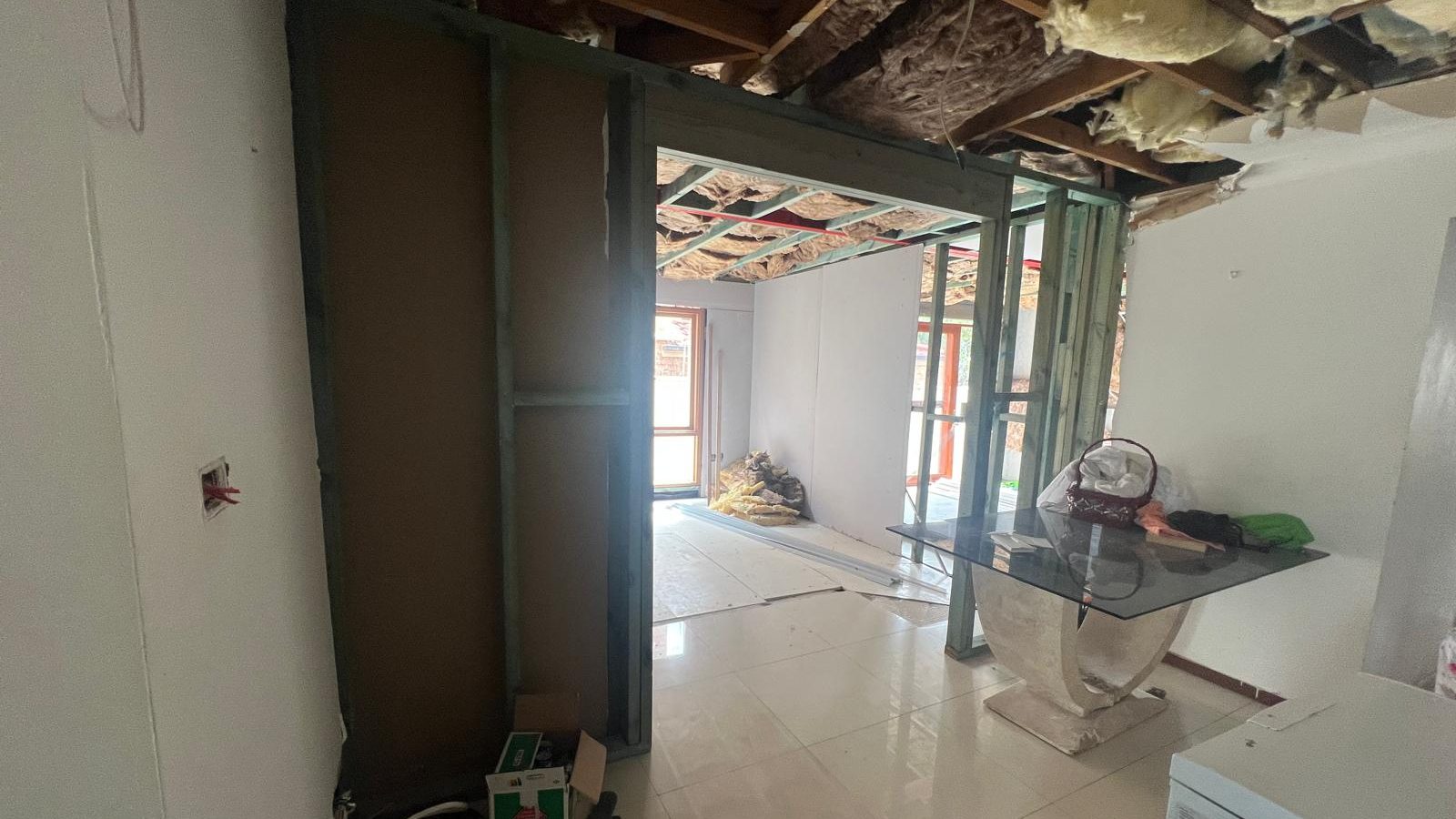
Movement checked first
Seasonal cracking, a poor old repair and a real structural problem look alike from the floor. We work out which before we quote.
Licensed contractor
NSW contractor licence 244708C, with insurance details available to builders, insurers and managers on request.
Coats with drying between
A deeper repair means more coats and therefore more visits. Rushing the build-up is why old repairs read as lines.
Dust kept where it belongs
Rooms sealed off where we can, floors and furniture covered, and the mess cleaned up at the end of each visit.
The area
The seasonal one
This is the complaint the housing in this council generates more than any other, and it is worth understanding before you pay anyone to fill it. A timber-framed house here lives through a wide temperature and humidity range every year, and it does not stay exactly the same size while it does.
A hairline that runs dead straight along a ceiling joint, or along the line where the ceiling meets the cornice, is almost always that movement finding the weakest point in the surface. It is a plaster job, not a building job, and it is repairable. The distinction that matters is whether the crack was ever properly reinforced the first time it was done.
A filled crack is a cosmetic result with a short life. A raked out, reinforced and re-set joint is a repair, because the reinforcement is what carries the small seasonal movement instead of the compound taking it. That is the difference between a ceiling that looks good for one summer and one that stays flat.
What does not belong on this page is cracking that is wide, stepped or diagonal, that also runs through external brickwork, or that arrives at the same time as doors and windows starting to stick. Those are worth a builder or an engineer looking at before a plasterer touches them, and we will say so rather than take the job twice.
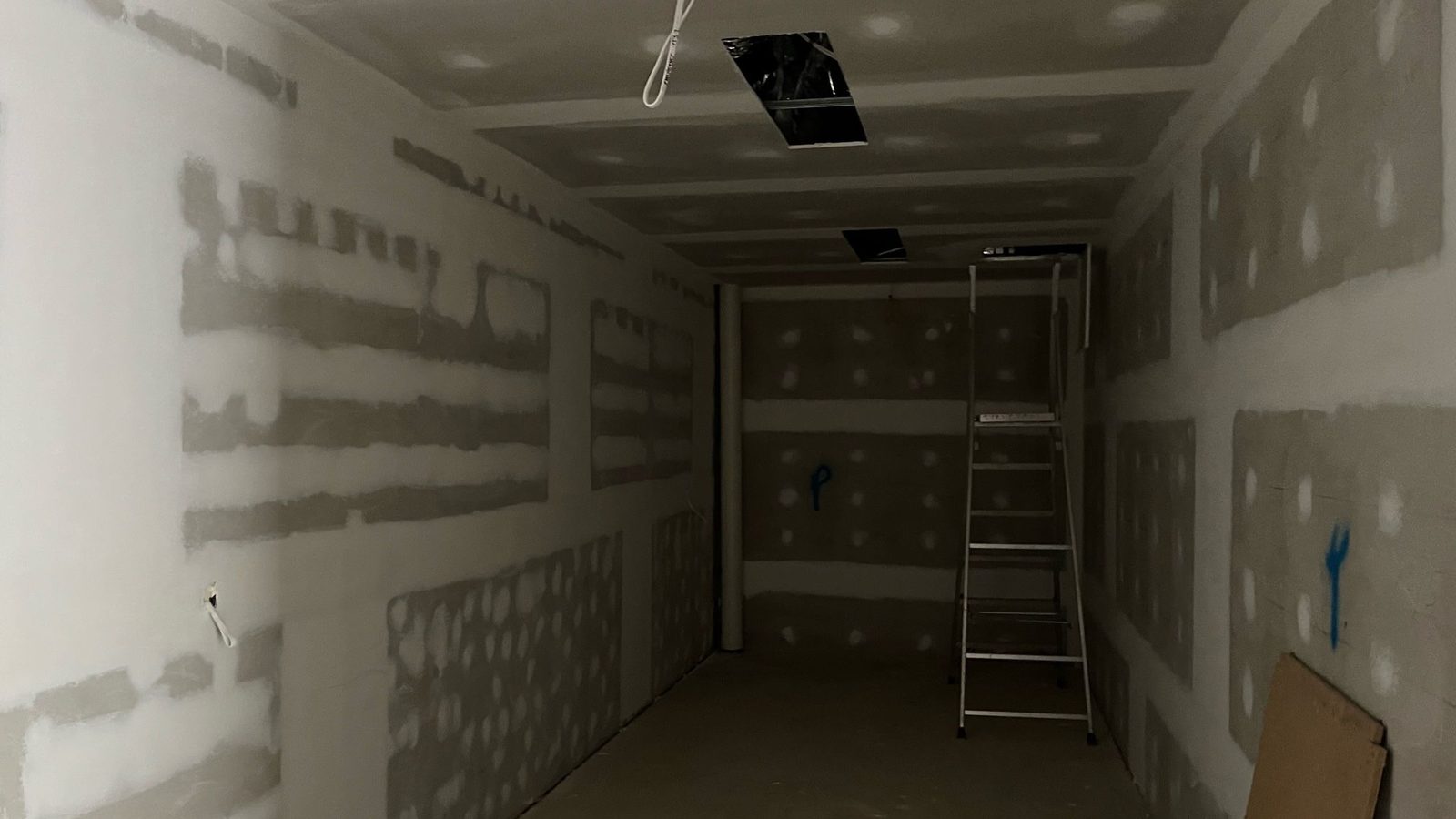
By generation
Tell us the suburb and roughly the decade and we can usually predict what we are going to find before we arrive.
| Build period | Where it dominates | What it usually needs |
|---|---|---|
| Post-war to 1970s | Penrith, St Marys, Emu Plains, Kingswood, Cambridge Park | Original ceilings at the age where fixings let go, solid plaster walls over brick, older sheet linings, whole-room skims |
| 1980s and 1990s estates | Glenmore Park, Cranebrook, St Clair, Erskine Park, Colyton, South Penrith | Seasonal joint and cornice cracking, screw pops, tired walls, garage and alfresco conversions |
| 2000s onward | Jordan Springs, Claremont Meadows, newer parts of Cranebrook | First-years settlement lines, long flat walls that read unevenly under downlights, square-set junctions |
| Any age, after a leak | Across the whole council | Reinstatement once the roof, valley or plumbing has been fixed and the space has dried out properly |
Boundaries
Saying this plainly up front saves a wasted inspection, which matters more out here than it does closer in.
If your job lands on the right-hand side you will hear it at the quote, not after the first coat has gone on.
Pricing
Six things account for nearly all of the spread between quotes here.
Three very different amounts of work, and the right one depends on how sound the board is and how flat the whole plane is, not on how bad the mark looks.
Protection, set-up and the sanding and clean-up day are paid once. Five rooms in one run costs far less than five separate visits.
Modern plasterboard, older sheet lining and solid plaster over brick all cut back and finish differently, and one of them needs identifying first.
A single-storey 2.4 metre ceiling is straightforward. A two-storey void, a stair well or a raked living ceiling needs staging.
Water still coming in, or framing still moving, means the repair gets paid for twice. That comes first.
An empty house runs at full speed. An occupied family home gets staged room by room, with protection each morning and a clean-down each night.
Plenty of houses in the older parts of this council still have a sprayed or heavily textured ceiling coating from decades back. Some coatings of that era must not be scraped, sanded, drilled or disturbed, and whether that applies to yours is a question for a competent person with the right qualifications.
So the order is: identify it, then decide. Do not let anyone start sanding to see what it is. Where a textured ceiling is the question, the vermiculite and textured ceilings page explains how it is approached. We do not offer removal.
Start here
Each covers the work, how it is scoped and what changes the price.
Joint and cornice-line cracking, screw pops, old patches showing as shadows and the access cuts other trades leave.
Ceiling repairsA whole wall or ceiling brought back to one plane when years of separate patches sit at slightly different levels.
Skim coatingWhat is involved when a ceiling has stopped being worth repairing: strip out, new sheet to the frame, cornice reinstated.
ReplacementHoles, knocks, corner damage and tired rooms brought back flat before a sale or a new tenancy.
Wall repairsPenrith questions
Six questions this council's mix of housing ages raises repeatedly.
On the evidence you have described, a repair. A fine line that widens in the heat and narrows again in the cold is seasonal movement in the frame, and the junction between the ceiling sheet and the cornice is the natural place for it to show.
It needs to be raked out and reinforced rather than filled, because reinforcement is what absorbs that movement next summer. If the same line has been filled two or three times already, that is why it keeps coming back.
Usually a skim rather than more patching. What you are seeing is a plane problem: separate repairs, or joints finished narrow, sitting a fraction above or below the surface around them. Under raking light those differences read as shadows.
Feathering wider works where there are one or two. Where a whole wall looks uneven, a skim over the full face brings it to a single plane, which is the only thing that satisfies downlights. Skim coating covers it.
Yes, the whole council: Penrith, South Penrith, Jamisontown, Kingswood, Cambridge Park, Emu Plains, Glenmore Park, Cranebrook, Jordan Springs, Claremont Meadows, St Marys, Colyton, St Clair and Erskine Park.
It helps to name the suburb when you ask for a price, because the housing varies so much across this council that the suburb tells us as much as the photo does.
Yes, and most are. A strip-out is dusty and noisy, so that room is out of use for the day and the space gets sealed off and protected. Furniture either comes out or goes to the middle under covers.
After that it is sheeting, then setting in coats, then a sanding visit, so the room is unavailable in bursts across a week or so rather than continuously. Ceiling replacement sets out what the process involves.
With whoever installed or services the unit. Condensate trays, drain lines and insulation around ducting in a hot roof space are a common source, and until that is fixed and the ceiling has dried, replastering is money spent twice.
Once it is dry, the repair is ordinary: failed material cut out, backing in, reinforced, set in coats and sanded flat. That work is described on the water-damaged ceilings page.
Frame complete and straight, roof on and watertight, windows in, and the electrical, plumbing and any air conditioning rough-in done and signed off. Insulation in where it is going. Once sheet is on, getting back behind it is expensive.
We also want to know how the new ceiling meets the old one and what the cornice is doing at that junction, because that is the join everyone looks at afterwards. Renovation plastering covers where the plasterer sits in the order.
Penrith quotes
Those two facts plus a photo taken with the light raking across the surface will get you a realistic price and an honest view on whether it is a repair or something bigger.