

Decorative finishes
Venetian and polished plaster, judged on the wall before you commit to it
Polished plaster is thin coats of lime and stone worked onto a flat wall until the surface has depth. The wall underneath, and the sample you sign off, decide how it looks.
People use Venetian plaster, polished plaster, Marmorino and stucco to mean roughly the same thing, and in a showroom they look close. They are not one product. They are a family of trowel-applied mineral finishes that differ in how coarse the aggregate is, how many coats go on, how hard the surface is burnished at the end, and what protects it afterwards.
This page sets out what the material is, what has to be true of the wall before any of it goes on, how a sample gets approved, what each sheen level actually looks like in a room, and what a quote for decorative plaster is built from. If you have a wall in mind, talk to us about the scope before you settle on a finish.
- Sample approved before the wall
- Substrate assessed first
- Quoted by area, coats and prep
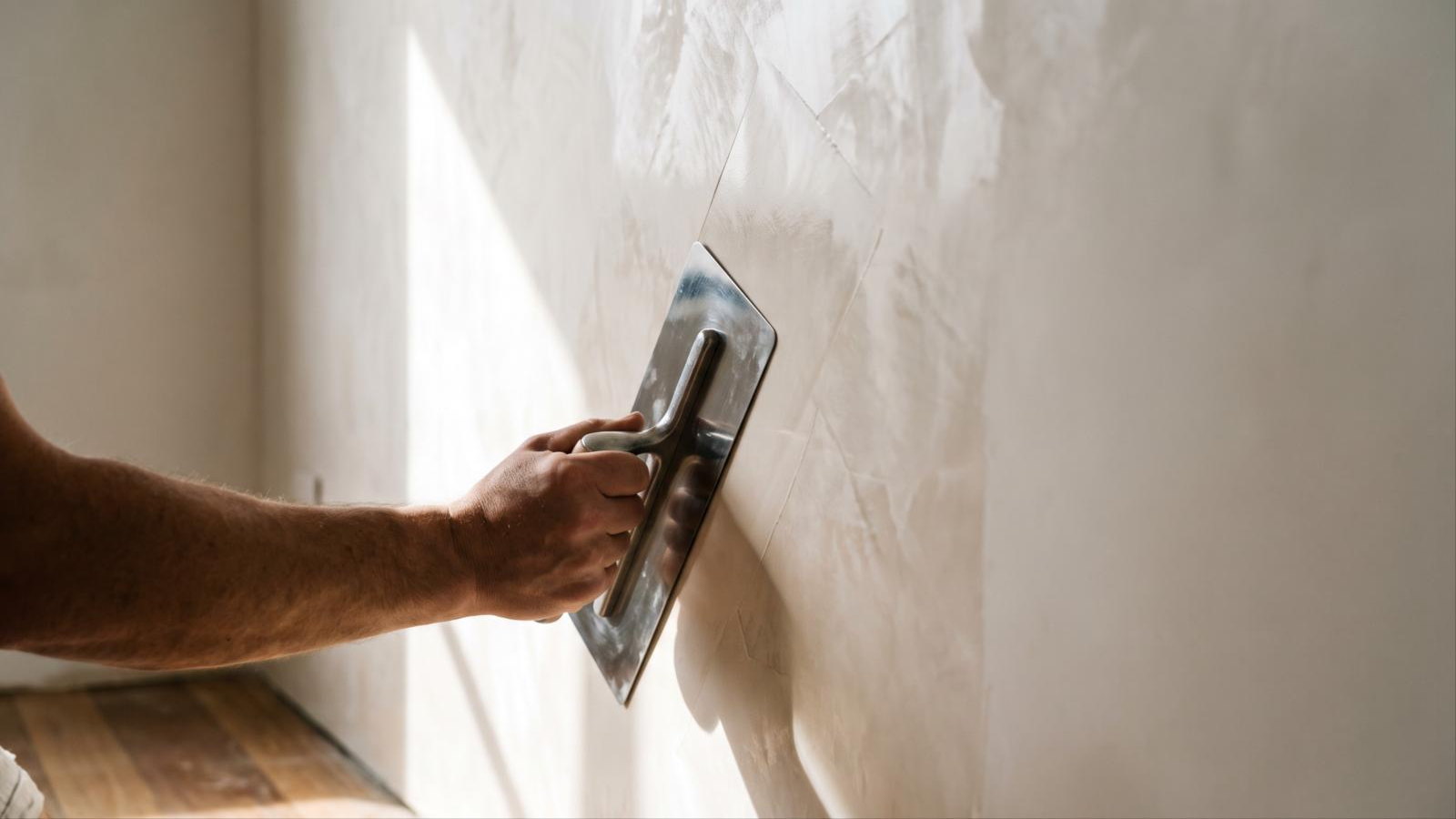
The wall decides the finish
A polished finish shows every flaw under it. Preparation is most of the work and most of the quote.
Sample, then commit
Colour, sheen and texture get approved on a board in the actual room light, not from a photograph.
Named material, named system
The product, the number of coats and the protection are written down before anything starts.
Straight about where it suits
Some walls are wrong for it. You will hear that at the quote rather than after the scaffolding goes up.
The material
What polished plaster actually is, and what it is not
Almost everything that makes a decorative finish look expensive happens in coats you never see, on a wall that was made flat before anyone opened a tub.
Traditional Venetian plaster is slaked lime putty ground with marble or stone dust, tinted, and laid on in very thin passes with a steel trowel. The depth people recognise comes from those passes sitting slightly differently to each other, then being compressed and burnished until the surface closes up and starts to reflect light. Modern versions carry acrylic or cement modifiers, which change how hard, how flexible and how forgiving the finish is.
What it is not is paint, and it is not a coating you roll on to hide a bad wall. It is thin, so it follows whatever it is applied over. A shallow dent, a proud joint, old filler or a line of screw heads will all read through the finished surface, because a polished surface throws light across the wall instead of absorbing it.
It is also not the same material as microcement, which is a cement-based system with its own primers, reinforcement and sealers, and its own uses in wet areas and on floors. The two get confused constantly because both are trowelled and both look mineral. They are quoted, prepared and maintained differently.
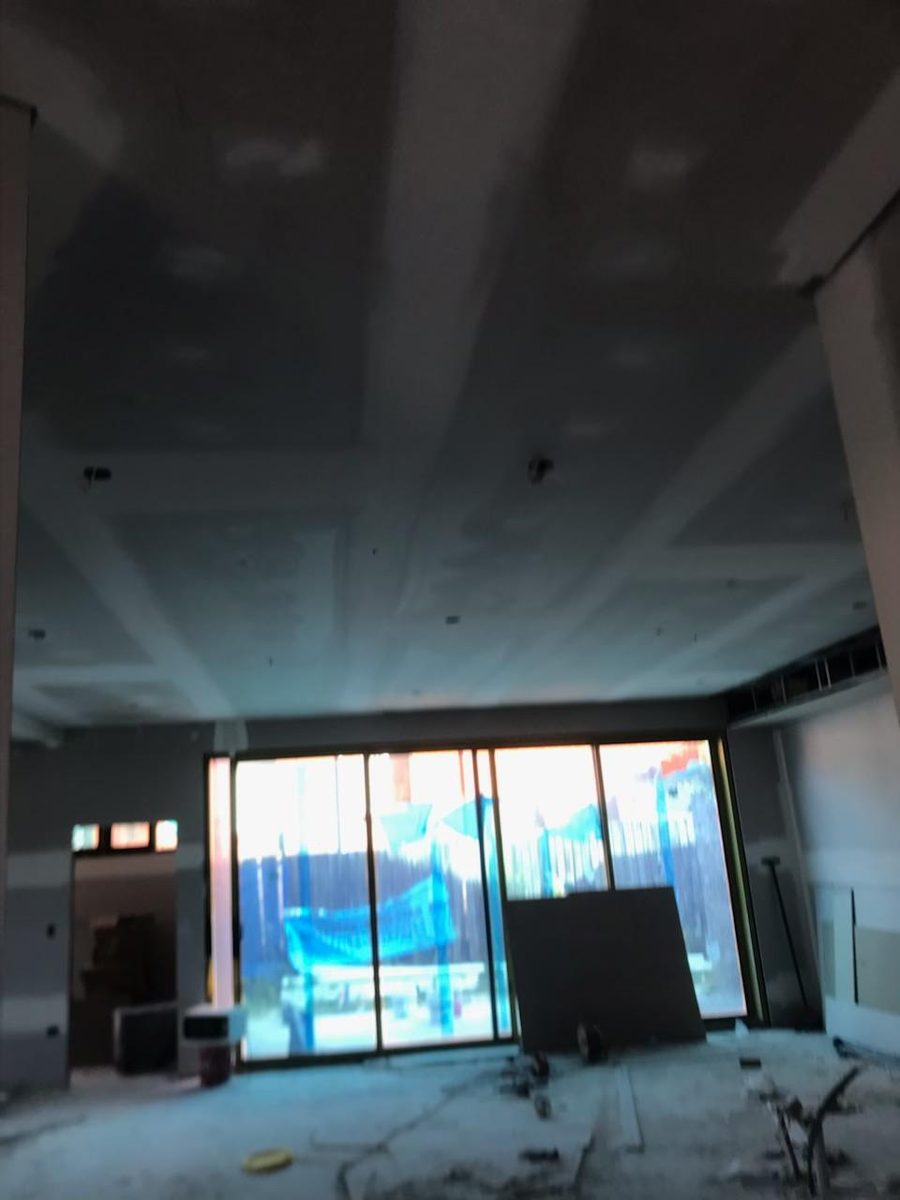
Scope
What this page covers, and what belongs elsewhere
This page owns decorative polished plaster on walls: the material, the preparation under it, the sample process and the finish variants. Related trowelled work has its own page because it is a different material or a different job.
What this covers
- Venetian and polished plaster to interior walls, returns, reveals and feature panels
- Marmorino, travertine, concrete-look and textured lime finishes, which are variants of this work rather than separate services
- Assessment of the existing wall and what it needs before a decorative finish is viable
- Substrate preparation, priming and the base coats that make the surface flat enough to polish
- Sample boards and an in-situ sample for colour, sheen and texture approval
- Sheen selection, burnishing and the wax or sealer that protects the finished surface
- Care instructions and what can and cannot be repaired later
What this is not
- Microcement systems for wet areas and floors, which is microcement
- Bringing a whole wall back to one flat plane as a painted finish, which is skim coating
- Traditional sand and cement or lime render to masonry, which is solid plastering
- Ceiling roses, ornamental mouldings and heritage profile matching, which is ornate and heritage restoration
- Patching holes, cracks and impact damage in an ordinary painted wall, which is wall plastering and repairs
- Waterproofing behind tiles and sheeting to wet areas, which is wet area linings and then a licensed waterproofer
If you are choosing between a polished plaster, a microcement and a painted skim finish, say so when you make contact. They suit different rooms and carry very different preparation, so it is worth settling before anyone quotes a square metre rate.
Finish variants
The finishes people are usually pointing at
These are all applied with a trowel, in coats, over a prepared wall. What separates them is aggregate size, how many passes go on and how hard the surface is worked at the end. Naming the one you want early makes every later conversation shorter.
Venetian, or stucco veneziano
The glossiest of the family. Fine marble dust in thin coats, burnished hard until the surface reflects. Depth and movement come through from the coats underneath. It is also the least forgiving of a wall that is not flat.
Marmorino
Coarser aggregate and fewer passes, so the surface reads as stone rather than glass. It holds a soft sheen where it is compressed and a quieter matte where it is not, which makes it more tolerant across a large area.
Travertine
Worked so the surface keeps open pitting and horizontal drift, in the way cut travertine does. It hides more than a polished finish does, but the texture has to be consistent across the whole wall or the eye picks it immediately.
Concrete look
Flat, cool and mottled, aiming at the surface of formed concrete without the weight. Usually a lime or cement-modified system in two or three coats, and its appeal is the cloudiness, so no two walls are identical.
Textured lime and brushed finishes
Limewash-style finishes laid on in loose passes. Matte, chalky and far more forgiving of an ordinary wall, which makes them sensible where a full polished finish is not worth the preparation.
Wax, soap or sealer
Not a look of its own but a decision that changes the look. Wax deepens colour and lifts sheen. Breathable soap finishes keep it flatter. Sealers are more practical in traffic. Each one changes how the wall is cleaned and re-coated later.
Before anything decorative
What the wall has to be first
Every decorative quote depends on the honest answer to one question: what is on the wall now, and what does it need before a thin trowelled finish can go over it. This is the usual starting point for each kind of surface.
| What is on the wall now | What it usually needs first | What to watch for |
|---|---|---|
| New plasterboard, taped and set | A full flat set, sanded to a high standard, then the primer the finish system calls for | Joint lines and fixing spots that pass under paint but will read under a polished surface |
| Existing painted plasterboard | Wash down, sand back the sheen, make good damage, then skim if the plane is uneven | Loose or flaking old paint, and anything oil based that the primer has to be matched to |
| Cement render or masonry | Check it is sound and dry, fill and level the surface, then prime as the system requires | Rising damp and salt coming through, which will keep coming through the new finish |
| A wall with a history of cracking | Understand why it is moving before anything goes on it | Lime finishes are thin and hard. A moving substrate cracks the finish where the wall cracks |
| A wet area or splash zone | A different conversation entirely, usually a different material | Polished plaster is not a waterproofing layer, whatever it is sealed with |
How the work runs
Sample, prepare, base coats, finish coats, protect
Decorative plaster is a sequence with drying time built into it, and the part that makes or breaks the result is settled before the finish coats begin.
- 01
Look at the wall and the light
The wall gets checked for flatness, soundness, damp and movement, and the room gets looked at for where the light lands. A wall with a window raking down it holds a polished finish to a much higher standard than a wall in soft light.
- 02
Sample and approval
A sample board in the chosen material, colour and sheen, then where it matters an area on the wall itself so you see it in the room. That sample becomes the reference the finished wall is judged against, so it is worth taking the time to be sure.
- 03
Protection and preparation
Floors, joinery, glazing and adjoining surfaces masked and covered. Then the preparation: making good, levelling, skimming where the plane needs it, and the primer the system specifies. This is usually the longest part of the job.
- 04
Base coats
The first coats build the body of the finish and give the later passes something consistent to work into. Each coat has to dry properly, and on a large wall the sequence matters, because a wall is worked as one piece where it can be.
- 05
Finish coats and burnishing
The final passes go on thin and are compressed while the material is at the right stage. Timing here is the skill. Too early or too late and the sheen and the depth are simply different, and the difference shows across the wall.
- 06
Protect, cure and hand over
Wax, soap or sealer as the system requires, then a cure period before the wall is treated as finished. You get the product details and the care instructions, because how it is cleaned from here decides how it ages.
Approval and prep Application and finish
Before the quote
What a decorative plaster quote is built from
A rate per square metre on its own tells you very little, because two walls of the same size can carry completely different amounts of work. These are the things that actually set the number.
The condition of the substrate
The single biggest variable. A new, well set wall needs priming. An old, patched, uneven wall needs levelling and skimming first, and that is a separate body of work before the finish starts.
Which finish and how many coats
A matte lime finish in two passes and a hard-burnished polished finish in four or five are different jobs in labour, material and drying time, on the same wall.
Total area and how it is broken up
One long uninterrupted wall is more efficient than the same area cut into panels, returns and reveals. Edges, stopping points and trims all take time to work neatly.
Colour and depth
Deep, saturated colours and strong movement usually need more passes to build evenly. Pale, quiet finishes take less work to keep consistent.
The sample stage
Sample boards and an on-site trial take material and time, and they are worth doing properly. Ask whether the sample is quoted separately or carried in the price.
Protection and access
Masking around finished joinery, stone, glazing and flooring is slow, careful work. Height, stairwells and platform requirements add to it again.
Where it sits in the build
Decorative finishes go on late, after the mess and before the fittings. If the room is not available in one clean run, the work gets broken into visits, and that costs time.
Protection after the finish
Wax, soap and sealer differ in cost and in how long the wall has to be left alone afterwards. In a busy space that waiting time has to be planned for.
It is a mineral finish, not a waterproof one
No polished plaster, Venetian, Marmorino or lime finish is a waterproofing system, and no wax or sealer turns it into one. Some systems are more water tolerant than others and will take splash in a powder room or behind a vanity, but that is water tolerance, not waterproofing, and it is not a substitute for a membrane installed by a licensed waterproofer.
Inside the shower or anywhere water runs and sits, treat it as a wet-area decision rather than a finish choice. Waterproofing is licensed work and it lives behind the surface, not in it. The sheeting and substrate side of that work sits on wet area linings.
Worth asking
Questions to put to anyone quoting decorative plaster
These separate a considered quote from a number on a page. They are also the questions we would expect to answer ourselves, so ask them of us as readily as of anyone else.
- Which material and system, by name, and is it a lime, an acrylic-modified or a cement-modified product
- How many coats, and is the final sheen achieved by burnishing, by wax or by a sealer
- What preparation is included, and what happens to the price if the wall turns out to need levelling
- Is a sample board included, and can a sample go on the actual wall in the actual light before you commit
- Who signs the sample off, and what is the reference if the finished wall is questioned later
- How is the finish cleaned, and what happens if it is cleaned with the wrong thing
- Can it be repaired locally if it is damaged, and will a repair be visible
- What is excluded: making good, protection, painting of adjoining surfaces, removal of old coatings
Common questions
What people ask about polished plaster
If yours is not here, ask it. We would rather answer it on the phone than have you guess.
Can Venetian plaster go straight over my existing painted walls?
Sometimes, and it depends on the wall rather than the paint. The paint film has to be sound and well stuck, the surface has to be flat enough that a thin finish will not telegraph every defect, and the primer has to suit what is under it. Where all of that is true, the existing wall is washed, sanded, made good and primed, and the finish goes over it.
Where it is not true, the honest answer is that the wall needs work first. Flaking paint, heavy texture, uneven patching or a wall that reads wavy under a raking light all need levelling before any decorative coat. That preparation is usually skim coating and it gets quoted as its own item, because it is the part that decides the result.
How is it different from microcement?
Different material, different system and different uses. Polished plaster is lime or lime-based, thin, and its appeal is depth and light. Microcement is cement-based, applied with reinforcement and sealed as a system, and it is used on floors and in wet areas where a lime finish would not be appropriate.
They also age differently and are repaired differently. If you like the look of both and the room is dry, either may suit. If the surface is a floor, a shower or a bench return, that points to microcement and to a conversation about the specific system rather than the look.
Will it crack?
A hard mineral finish is only as stable as what it is applied to. If the wall behind it moves, the finish will show it, because it is a few millimetres thick and it cannot bridge movement. That is why the assessment before the job matters more than the trowel work.
Fine surface crazing in a lime finish is a different thing, and in some finishes it is character rather than fault. What is worth sorting out beforehand is structural movement, damp and a substrate with a history of cracking, because none of those are fixed by what goes on top.
Can a damaged area be patched, or does the whole wall have to be redone?
Small chips and knocks can usually be made good by an applicator who has the same material and can work it into the surrounding surface. How invisible that repair is depends on the finish. A textured or matte finish takes a local repair well. A high-polish wall with movement in it is much harder to match, because you are matching a sequence of passes, not a colour.
It is worth keeping the product details and any leftover material at handover for exactly that reason, and worth asking at the quote how repairs would be handled. On a large, heavily worked wall the honest answer is sometimes that a section is reworked corner to corner rather than spot repaired.
How do I clean it, and does it need anything doing to it over time?
A soft dry cloth for dust, and a barely damp cloth with a pH neutral cleaner for marks. No abrasive pads, no scouring cream, no bleach and nothing acidic. Lime is alkaline and a mineral surface will etch or dull if it is cleaned with the wrong product, and that damage is in the surface rather than on it.
Waxed finishes can be buffed, and in a busy area they can be re-waxed after some years to bring back the depth. Sealed finishes generally just need sensible cleaning. Whichever it is, ask for it in writing at handover so whoever cleans the space is not guessing.
Can it be used in a bathroom?
On dry walls in a bathroom, on a vanity wall away from direct water, and in a powder room, it is used often and it suits those spaces. The question is always which system, because water tolerance varies a great deal between products and the specification has to match the exposure.
Inside the shower, or anywhere water runs and sits, the decision belongs with the wet-area build rather than with the finish schedule. A membrane goes in behind the surface, installed by a licensed waterproofer, and nothing trowelled on top removes the need for it.
Do you have to see the wall before quoting?
For anything beyond a rough range, yes. A photograph tells us the size and the light. It does not tell us whether the plane is flat, what is under the paint, whether the wall is dry or how the edges are detailed, and those are the things that decide the preparation.
Send photographs and the dimensions to start with, along with the finish and colour direction you have in mind, and say which room it is and what else is happening in it. That is enough for a useful conversation about scope, and about whether a polished finish is the right call for that wall at all.
Talk it through
Tell us the wall, the room and the look you are after
Send photographs, rough dimensions and the finish you have in mind. We will talk through what the wall needs first, which finish suits it and how a sample would work before anything is committed to.