
Skim coating
Where the solid plaster is bonded and sound but the surface is tired, a thin skim brings the wall back without touching the coats underneath.
Skim coating
Plastering Gyprock Ceilings
Masonry interiors
Plaster applied in coats directly to a masonry wall inside the house, with no frame and no sheet behind it. Older Sydney homes are full of it, and it fails in ways plasterboard never does.
Knock on the wall of a brick house built before plasterboard took over and you get a dull thud rather than a hollow drum. That wall is solid plastered: a render coat worked into the brickwork, a float coat to straighten it, and a thin finish coat on top, all of it bonded to the masonry instead of screwed to a frame.
This page covers that work on interior walls only. It sets out what the coats do, why the background matters more than the plaster, how a solid wall fails, and when a patch is sensible against re-rendering the wall corner to corner. External render and facade work are not part of it, and we say so plainly below.
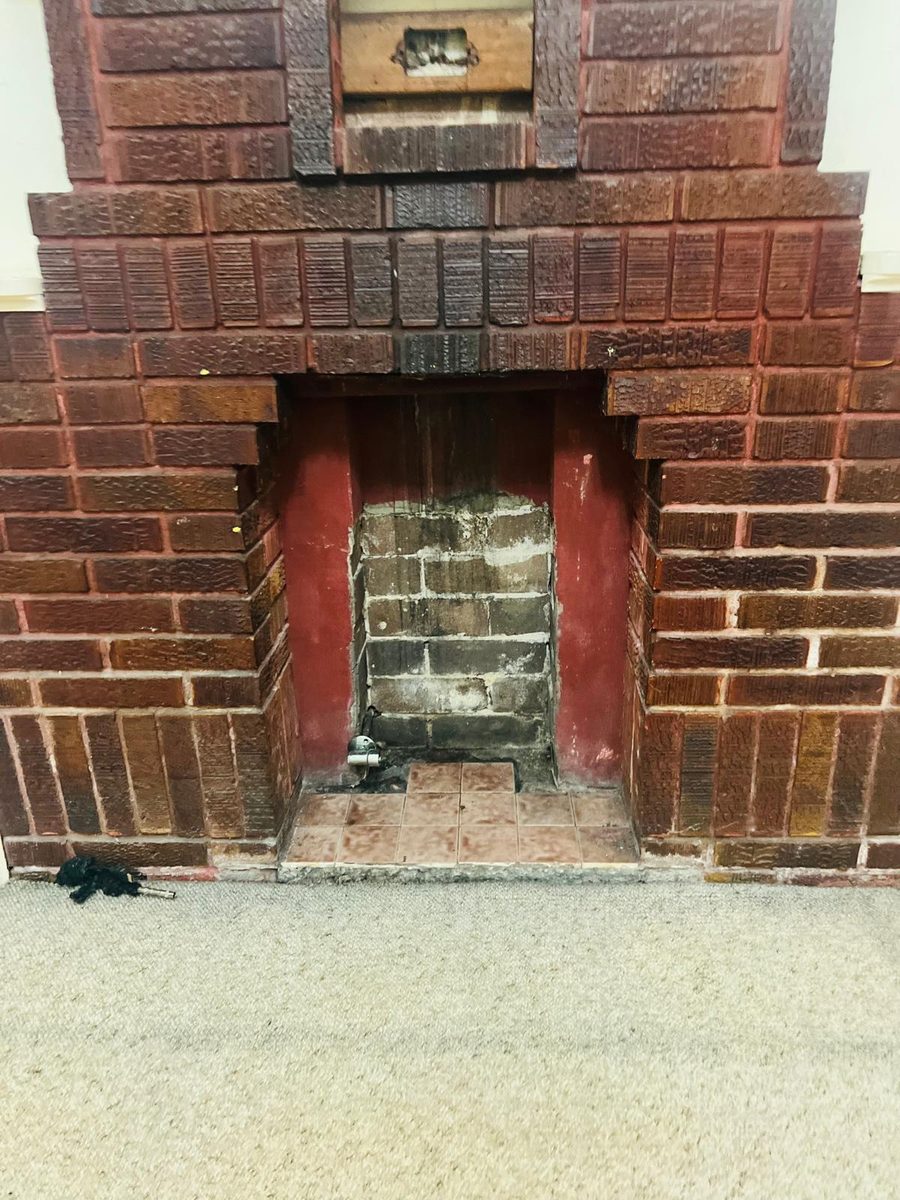
The background decides it
Plaster does what the brick under it allows. Suction and key get checked before any number is given.
Tapped before it is quoted
A solid wall hides its faults. Sounding the whole wall tells you how much is actually loose.
Matched to what is there
A hard modern mix on a soft old wall causes damage. The repair has to suit the original.
Interior work only
This is inside walls. External render and facades are not a line of work we take on.
The background
Solid plastering is not an upgrade or a heritage flourish. For most of the last century it was simply how an internal masonry wall got a finish, and a large part of the housing stock still has it.
Before sheet lining became standard, the inside face of a brick or block wall was plastered in coats by hand. The first was pushed into the raked mortar joints so it locked on mechanically, the second straightened the wall, the third was a thin finish that took the paint. The whole build-up is thicker than most people expect once it is cut into.
That is why a solid wall behaves differently. It is heavy, it is hard, it holds and gives up moisture through its whole depth, and it is only as sound as its grip on the brick. Plasterboard fails at a joint or a fixing. Solid plaster fails by letting go, and the surface can look perfect for years while it does.
It is also why the mix matters. Older walls are lime based and softer. Patch one with a hard cement mix and the new work will not move with the wall around it, so the original plaster at the edges of the repair breaks away instead.
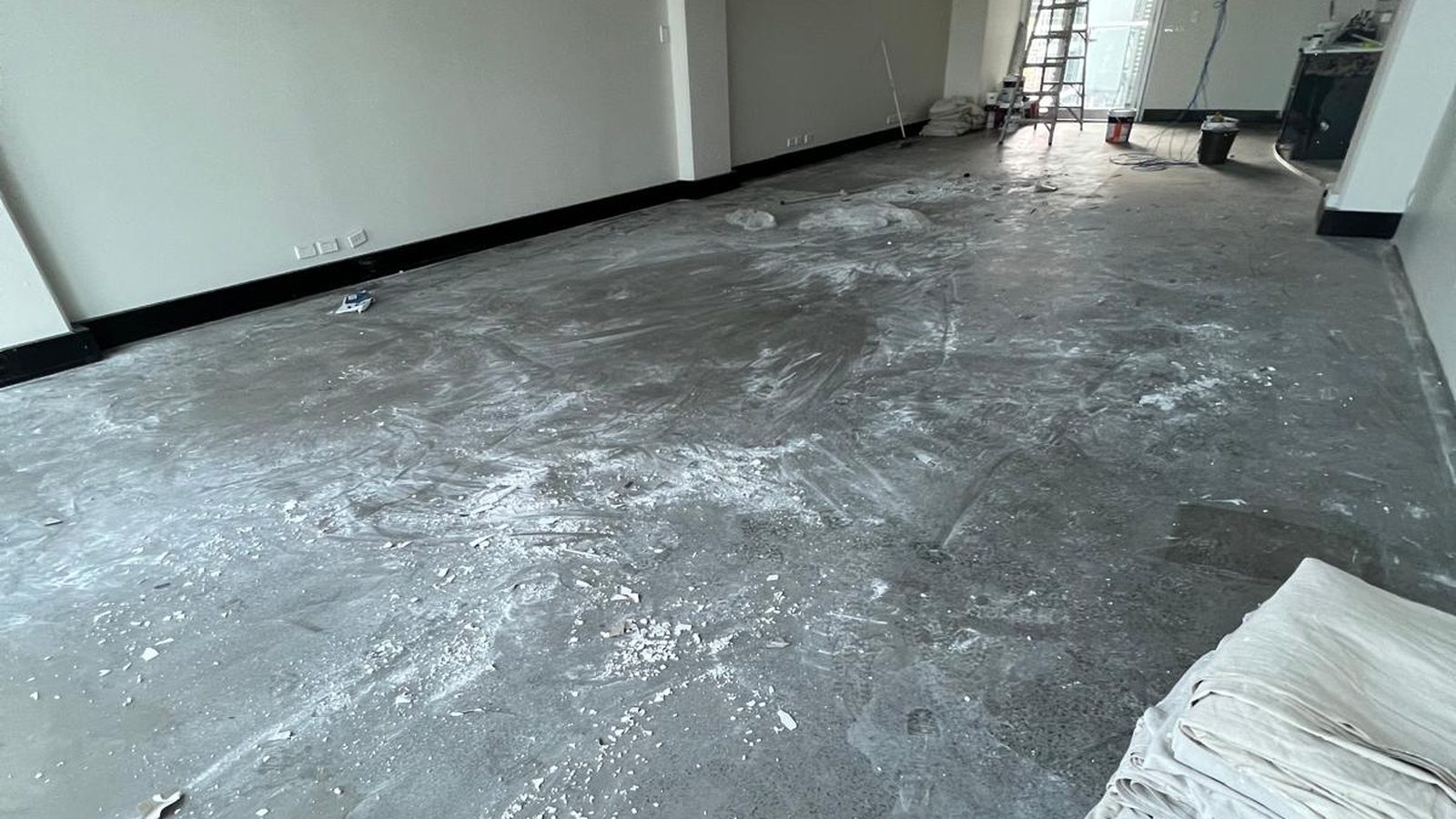
Reading the wall
Tap along the wall with your knuckles and listen. A sound wall answers dead and flat. A failed one answers hollow, and the change from one to the other is usually sharper than the damage looks.
| What you find | What it usually means | What it normally takes |
|---|---|---|
| A hollow note over an area, surface intact | The plaster has lost its bond to the brickwork but has not moved yet | Sound the whole wall, mark the extent, then cut the drummy section out back to plaster that is holding |
| A bulge you can see in raking light | The bond has gone and the plaster is standing off the wall under its own weight | Take it off. Nothing bonds it back, and it will come down in one piece eventually |
| Soft, crumbling plaster low on the wall | Moisture has been moving through the masonry and has broken the plaster down | Find and stop the moisture first. Replastering ahead of that buys you a year at most |
| White powdery bloom, paint lifting in patches | Salts carried out of the brickwork by moisture, crystallising behind the paint | A damp assessment before any plastering. The plaster is the symptom, not the cause |
| Cracking above a door or window head | Movement at the opening, or an old lintel doing something it should not | Understand the movement first. A crack that is still opening will come back through new plaster |
| Fine map cracking across the finish only | The thin set coat has crazed while the base coats behind it are sound | Often the easiest case: prepare the surface and bring it back with a skim rather than a re-render |
The coats
Solid plastering is a sequence, and every coat has one job. Understanding what each is for makes it much easier to follow what a quote is describing.
A rough thrown coat, or a bonding primer, used where the wall is too dense or too smooth for plaster to grip on its own. Smooth concrete, painted brickwork and hard engineering brick all need it.
Pushed hard into the joints and the face so it locks on, then scratched over while green to give the next coat something to hold. This is the coat that decides whether the wall stays up.
The straightening coat. Ruled off to a plane, checked with a straightedge and floated up. Everything you will eventually see in the light is either fixed or created here.
A thin, hard, fine coat trowelled up to the surface you paint. It is only a few millimetres, which means it cannot correct a wall that was not ruled flat underneath it.
How fast the background pulls water out of fresh plaster. Too much and the plaster dries before it sets, going powdery and letting go. Too little and it slides. Controlling it is why walls get dampened down or primed.
A repair mix should be no stronger than the original plaster and the masonry behind it. Harder is not better. Harder is what breaks the wall around the patch instead of the patch itself.
Scope
This page owns plaster worked directly onto interior masonry: the coats, the background preparation, and the repair or replacement of solid plaster that has failed. It is interior work, and the list on the right matters as much as the list on the left.
If you are not sure whether your wall is solid or lined, tap it. A dull, dead note usually means masonry behind the plaster. A hollow, drummy note across the whole wall usually means sheet on a frame, and that is a different page.
Two piles
How the work runs
A solid plaster repair is slow at the start and slow at the end. The middle is quick. Most of the timeline is the wall giving up water it took on during the work.
The whole wall gets tapped, not just the visible damage, and the drummy area marked out. This almost always turns out to be larger than the mark on the paint. Suction and the background get checked at the same time, because they set the method.
Floors and anything staying in the room covered properly, because this work makes rubble rather than dust. The failed plaster is taken off back to plaster that is holding, and the edge is cut square and undercut so the new work has something to lock into.
The exposed masonry is cleaned off, joints raked where they have been filled flush, and the wall dampened or given a bonding coat depending on what it is. Dense, smooth or previously painted backgrounds get a key rather than a hope.
The render coat goes on and is scratched, then the float coat brings the patch up to the plane of the wall around it. On an old wall that plane is rarely flat, so it is ruled to what is actually there rather than to a theoretical straight line.
The finish coat is trowelled up and worked to match the surrounding surface. Where the original has a texture or a slightly soft hand-floated look, that is matched rather than polished to something the rest of the wall is not.
A solid repair carries far more water than a patch in plasterboard. It has to give that up before paint goes on, and painting early traps it, which shows as patchy sheen, flashing or peeling. Your painter will have a view, and it is worth asking them.
Assessment and strip Coats and finish
Before the quote
Square metres are the smallest part of it. These are the things that actually move the number on a masonry wall.
The area of loose plaster after the wall is sounded, not the area of visible damage. The difference between those two is the single biggest surprise on this kind of job.
Old solid plaster can be substantially thicker than a modern render. Building a patch back to that depth means more coats and more drying, which is time rather than material.
Soft old brick with raked joints is ideal. Dense brick, concrete, a previously painted face or a wall already sealed with something all need a key coat first.
Many separate patches in one wall rarely add up to a good result, because they never land in the same plane. At some point re-rendering corner to corner is both better and cheaper.
If damp is still moving through the wall, the work has to wait. Pricing plaster over an active moisture problem is money spent twice.
Bringing a repair into the plane and the texture of a wall that is neither flat nor square takes longer than plastering a new wall that has no history.
Stripping solid plaster produces weight, not just mess. Stairs, upper floors, parking and where the rubble goes all shape the day, particularly in a unit.
The wall cannot be painted straight away, and that waiting time has to sit in the schedule honestly. Jobs that ignore it end up being paid for twice by the painter.
Nearby work
Solid walls rarely arrive on their own. These are the pages the rest of the job tends to sit on.
Where the solid plaster is bonded and sound but the surface is tired, a thin skim brings the wall back without touching the coats underneath.
Skim coatingThe alternative to plastering a masonry wall: line it with board instead, either on battens or fixed direct. Faster, drier, and it changes the wall thickness.
Board liningWhere solid walls, new framing and new ceilings all have to end up in one surface, the whole house is easier to plan as one contract.
RenovationsRe-rendering a wall almost always reaches the cornice line. Matching or reinstating the run is its own piece of work.
CorniceCommon questions
If yours is not here, ask it. We would rather answer it on the phone than have you guess.
No. This page is interior work only: plaster worked onto the inside face of brick, block and stone. External render, facades, parapets, fences and anything on the outside of the building are not a line of work we take on, and we would rather say so in the first phone call.
If your job is a mix of both, get the outside quoted by a renderer who does facades and keep the two separate. They are priced differently and they carry different risks.
Tap it with your knuckles. Plasterboard on a frame drums hollow between the studs and firms up where you hit one. Solid plaster on masonry gives a dull, dead thud almost everywhere, and it is noticeably harder to knock a nail into.
Age is the other clue. A brick house from the first half of the last century usually has solid plastered walls. Anything built or renovated recently is almost certainly sheeted, which belongs on wall plastering and repairs.
Not usually. What comes off is whatever sounds hollow when the wall is tapped, plus a little beyond it so the new work starts on plaster that is genuinely holding. Sound plaster elsewhere on the wall is left alone.
What changes the answer is how many separate hollow areas there are. One or two is a patch. Six scattered across a wall means the bond is failing generally, and patching them one at a time gives you a wall of slightly different planes that will never look right under a side light. At that point it is re-rendered as one surface.
Not directly, and this is a common cause of a repair failing later. Paint seals the face of the brick and fills the joints, so there is nothing for the plaster to grip and nothing to control suction. It can look fine for a while and then let go in a sheet.
It can be dealt with: the paint removed, the face keyed with a spatterdash coat, or a bonding system suited to a low-suction background. All of those are extra work, and any of them is cheaper than doing the wall twice.
Longer than people expect, and longer than a skim over plasterboard. A solid repair is thick and holds a lot of water, and it has to give that up through its face before it is sealed. The wall looks dry well before it is dry.
Painting early traps moisture behind the film, which shows as patchy sheen, flashing, or paint peeling in sheets months later. How long it needs depends on thickness, weather and ventilation, so plan on the painter checking it rather than working to a date set in advance.
Board is usually faster and drier, and on a wall in poor condition it is often the more sensible call. It gives a flat surface without having to fight the wall behind it, and there is no long drying period before painting.
What it costs you is wall thickness, a cavity you cannot fix heavy things into without planning, and the solid feel. In an older house, lining a wall out also pushes the skirting, architraves and cornice line forward, and the joinery has to be dealt with. Both are worth pricing.
We can, but not yet. White crystalline bloom with soft or crumbling plaster around it is salt carried out of the masonry by moisture. The plaster is where you see it. The water is the problem.
That needs a damp assessment, and the cause dealt with, before any plastering is worth paying for. Once the wall is dry the affected plaster comes off, the background is cleaned back and the wall is built up again with a mix suited to what is behind it.
Get the wall looked at
A photograph, the age of the building and what you hear when you tap the wall will get us a long way. If it turns out to be damp, movement or an outside wall, you will hear that instead of a quote.