
Water-damaged ceilings
Reinstatement after the leak is stopped and the space is dry, including what has to be dry before board goes back.
Water damage
Plastering Gyprock Ceilings
Insurance work
Written scopes, photographs taken before anything is disturbed, and quotes itemised line by line, so the plastering part of a claim is easy for everybody to read and price.
A claim moves at the speed of its paperwork. The plastering is usually straightforward; what slows things down is a quote that says one line and a lump sum, photographs taken after the room was tidied up, or a scope that does not say what was measured and what was assumed. All of that is avoidable.
What we can do is describe and price the plaster reinstatement clearly, photograph the damage the way an assessor expects to see it, and get the work booked once it is approved. What we cannot do is tell you whether a claim is covered. That decision sits with your insurer, and nothing on this page is advice about it.
We document, we do not decide
Cover, liability and claim outcomes are your insurer's call. We describe and price the plastering, nothing more.
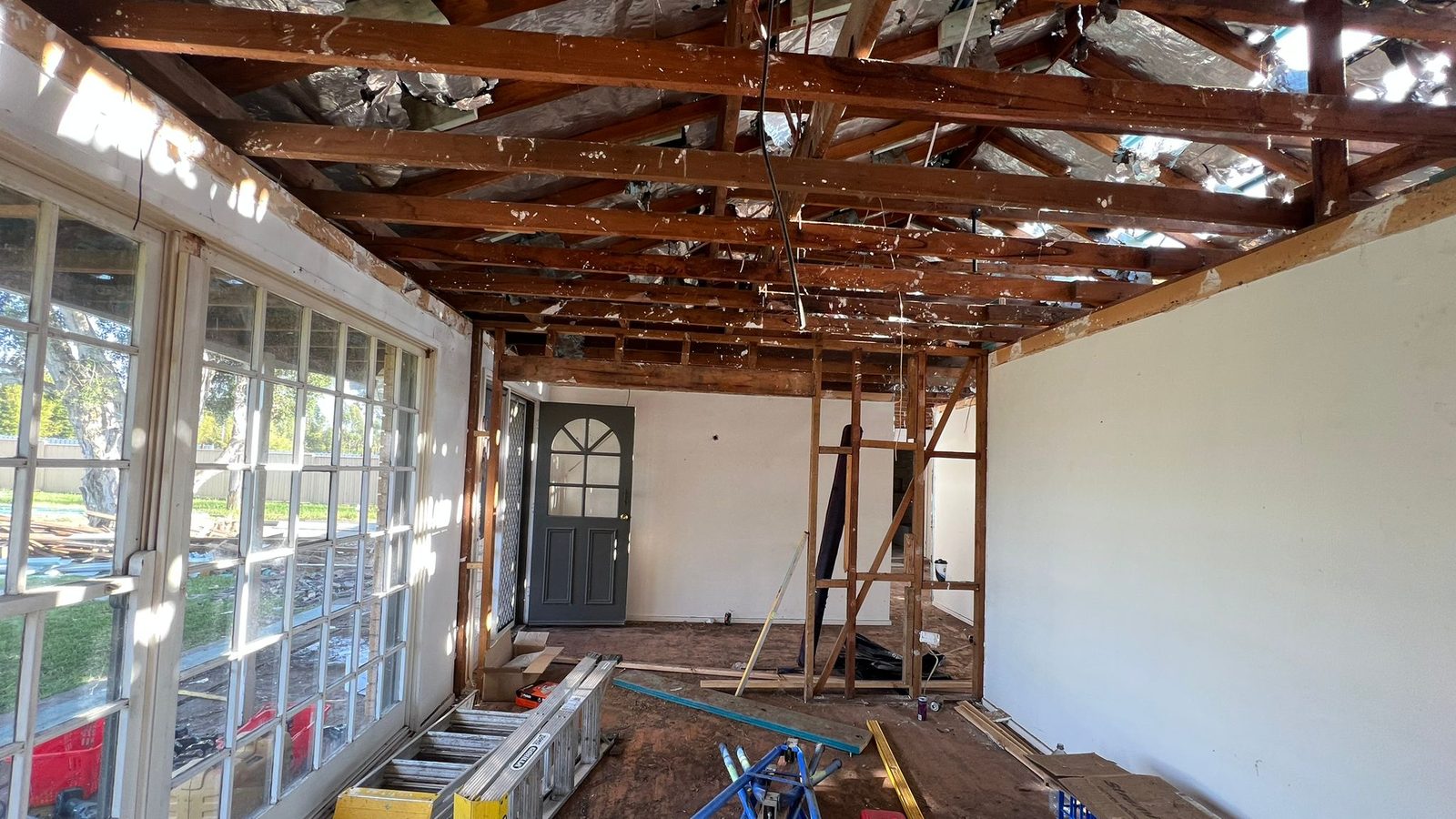
Photographed before it is disturbed
Wide, mid and close, with a tape in frame where size matters. Once a room is cleaned up, that evidence is gone.
Itemised so it can be checked
Room by room, element by element, with quantities. A single lump sum is the hardest thing for an assessor to approve.
Cause reported, not invented
We record what you tell us caused it and what the damage is consistent with. Diagnosis belongs to the trade that owns the cause.
Scope
This page is about the workflow around insurance plastering: the documents, the photographs, the pricing and the scheduling. The repair work itself is described on the pages that own each type of damage.
To be plain about it: we are plasterers who write good documentation, not claims consultants. If your insurer declines something or values it differently, that is a conversation between you and them, and we will not pretend otherwise.
The workflow
Claims fail on sequence more often than on substance. This is the order that keeps a plastering scope reviewable, and the first step is the one people most often skip.
Even if you have not called anyone yet. Photograph each affected room wide, then the damage from a few metres, then close up. Note the date and the weather. If the room has to be cleared to make it usable, take the photographs first, because that condition cannot be recreated later.
A roofer, plumber or waterproofer where water is involved. This is not a plastering step and it is not optional, because a scope written while water is still coming in will have to be written again.
We attend, record what is there, measure each area, check how far the damage runs past what is visible, and note access constraints, occupancy and anything that will affect staging. Where we cannot see behind a surface, that gets written as an assumption rather than a guess.
A written description of the reinstatement, room by room, with quantities and separate lines for strip out, supply, labour, finishing and disposal. Dependencies and exclusions are stated on the document rather than left to be discovered.
That part is out of our hands and the timeframe belongs to them. If an assessor wants clarification, a breakdown split differently, or additional photographs of one area, we will provide it.
Once you confirm approval to proceed, the work is scheduled around access, other trades and drying time. Any variation found on opening up is priced and sent before it is carried out, not after.
Document and price Approved and delivered
Do this first
Most claim photographs are taken close up, in poor light, after the room was straightened. A usable set takes five minutes and saves a fortnight. If you do nothing else on this page, do this.
What is usually asked for
Requirements differ between insurers and between claims, so treat this as the common pattern rather than a checklist for yours. Your insurer or assessor will tell you what they want.
| What is commonly requested | What it means in practice | When it is best done |
|---|---|---|
| Evidence of the damage | A photograph set per room showing location, extent and detail, with dates | Before anything is moved, cleaned or repaired |
| A description of the cause as reported | What you say happened, and what the damage pattern is consistent with, kept separate from each other | At the first attendance |
| A written scope of reinstatement | Room by room, surface by surface: what comes out, what goes back, what finish it is handed over at | Before pricing, because the price follows the scope |
| Measured quantities | Areas in square metres, cornice in linear metres, and a count of separate repair locations | At the measure up, not estimated from photographs |
| An itemised quote | Separate lines for removal, disposal, supply, labour, setting and finishing, so each can be reviewed | With the scope, as one package |
| Dependencies and exclusions | What has to be true before we start, and what is not in our price | On the quote itself, in writing |
| Variation pricing | A priced addendum where opening up reveals more, with photographs of what was found | Before the extra work is carried out |
Inside the document
A quote that reads plaster repairs, one lump sum, gives an assessor nothing to approve. Splitting it out is not bureaucracy, it is what lets somebody who has not stood in the room agree that the price is reasonable.
Typical claims
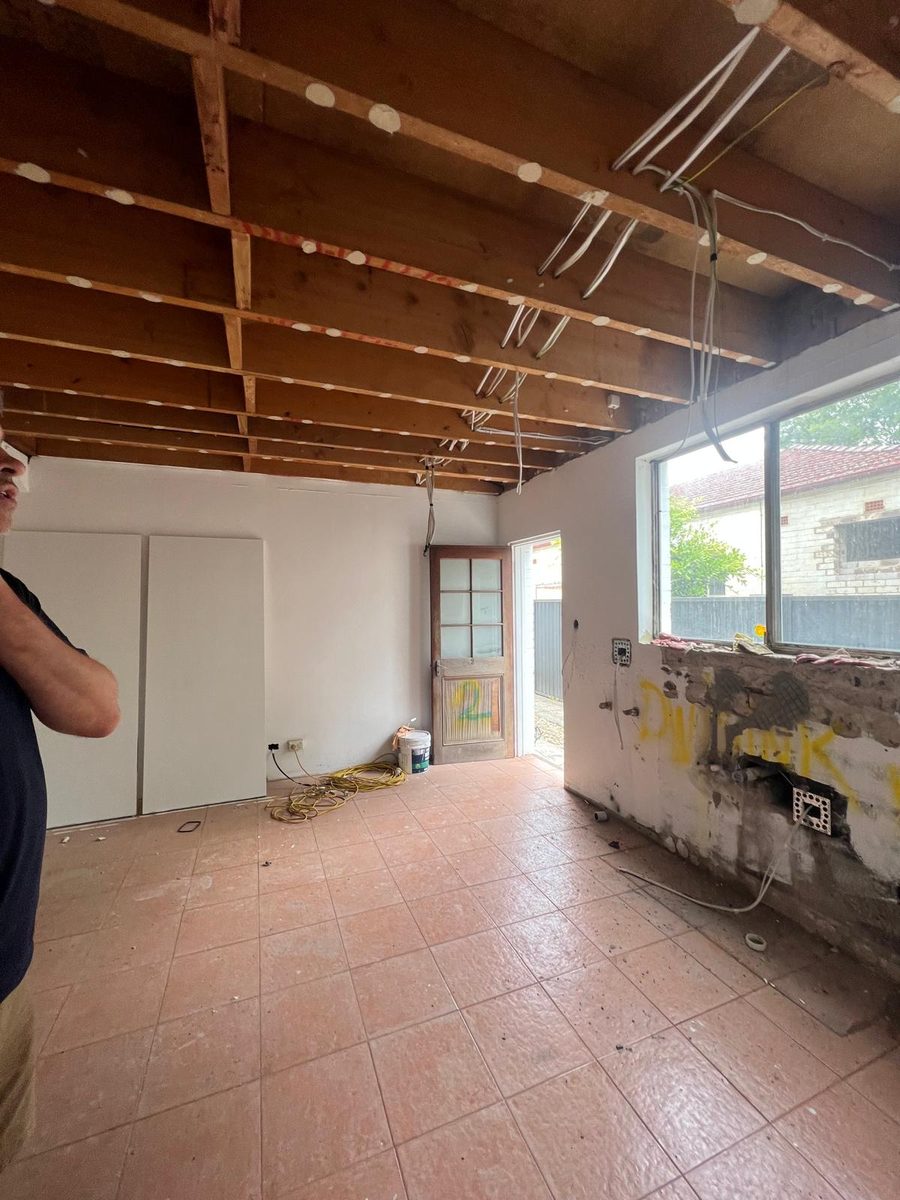
These are the situations where documentation is worth the effort, because each one involves damage that spreads further than it first looks and therefore needs its extent recorded properly.
A stain that grows over a couple of days, board that softens, and a cornice line that wets first. The extent is set by where the board is still firm, which is why it gets pressed and mapped rather than traced around the mark.
Usually fast, high volume and localised, often under a kitchen or a laundry. Walls wick water upward from the floor, so the damage line on a wall is frequently higher than the waterline people photograph.
A bathroom or laundry discharging into the room underneath. The ceiling below and the wall lining in the corner both get recorded, because they are two different repairs in two different rooms.
Something heavy through a wall, a falling object, or damage during a delivery or a move. The repair is often simple; the value is in photographing it before anyone tidies up or props something over it.
The common variation. Board comes off and the area behind it is worse, or the frame needs work. It gets photographed, priced as an addendum and sent for a decision before it is carried out.
Where the person approving, the person paying and the person living there are three different people. The documentation and access side of that sits with strata and property maintenance.
The quote
The plastering is priced the same way it would be for anybody. What a claim adds is documentation, waiting and coordination, and it is honest to say which of those cost money and which just cost time.
Areas, ceiling heights, the number of separate repair locations and how much of each surface has to come out. This is the bulk of the number.
Reinstating sound but marked board is a different order of work from stripping, disposing and re-lining. The assessment decides it, not the size of the stain.
A one-room repair needs a short scope. A multi-room claim with several elements needs measured quantities and a photograph set per room, and that is time on site and at a desk.
Drying, a roof repair, an electrician, a waterproofer. Each one adds a date we have to work around, which shows up in the timeline rather than the price.
An occupied home with damage in a hallway needs more protection and more careful debris handling than an empty room does.
Unit blocks with booked work hours, lift bookings and no skip frontage change how a strip out is staged. So does a property nobody can let us into on weekdays.
Priced separately and sent before they are done. The alternative, quietly absorbing them or arguing later, is worse for everyone.
Reinstating a plain painted ceiling is straightforward. Matching a decorative cornice profile or an existing texture takes more time and has to be scoped honestly.
The repair itself
This page is the paperwork and the process. The repair methods live on the pages that own each kind of damage, and a claim usually points at one of these four.
Reinstatement after the leak is stopped and the space is dry, including what has to be dry before board goes back.
Water damageThe assessment that decides between refixing a sound sheet and replacing board that has lost its strength.
Sagging ceilingsImpact damage, holes, failed joins and water-damaged wall lining in existing walls.
Wall repairsFull strip out and re-lining, for when the damage covers enough of the plane that patching it is the more expensive answer.
ReplacementQuestions
Some of these we can answer properly and some of them belong to your insurer. We have tried to be clear about which is which.
We cannot tell you, and anyone in a trade who says they can is guessing. Cover depends on your policy, the cause, and how your insurer assesses it, and none of that is a plastering question.
What we can do is make sure the plastering side is described accurately and priced in a way that can be reviewed, so a decision is being made on good information. Ask your insurer or claim manager the cover question directly, and ask them in writing.
We deal with the plastering. That means providing the scope, the photographs and the itemised quote, answering an assessor's questions about our scope, and repricing if they want it broken down differently. If an assessor wants to meet us on site we will attend.
What we do not do is negotiate on your behalf, argue a valuation, or represent you in a dispute. If a claim becomes contested, that needs someone whose job that is. We stay on the side of describing the work honestly, which is more useful to you anyway.
Stopping the cause should not wait. A leak left running makes the damage worse and the scope larger. Beyond that, whether to proceed before approval is a decision about your own money and your insurer's requirements, so it is a question for them rather than for us.
What we would say is: document before you repair. Once a ceiling is cut out and re-sheeted, the only evidence of what was there is the photographs somebody took first. If urgency forces your hand, photograph thoroughly, keep the removed material if it is safe to, and keep every invoice.
Because someone who has not seen the room has to agree it is reasonable. A single line with a total gives them nothing to check, so the usual result is a request for a breakdown, which costs a week. Providing it up front removes that round trip.
Itemising also protects you. When removal, supply, labour, setting and disposal are on separate lines with quantities beside them, it is obvious what is included. If a scope later changes, the difference is visible rather than buried in a new total.
That is common enough that we treat it as part of the process rather than a surprise. Work stops at that point, what has been found is photographed, and a priced variation is sent for a decision before anything further is done.
It is also why a good scope states its assumptions. If we could not see behind a surface, the quote says so and says what we assumed. That way an addendum is an expected step rather than an argument about whether it should have been foreseen.
We can describe what we observed and note what the damage is consistent with, which is often what is actually wanted. What we will not do is write a cause report, because a plasterer is not the right trade to determine a roofing, plumbing or waterproofing failure.
Where a cause needs establishing, that is a roofer, a plumber, a waterproofing contractor, a building consultant or an engineer depending on the situation. A scope that is honest about the limits of what it observed carries more weight than one that overreaches.
Yes, and the requirements overlap heavily. Evidence photographs, an itemised scope, clear inclusions and a clean invoice trail are the same needs whether the payer is an insurer, a body corporate or an owner.
The access and coordination side of managed properties has its own page, because resident access, common-area protection and recurring work orders are a different workflow. That is strata and property maintenance plastering, and for commercial tenancy handback the equivalent is make-good plastering.
Start with the photographs
Photographs, the date, and what you have been told caused it. We will write the plaster scope and itemise the quote. The cover question stays with your insurer.