

All services
Every plastering page on this site, grouped so you land on the right one
Thirty-two pages in five groups. This one exists to get you to the right page quickly, whether you know the trade word for what you have or only what it looks like from the floor.
Plastering is one trade with a lot of different jobs inside it. A hairline crack in a bedroom ceiling and a fire-rated wall in an office fitout are both plastering, and almost nothing about how the two are assessed, priced or built is the same. Splitting them across separate pages is the only honest way to explain any of them properly.
So this page does not describe the work. It sorts it. Five groups, matching the menu at the top of the site, and under each group the pages that belong to it with one line saying what that page covers. If you already know what you need, go straight to the index below.
- 32 service pages
- Five groups
- Homes, strata and commercial
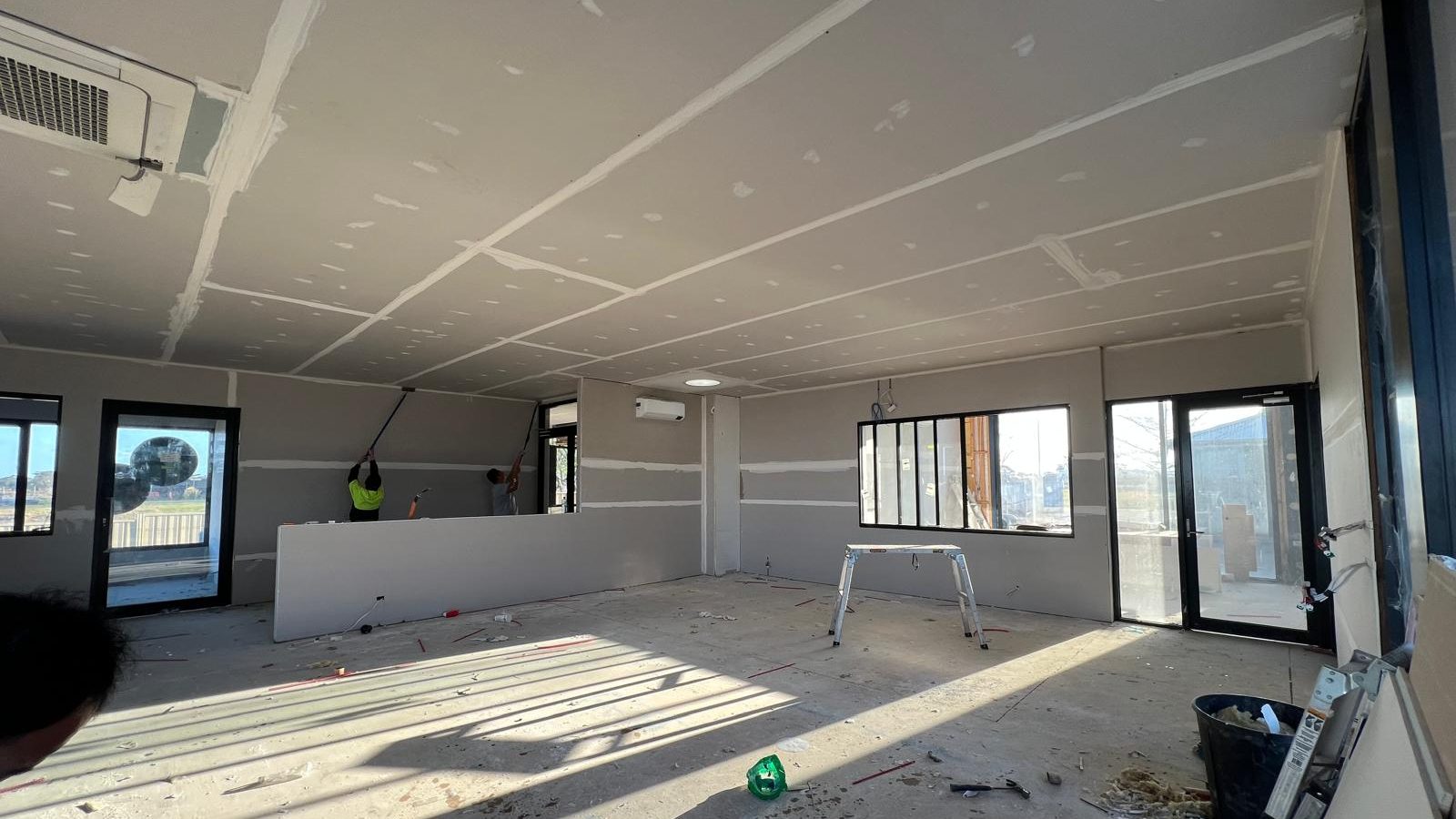
One page, one kind of job
Each page covers work that is scoped, quoted and built its own way, so nothing gets explained twice.
A photo is usually enough to start
Most enquiries can be narrowed to the right page from one picture and a sentence about the room.
Told if you are on the wrong page
If what you describe belongs somewhere else, you hear that before anything gets quoted.
Licensed in NSW
NSW contractor licence 244708C, for residential, strata and commercial plastering.
The five groups
How the work splits, and which group yours sits in
The groups are not marketing categories. They are the real divisions in how a plastering job gets assessed and priced: something broken, something new, the finish on it, a job run to a programme, and work that needs a decision made before a trowel comes out.
Repairs to what is there
Something that was fine is not fine any more. Cracking, screw pops, a ceiling that has dropped, damage after a leak, holes and dents in walls, and claims that need a written scope. Six pages, because a crack and a sagging sheet are nothing like the same assessment.
New lining and ceiling systems
Board going on for the first time: sheeting a frame, a new ceiling, a dropped or grid ceiling, a stud wall, bulkheads, and the systems where a specification decides the build rather than the plasterer. Nine pages, and the last three of them are systems before they are surfaces.
Finishing and junctions
What happens once the board is up and the room has to start looking like a room. Cornice, the two cornice-free ways of closing a wall to ceiling junction, and skim coating for a surface that is structurally fine but no longer flat. Three pages.
Work run to a programme
Jobs defined by a drawing set, a lease or a build schedule rather than by one damaged room. Commercial buildings, office fitouts, end of lease make-good, strata maintenance, renovations and new homes. Six pages, and the paperwork on them matters as much as the plaster.
Specialist and decided-first work
Work where the decision comes before the trowel. Polished plaster, ornate and heritage detail, textured ceilings that have to be tested before anything is disturbed, access panels, curved board, solid plaster, microcement and fitouts in trading shops. Eight pages.
When you cannot name it
Plenty of people ring without the trade word for what they are looking at, and that is completely normal. The table further down starts from what you can see in the room instead, and points at the page that covers it.
The full index
All thirty-two pages, group by group
One line each. Enough to tell whether it is your job, not enough to save you reading the page.
Repairs
- Ceiling repairsCracks along joints, screw pops, failed old patches and trade access cuts.
- Sagging ceilingsA ceiling that has dropped or bulged, assessed before anyone refixes it.
- Water-damaged ceilingsPlaster reinstated after a leak, once the water has stopped and the space is dry.
- Wall plastering and repairsHoles, dents, cracked corners and lifted joins, cut back and set flat again.
- Ceiling replacementWhat the job involves when the board has stopped doing its job and has to come out.
- Insurance plaster repairsHow a plastering scope, photographs and an itemised quote are put together for a claim.
Installation and systems
- Gyprock and plasterboardSheeting walls and ceilings from bare frame, taped and set to an agreed level.
- Ceiling installationWhat decides a new plasterboard ceiling: battens, setting out and one flat plane.
- Suspended ceilingsA ceiling framed and hung below the structure so services disappear behind it.
- Grid and tile ceilingsExposed grid with lay-in tiles, for spaces somebody has to get above regularly.
- Partition walls and framingNon-load-bearing stud walls set out, framed square and lined both sides.
- Bulkheads and pelmetsBoxing over ducts and pipe runs, kitchen bulkheads, pelmets and lighting recesses.
- Acoustic walls and ceilingsLining systems that cut sound between rooms: mass, a broken path and sealed edges.
- Fire-rated walls and ceilingsWhy a rated wall is a whole tested assembly rather than one special sheet.
- Wet area liningsBathroom and laundry substrate, flat and ready for the waterproofer and tiler.
Finishing and detail
Commercial and project work
- Commercial plasteringCeilings, partitions and linings priced off the drawings and built to a programme.
- Office fitout plasteringThe lining package for a fitout, set out as one job rather than trade by trade.
- Commercial make-goodHanding a tenancy back, scoped against the make-good clause and the condition report.
- Strata and property maintenancePlaster work where one person reports it, another approves it and a third pays.
- Renovation plasteringSeveral rooms at once, staged around other trades and a family still living there.
- New home and builder plasteringA whole house of linings quoted from a plan set, room by room and wet area by wet area.
Specialist finishes
- Venetian and polished plasterLime and stone in thin coats, and why the wall underneath decides the result.
- Ornate and heritage restorationCeiling roses, enrichments and run cornice matched to an original profile.
- Vermiculite and textured ceilingsSprayed and stippled coatings, and why a test result comes before a scraper.
- Ceiling access panelsManholes and hatches set out around the frame above, then trimmed and finished.
- Curved and architectural plasterboardArches, niches, barrel ceilings and radius bulkheads, framed to a drawing first.
- Internal solid plasteringHardwall worked straight onto brick and block, and how it fails differently.
- Microcement finishesA thin sealed cement coating, and the things it is not: thick, flexible or waterproof.
- Retail and hospitality fitoutLinings in a tenancy that cannot close, worked around the access window.
If you cannot name it
Start from what you can see, not from the trade word
Almost nobody rings a plasterer with the right term. Find the row that sounds like your room and start on the page in the last column. If it turns out to be the wrong one, that costs you nothing but the click.
| What you have noticed | What a plasterer would call it | Where to start |
|---|---|---|
| A fine line that follows the same path across the ceiling every year | Joint or cornice-line cracking | Ceiling repairs |
| A ceiling sitting low at one edge, or soft and heavy when you press it | A sheet that has let go of its fixings | Sagging ceilings |
| A stain with a hard edge that appeared or grew after rain | Water damage to the lining | Water-damaged ceilings |
| A wall that sounds hollow when you knock a section of it | Adhesive daubs that have released from the brickwork | Wall plastering and repairs |
| Walls and ceilings patched so often that they read unevenly under a light | A surface that is sound but out of plane | Skim coating |
| A bumpy, sprayed or popcorn ceiling you would like gone | A textured or vermiculite coating | Vermiculite and textured ceilings |
| Every word from the next room coming straight through the wall | Sound passing through a lightweight lining | Acoustic walls and ceilings |
| No way into the roof space, or no hatch to reach a valve or a damper | A missing access panel or manhole | Ceiling access panels |
Next step
What happens once you have picked a page
Every page on this site ends the same way, with a form and a phone number that both land in the same place. What you send with it decides how useful the first answer is.
A photograph and one line about the room gets you a long way. What you can see, roughly how large the area is, and whether anything has changed recently: a leak, a bathroom above, a renovation next door, a wall that came out. Hold a torch flat against the surface so the light rakes across it and the photo will show far more than a straight-on shot.
From that we can usually say what the job is, whether it belongs to a roofer, a plumber or a builder before it belongs to a plasterer, and roughly what the plastering part costs. If it genuinely needs a look in person, we will say so rather than put a number on a guess.
Plenty of jobs span several of these pages, which is normal and does not mean several quotes. A renovation can involve sheeting, a bulkhead, cornice and patching where an old wall came out, and it gets priced and programmed as one job. Pick the page closest to the main part of the work and we will sort the rest out at the quote.
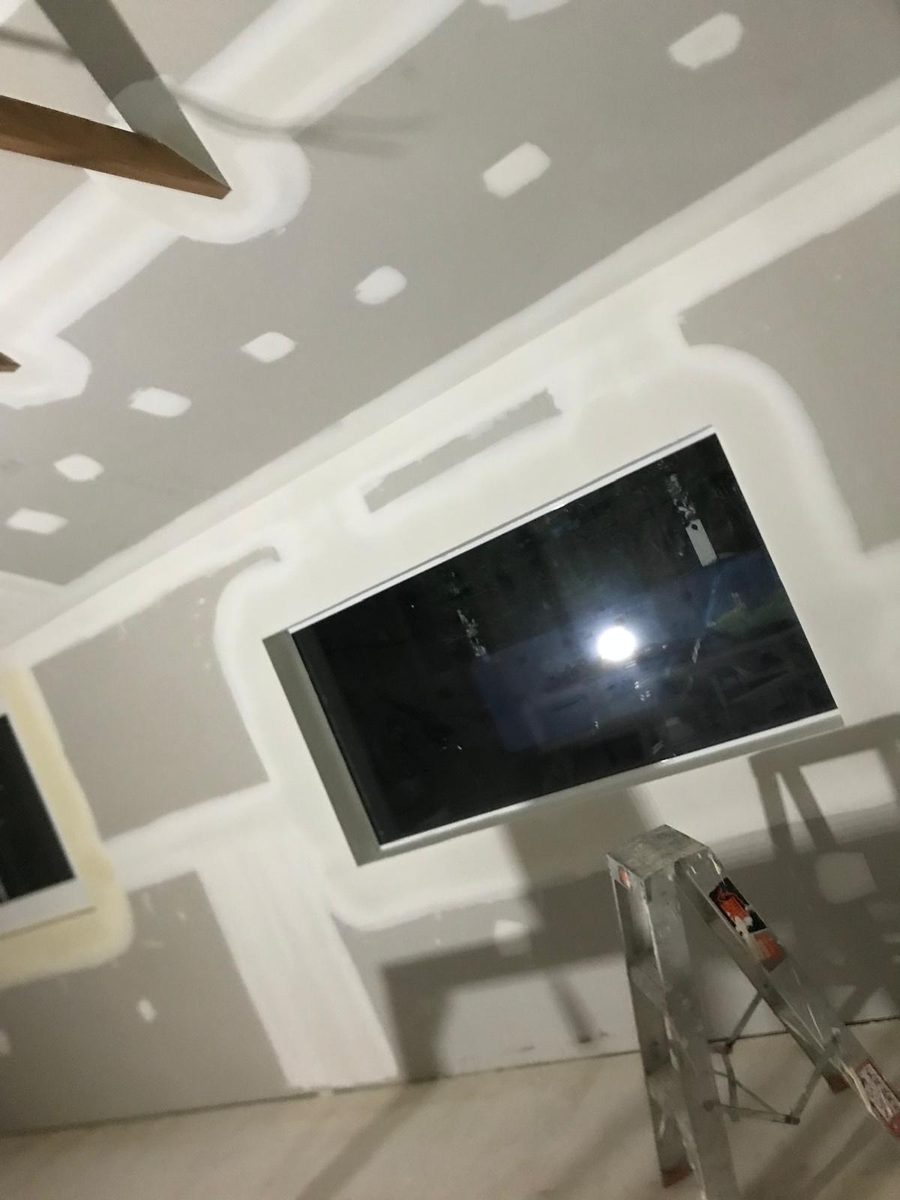
The same job goes by several names
Plastering collects a lot of words for the same thing, and brand names get used as though they were the job. Gyprock and plasterboard mean the same sheet here. Cornice, coving and moulding usually mean the same run around the top of the room. Rendering the outside of a house is a different trade from plastering the inside of it, even though both get called rendering.
If what you have is not on the list under any name, ring rather than guess. Either it is one of these pages wearing a different word, or it is honestly not our work, and hearing that early is more use to you than a quote for the wrong thing.
Ready when you are
Tell us which room, and what it is doing
One photo and a sentence is usually enough for us to tell you which of these pages you are actually on, and what the work is likely to involve.