
Sagging ceilings
A ceiling that has taken water and dropped is both problems at once. The assessment that decides refix or replace lives here.
Sagging ceilings
Plastering Gyprock Ceilings
After a leak
Reinstating a ceiling after a roof leak, a burst pipe, an overflowing bathroom or a storm. The plaster goes back after the water has stopped and the space has actually dried, not before.
Water does two things to a plasterboard ceiling. It swells the gypsum core and softens the paper that gives the sheet its strength, and it leaves a stain that will keep coming back through fresh paint unless it is sealed properly. Which of those you are dealing with decides whether the ceiling needs replacing or just finishing.
The order matters more than the plastering does. A ceiling set and painted over damp framing looks right for a month and then blisters, stains again or drops. So the work here starts with two questions: has the water stopped, and is everything above the ceiling dry.
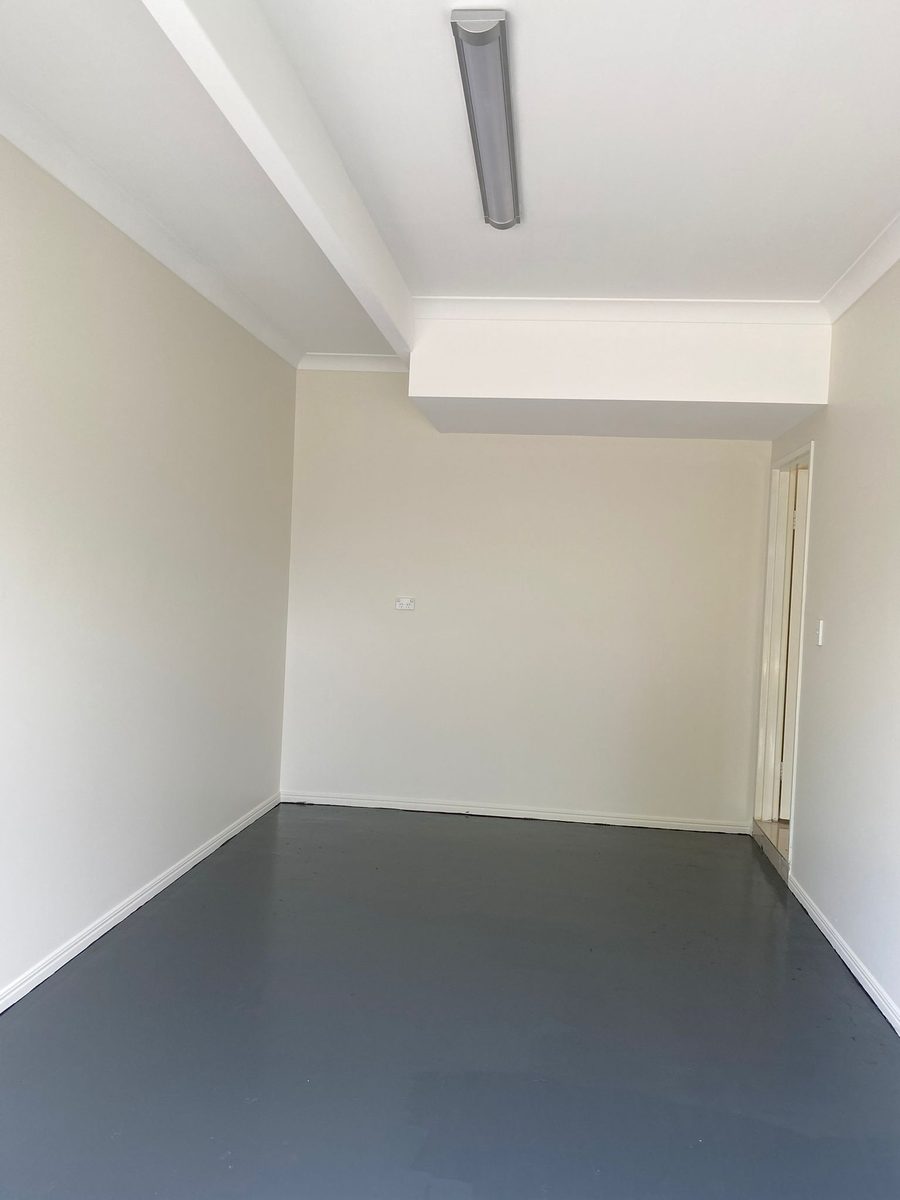
We come in after the water
Stopping the leak is a roofer or a plumber. We reinstate the ceiling once it has stopped and the space is dry.
Dryness gets measured
Damp framing and wet insulation are checked and felt, not assumed. Plaster over damp timber is a repair you pay for twice.
Failed board comes out
Swollen, soft or delaminated sheet is cut back to sound board. Nothing that has lost its strength gets set over.
The stain gets called out
Water staining bleeds through waterborne paint. You are told where a stain-blocking sealer is needed before anything is topcoated.
The order
This is the part that decides whether a water repair holds. None of it is glamorous and most of it is waiting, but a ceiling reinstated in the right order stays reinstated.
A roof leak, a flashing, a blocked box gutter, a failed shower membrane or a burst pipe has to be fixed and then tested. Tested matters: a leak that only shows in driving rain from one direction is easy to declare fixed and easy to be wrong about.
Water sits in the ceiling long after the surface looks dry, and saturated insulation batts hold it against the back of the board like a wet towel. Those come out or the ceiling never dries. Ponded water is drained in a controlled way rather than by poking a hole and hoping.
Airflow, time and, on larger jobs, drying equipment. How long depends on how much water went through, how well the space ventilates and the weather that week. It is days rather than hours, and in a closed roof space in winter it can be considerably longer.
We feel and sound the board, check the framing, and look at the joints and edges rather than the middle of the stain. The boundary of the damage is almost always wider than the boundary of the mark on the paint.
Cut back to sound board on the joist or batten lines, new sheet fixed to the frame, edges supported where the cut has landed between joists, insulation replaced if it was removed.
Joints reinforced and built up in coats, fixings spotted, sanded back and checked under raking light. Where a sound but stained area stays in place, you are told it needs a stain-blocking sealer before paint.
Before plaster Reinstatement
Scope
This page owns the plaster reinstatement: assessing what the water has taken, removing what has failed, putting board and finish back. It does not own finding the leak, and it does not own the claim.
If you are still getting water in, ring us anyway. We would rather tell you what to sort out first, and roughly what the plaster side will involve, than turn up to a ceiling nobody can work on yet.
Timing
Almost every disappointing water repair is a timing problem rather than a workmanship problem. The left column can be booked. The right column will fail if it is plastered now, whoever does the work.
How bad is it
The mark on the paint tells you where water arrived. It does not tell you what the board did about it. These are the conditions we sort a ceiling into, and what each one normally needs.
| Condition of the board | What the water has done | What it normally needs |
|---|---|---|
| Dry, firm, flat, with a brown or grey mark | Water passed over the face without saturating the core | Often no plastering at all. A stain-blocking sealer and paint, which is a painter's job. |
| Dry and firm but with a swollen, raised joint line | Water tracked along the paper tape and lifted it | Cut out the joint, re-tape and re-set in coats. The sheet itself stays. |
| Firm in the middle, crumbling at a cut or corner | The core has taken water at the edge and lost its bond to the paper | Cut back past the soft edge to firm board and piece in, with support at the new edge. |
| Soft, spongy, or dented by a light press | The gypsum core is saturated and has lost its compressive strength | Replacement of that board. It will not carry fixings or hold a finish. |
| Sagging, heavy, or pulled away at the cornice | Weight of held water plus failed fixings through wet paper | Controlled take down, new sheet, and a look at the cause of the sag as well. |
| Paper peeling away from the core in sheets | Prolonged wetting has delaminated the face | Replacement. Setting over delaminated paper puts the finish on something with nothing behind it. |
| Textured or sprayed ceiling with water damage | Unknown coating, disturbed by water | Stop and get the coating identified. See vermiculite and textured ceilings. |
The decision after water
Water does not respect sheet edges, which is why this decision is different from an ordinary repair. Sometimes the cheapest honest answer is to take the whole ceiling out even though only part of it is wrecked.
A patch makes sense when the damage sits inside one sheet or two, the surrounding board is dry and firm, and the ceiling is a flat painted plane that will be repainted afterwards. Cut back to the joists, piece in, reinforce the joins, set in coats, and the repair disappears once the ceiling is coated.
Re-sheeting the room starts to make sense when the wet area covers most of the ceiling, when several separate patches would end up meeting each other, when the board has already been patched from earlier leaks, or when the ceiling is a decorative or raked plane where a patched line would always read. On those, the cost of chasing water damage patch by patch overtakes the cost of doing it once, and that work is ceiling replacement.
There is a third answer people do not expect: sometimes nothing needs plastering. A stain on dry, firm, flat board is a painting problem. We will say that rather than invent work, and you can have your painter seal and coat it. What we will not do is set a skim over a stain and let you find out in six months that water marks come back through paint.
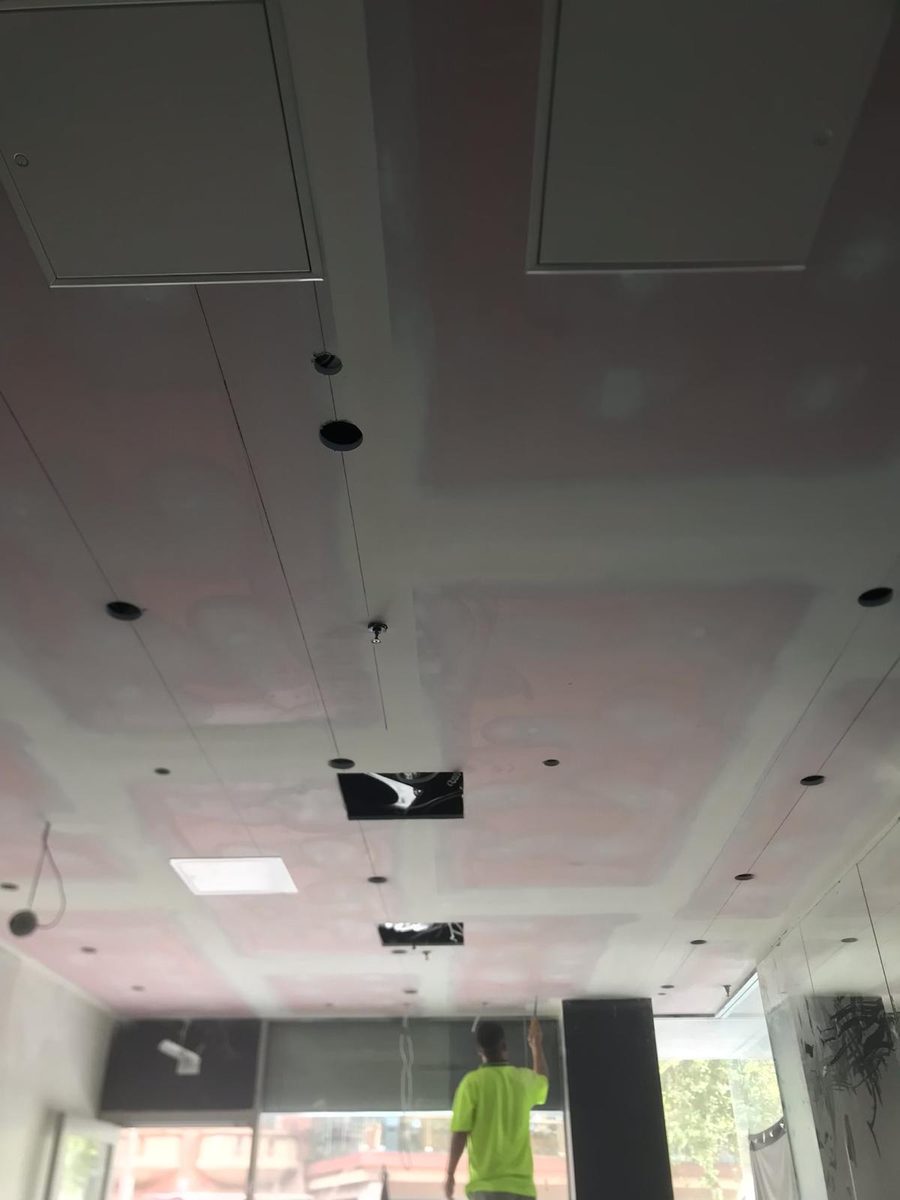
First hours
None of this is plastering, and all of it makes the plastering cheaper. If you are standing under a wet ceiling right now, this is the short list.
The quote
The stain size is the least useful predictor of the price. These are the things we look at before we can put a number on it.
The mark on the paint is the smallest version of the problem. The real extent is set by where the board is still firm, and it is usually wider.
A stain on sound board can be a painting job. Saturated board is a removal, a disposal and a re-sheet, and those are different orders of cost.
Sometimes the only way to check the framing and clear wet insulation is to take a bigger opening than the damage needs. That is work, and it is better than guessing.
Wet batts have to come out and be replaced. Cabling, ducting and downlight housings above the damage all slow the sheeting back down.
Water usually runs to the wall junction, so a cornice run is often wet. Re-setting a plain cove is simple. A decorative profile is a cornice job in its own right.
New board next to old board takes careful building up so the join does not read. More build-up means more visits, because each coat has to dry.
A bathroom ceiling in a unit with lift access and booked work hours is a different day from a bedroom in a freestanding house.
Claim work needs the damage documented before it is touched and an itemised scope written up. That sits on insurance plaster repairs and it changes the timeline more than the price.
Related work
Water rarely stops at one surface, and these three pick up the jobs that come out of the same leak.
A ceiling that has taken water and dropped is both problems at once. The assessment that decides refix or replace lives here.
Sagging ceilingsWhen the wet area covers most of the plane, one strip out and re-sheet costs less than chasing it patch by patch.
ReplacementWater that ran down a wall, swelled the lining or lifted a join at the skirting is wall repair work, not ceiling work.
Wall repairsScope documents, assessor-ready photographs and itemised quotes for a ceiling that is going through a claim.
Insurance workQuestions
Most of these come up in the first phone call, usually while somebody is standing in a hallway with a bucket.
Long enough that the framing and the remaining board read dry, which is days rather than hours, and often a week or more where a lot of water went through or where the roof space does not ventilate well. Winter and a closed cavity are the slow combination.
Nobody can give you a number without seeing it, and any plasterer who quotes you a drying time down the phone is guessing. What we can tell you is that the drying gets checked before board goes back, and that we would rather push a booking out a week than set a ceiling onto damp timber.
No. Roofs, flashings, box gutters, pipes and shower membranes are a roofer's, a plumber's or a waterproofer's work, and getting one of them in first is the most useful thing you can do. We reinstate the ceiling once the water has stopped.
We will tell you what the damage pattern suggests, because a ceiling reads its own history. Water at a ridge, water following a valley, water only in driving rain from the south, or a neat wet ring under a bathroom all point in different directions. That is a starting point for the right trade, not a diagnosis.
Painting is not our trade, so the direct answer is that a stain needs a stain-blocking sealer before any topcoat, and your painter applies it. Waterborne paint straight over a water mark will let the discolouration come back through, sometimes within weeks.
What we will do is tell you clearly which parts of the ceiling are sound and only stained, so you do not pay for plastering you do not need. On a dry, firm, flat ceiling the honest answer is often that there is nothing here for a plasterer at all.
The soft part. A stain is discolouration in the paper and the surface coating. Softness means the gypsum core has taken water and lost strength, and a soft sheet will not hold a fixing or carry a finish no matter how neat the patch looks.
That is why we press a wet ceiling in a grid rather than working to the outline of the mark. It is common for a stain the size of a dinner plate to sit inside a soft area a metre across, and cutting to the stain would leave failed board in the ceiling.
We are plasterers, not a remediation contractor, and we do not treat or remove mould. A small amount of surface growth on board that is coming out anyway leaves with the board. Anything more than that, anything spreading past the wet area, or anything in a bedroom or a place where someone is worried about it should be assessed by a specialist before plastering is booked.
The practical reason is the same as the drying reason. Sealing a cavity up behind new board while it is still damp is how a small problem becomes a hidden one.
Stopping the water should not wait. Documenting should not wait either: photograph the damage before anything is moved or cleaned, and note the date and the weather. Beyond that, what an insurer wants to see and when is between you and them, and we do not advise on cover or claims.
Where we can help is on the plastering side of the paperwork: a written scope of the reinstatement and photographs taken the way an assessor expects them. That work is described on insurance plaster repairs, and nothing there is a statement about whether a claim will be accepted.
On a flat painted ceiling that is being repainted, yes. New board is brought level with the surrounding plane, joins are reinforced and feathered well past the cut, and the whole thing is checked under raking light before we leave.
Two things make matching harder. A ceiling that is not being repainted will show the difference between fresh compound and aged paint no matter how flat the plaster is, so plan on coating the full plane. And a textured or sprayed ceiling is its own problem, where a full skim to a flat finish often looks better than a texture that nearly matches.
Ready when it is dry
Send a photo of the ceiling and the date the water stopped. We will tell you whether it is ready to reinstate, what it needs, and what has to happen first if it is not.