
Ceiling repairs
Cracking along batten and cornice lines, fixings pushing proud and old patches showing as shadows.
Ceiling repairs
Plastering Gyprock Ceilings
Liverpool
One council covers 1960s brick out through Green Valley and Lurnea, established streets near the centre, and volume new builds at Middleton Grange. Those are three different plastering jobs.
Liverpool City covers a long way. The older brick streets of Green Valley, Lurnea and Hinchinbrook went up in the 1960s and 1970s. Casula, Prestons, Cecil Hills and Wattle Grove filled in through the 1980s and 1990s. Middleton Grange and West Hoxton are newer again, and around the centre and Warwick Farm older cottages sit alongside a growing number of units.
That spread matters, because a fifty-year-old ceiling and a five-year-old ceiling fail for different reasons. One has timber battens, seasonal movement and often a textured finish. The other has a hairline along a cornice line where the frame has taken up its load.
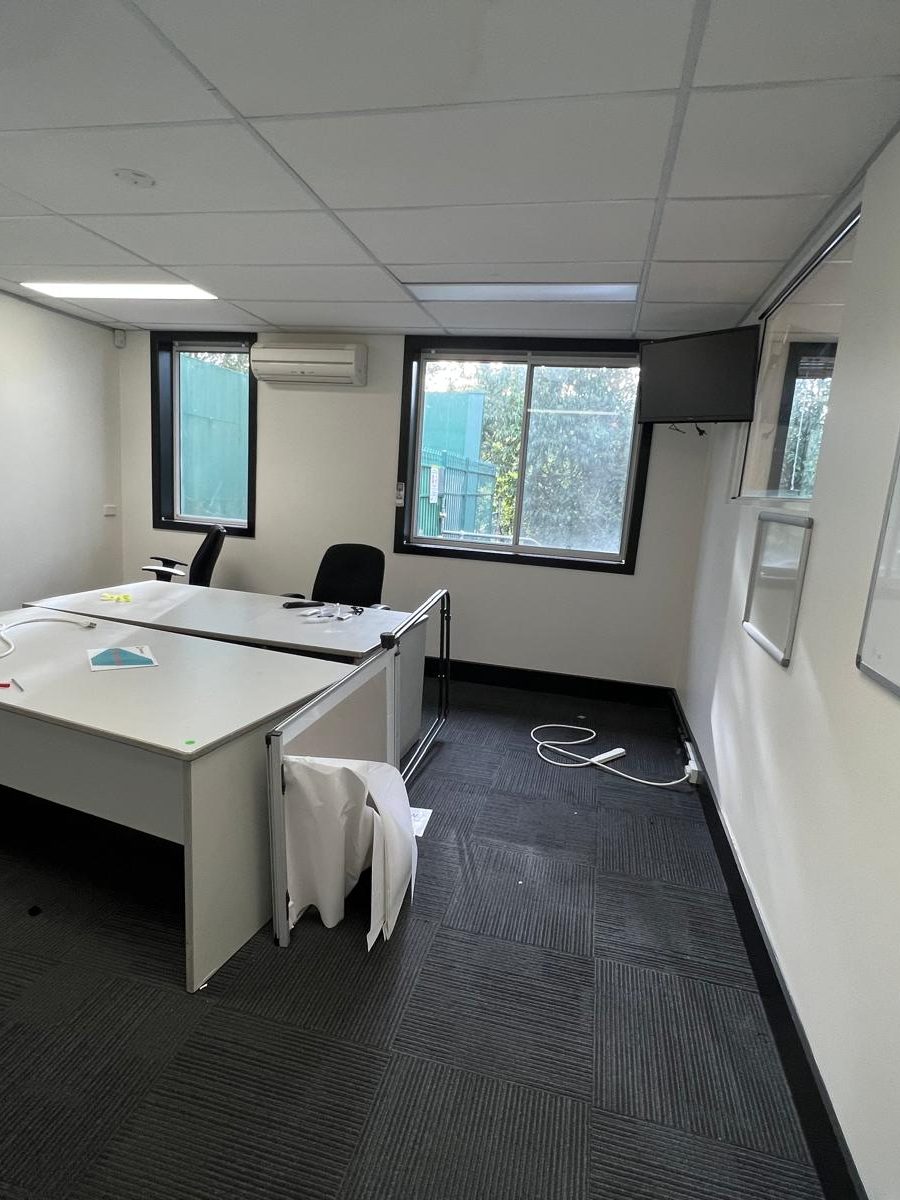
We ask what year it was built
The age of the house tells us what is behind the lining before anyone arrives.
Old stock and new builds both
Patching a 1970s ceiling and setting a new extension are both ordinary work here.
Visits grouped, not spread
Coats need drying time, so return visits are planned rather than improvised.
Licence 244708C
One licensed NSW contractor quotes it, does it, and comes back to check it.
Which house is yours
The repair that suits one of these is the wrong answer for another, which is why the first question is about the age of the place rather than the size of the crack.
Much of Green Valley, Lurnea and Hinchinbrook. Ceilings fixed to timber battens, so the cracking and the loose fixings follow straight lines you can measure off the wall.
Casula, Prestons, Cecil Hills and Wattle Grove. Internal walls are board on timber studs, so wall damage is a hollow break and the patch needs something behind it to fix to.
Middleton Grange and West Hoxton. Tall ceilings, square set in some rooms and cornice in others, and first-year hairlines where the frame has settled.
Around Liverpool and Warwick Farm, older cottages with plaster straight onto masonry, plus apartments with concrete slab soffits and building access rules.
Behind the lining
You cannot see this from the room, and it changes the method more than anything else. A knuckle rap tells you most of it: hollow is board on studs, dead and solid is plaster on masonry.
| What you have | Where it turns up | What it means for the repair |
|---|---|---|
| Plasterboard on timber studs | Brick veneer from the 1980s on, and the newer estates | Cut back to the studs, back-block the join, set in coats. Nothing gets bridged over thin air. |
| Plaster applied to masonry | Older cottages near the centre and Warwick Farm | Drummy render comes off first. That is solid plastering, not a board patch. |
| Sheets on timber battens | 1960s and 1970s brick across Green Valley and Lurnea | Fixings work loose along the batten line, so they get refixed and spotted rather than sanded off. |
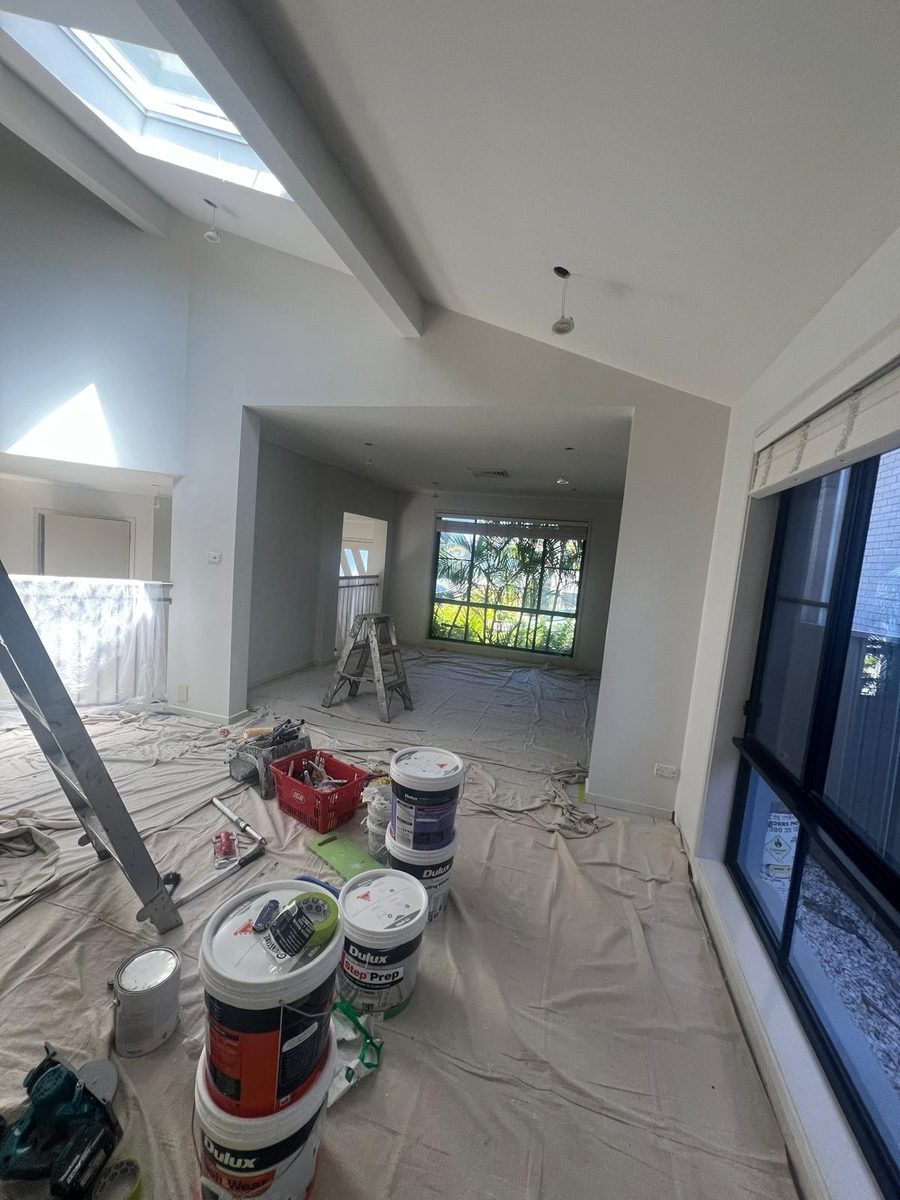
Newer estates
Middleton Grange, West Hoxton and the newer streets of Prestons throw up their own set of calls. The house is not falling apart. It is settling, and the plaster is where you notice it.
In the first couple of years the frame dries out and takes up its load. Hairlines appear along the cornice, at a door head, and where a long ceiling run meets a wall. Those are the frame moving a millimetre, not a failure of the lining.
The pattern is what matters. A fine, straight, stable line following a junction is ordinary work. A crack that steps, widens at one end, shows in the brickwork outside or reopens after a proper repair belongs with your builder first.
Where the builder has long finished, or the house has changed hands, we treat it as ordinary ceiling repair and wall repair work. One local quirk: many of these homes run square set in the living area and cornice elsewhere, so new work matches whichever detail that room has.
How it runs
Warwick Farm out to West Hoxton is a real drive, and a plaster repair is mostly waiting for compound to dry. Those two facts decide how a Liverpool job gets booked.
A photo with the light raking across the surface, a second from further back, and the suburb. That is usually enough to price it.
Walk the house with the camera and send everything you are unhappy with, so we arrive knowing the extent rather than finding a second ceiling on the day.
Floors and furniture covered and the route in protected, then damage cut back to firm edges and sound fixings before anything is built up in coats.
Because of drying time and distance, the later visits are booked when the first one is, at times that suit the house.
Quote and plan On site and finish
Scope
Houses, units, added rooms and small commercial tenancies. The list on the right is not work we avoid. It has its own page because it needs its own assessment first.
If your job belongs on one of those pages, or with another trade entirely, you hear it at the quote.
Before the number
Two jobs that read the same in a message can price very differently.
A run into Casula and a trip out to West Hoxton are not the same day. Small jobs in the same pocket get grouped where we can.
One hallway patch prices differently from cracking along every ceiling joint, and differently again from every room.
Board on studs is predictable. Plaster on masonry, or two linings on one set of fixings, takes longer to make good.
A standard ceiling off a small platform is one job. A two-storey void or a raked ceiling needs staging.
A flat painted wall is easy. Matching a cornice profile, a square set junction or a texture takes longer.
If water is still getting in or the frame is still moving, the surface gets paid for twice. That is settled first.
Where to start
Cracking along batten and cornice lines, fixings pushing proud and old patches showing as shadows.
Ceiling repairsReconfigured layouts, enclosed patios and extensions, where new linings meet old ones.
Renovation workRooms reframed and needing lining from scratch, including added rooms out the back.
Gyprock and boardWhole-home linings from drawings, with the take-off and the finish schedule planned first.
New builds
Asked around Liverpool
If yours is not here, ask it. We would rather answer it on the phone than have you guess.
Usually not. A new frame dries and takes up its load over the first couple of years, and the plaster is where you see it. A fine straight line following the cornice is movement, not a failed lining.
If the build is still inside its defect liability period, raise it with the builder, because it may be theirs to make good. Otherwise we repair it as ordinary work: raked out, reinforced, re-set in coats and sanded flush.
Yes, with one note. A small repair still needs several coats with drying time between them, so it is two or three short visits, and a council this size makes travel a real part of the cost.
So tell us everything you are unhappy with rather than just the worst bit. Getting the hallway, two ceilings and a door head done in the same visits beats calling us back for each.
They can, but it is a different job from patching board. Plaster straight onto brick gets sounded out first, because the layer around the damage is often drummy and has lost its grip even where it looks sound.
Anything loose comes off back to firm material, then it is built back up flush. If large areas are drummy, re-coating that wall beats a series of patches, and that sits on the solid plastering page.
Lining the new room is the straightforward half. Rumpus rooms, enclosed patios, garage conversions and second dwellings are ordinary gyprock and plasterboard work, including any non-structural partition walls.
The join is the part to plan. New board and an older lining sit at slightly different thicknesses and move differently, so sometimes the neat answer is to skim the older surface into the new one.
Not without knowing what the coating is. Older sprayed and textured ceiling coatings can contain material that must be assessed by a competent person before anything is scraped, sanded or disturbed.
Once it has been assessed, the usual routes are covering or re-lining. How that is scoped is on the vermiculite and textured ceiling page.
Whichever that room already has. Volume-built homes across the newer estates often run square set in the main living space and cornice through the bedrooms, and mixing them inside one room is what looks wrong.
Square set is the less forgiving detail, because there is no profile to hide a slight wave in the line. The difference is explained on the square set and shadowline page.
Get it priced
The suburb tells us roughly what era the house is and the photo tells us what the surface is doing. Between them we can usually price it without a site visit.