

Plastering and gyprock specialists
Sydney plasterers for walls and ceilings
Cracks, sagging ceilings and damaged plasterboard repaired properly, then finished flat and ready for paint.
Plaster is the surface everything else gets judged on. We start with what is actually happening behind the crack, the stain or the sag, work out whether it needs patching, re-fixing or re-sheeting, then repair it, set it and sand it flat. You get the wall or ceiling back in one piece, ready for your painter.
- Finished paint readySanded flat so your painter starts on a clean surface
- Greater Sydney wideCBD to Penrith, the Beaches to the Shire
- Assessed before quotedWe look at the cause, not just the surface
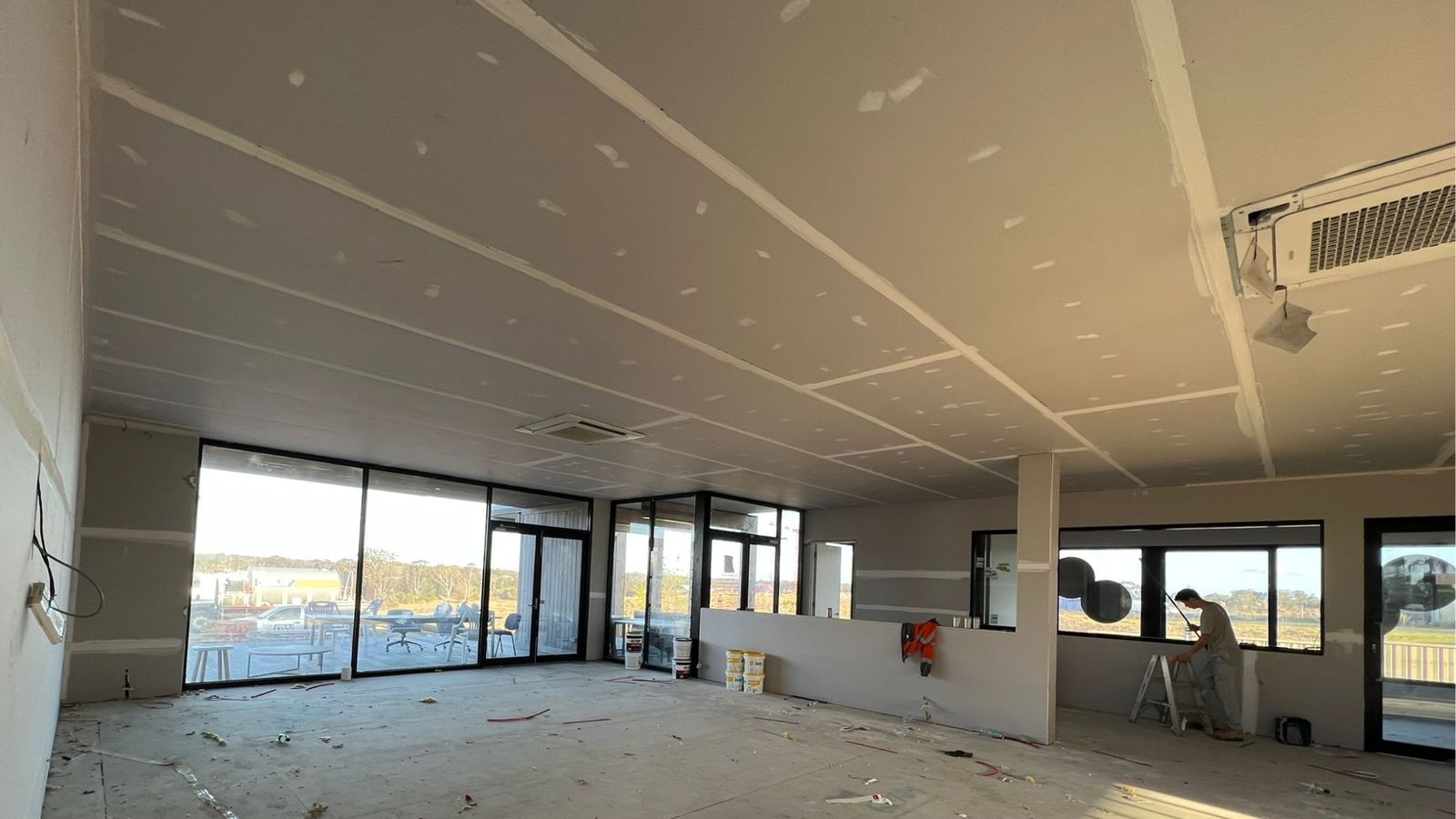
Plastering is the whole job
Not preparation squeezed in between other trades. Walls and ceilings are what we do.
Greater Sydney
From the CBD to Penrith, the Northern Beaches to the Shire.
Homes, strata and commercial
A single ceiling, a whole renovation, or a fit-out worked around trading hours.
Cause before patching
If the damage has a live cause, you hear that before anything gets patched.
Start with what you can see
What is your wall or ceiling actually doing?
Most people ring because something has appeared on a wall or ceiling and they are not sure how serious it is. Here is what each of the common ones usually means, and which job it turns into.
A hairline crack in the ceiling
Usually seasonal movement or a joint that was never reinforced properly. Filler alone will not hold. It needs raking out, taping and re-setting.
Ceiling repairs 02The ceiling is bowing or dropping
The sheet has lost its fixing, or the adhesive daubs have let go. This one is worth acting on quickly, because a sagging sheet can come down.
Sagging ceilings 03A brown ring or stain has appeared
Water has been through it. Until the source is stopped and the failed plaster is out, sealing the stain and setting over it will not hold.
Water-damaged ceilings 04A hole, or damage around a fixing
Doorknobs, removed shelving, old TV brackets and access cuts. Cut back to sound board, patched, reinforced and sanded flush.
Wall repairs 05The wall looks wavy under the light
Years of separate patches at different levels. Another coat will not hide it. A full skim coat brings the whole wall back to one plane.
Skim coating 06New sheeting, a renovation or a fit-out
Walls and ceilings sheeted, joints taped and set, fixings spotted, then sanded flat and handed over paint ready for your painter.
Gyprock and plasterboardWhat we do
Walls and ceilings, repaired and finished properly.
Thirty-two specialist jobs, one trade behind all of them. Repairs, installation, ceiling and wall systems, finishing detail, specialist finishes and whole-project work, from the first look at the damage through to a surface that is flat, sanded and ready for paint.
Plastering & gyprock
Gyprock is what most of Sydney calls plasterboard, and it is the same topic: sheeting, repairing, taping, setting and finishing the surface. We treat it as one deep specialty rather than two departments.
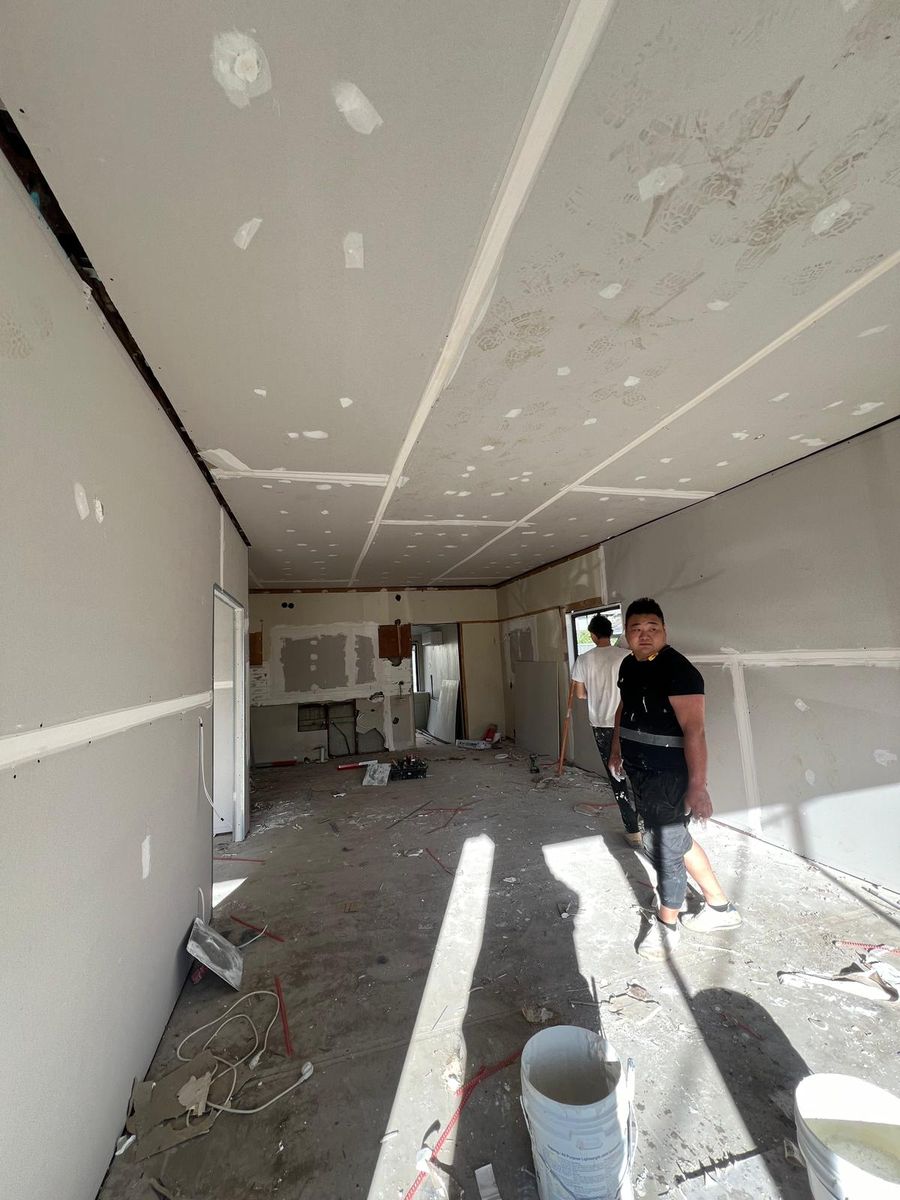
Repairs
- 01 Ceiling repairsCracks, screw pops, failed old patches and access cuts, brought back to one even surface.
- 02 Sagging ceilingsSheets that have dropped away from the battens, and older ceilings whose plaster wads have let go.
- 03 Water-damaged ceilingsFailed plaster removed, stains sealed so they cannot bleed, and the ceiling rebuilt once the water is stopped.
- 04 Wall plastering & repairsCracks, holes, gyprock wall repairs and damaged sections, repaired so the join disappears under the finish.
- 05 Ceiling replacementWhen the board itself has stopped working, the ceiling comes out, goes back, and the cornice is reinstated.
- 06 Insurance plaster repairsReinstatement scopes, assessor-ready photographs and itemised quotes, scheduled once the work is approved.
Installation & systems
Finishing & detail
Commercial & project work
Not sure which one it is
Most people describing a problem on the phone do not know whether it is a patch, a re-sheet or a skim, and they do not need to. Describe what you can see and we will tell you which job it is.
Before you book anyone
Can it be patched, or does it need re-sheeting?
Some damage is a patch. Some is a sheet that has stopped doing its job. And some is a symptom of something that needs a different trade looking at it first. It is worth knowing which one you have, because the wrong fix comes back.
Normal plastering work
- Fine cracks that follow a sheet joint or a cornice line
- Cracking that opens and closes slightly with the seasons
- Holes, dents and damage around old fixings
- Sheets that have dropped away from the ceiling battens
- Surfaces left rough or uneven by a previous repair
- Failed plaster and staining after a leak that has been fixed
- Access cuts left behind by an electrician or a plumber
Get this looked at first
- Wide, stepped or diagonal cracking through brickwork
- Cracks that keep coming back in the same place after repair
- Doors and windows that have started sticking as well
- A stain that is still growing, or still wet to touch
- Anything you suspect is structural movement or subsidence
- Older textured ceilings you plan to disturb, before any work starts
- Rising damp, or salt crystallising out of the wall
We plaster. We are not engineers, builders, plumbers or painters. If what you are describing belongs to one of those, we will say so on the phone rather than quote you for a finish that will not hold.
The decision that changes the quote
Patch, re-fix, re-sheet or skim
Four different jobs get described on the phone in almost the same words. Which one a wall or ceiling actually needs depends on whether the board is still sound, whether it is still fixed, and how flat the surface is across the whole plane rather than at the damage.
- Patch. A hole, a crack or an access cut in board that is otherwise sound and still fixed. Cut back to firm edges, reinforced, set and sanded flush.
- Re-fix. The sheet is sound but has let go of the batten or the adhesive daub. It gets refixed properly, then the fixings are set and spotted so they do not show later.
- Re-sheet. The board itself has failed: soaked, sagging, crumbling, or patched so many times it will never sit flat again. That section comes out and new sheet goes back.
- Skim. The board is fine but the surface is not. A full skim brings years of separate patches at different levels back to one plane.
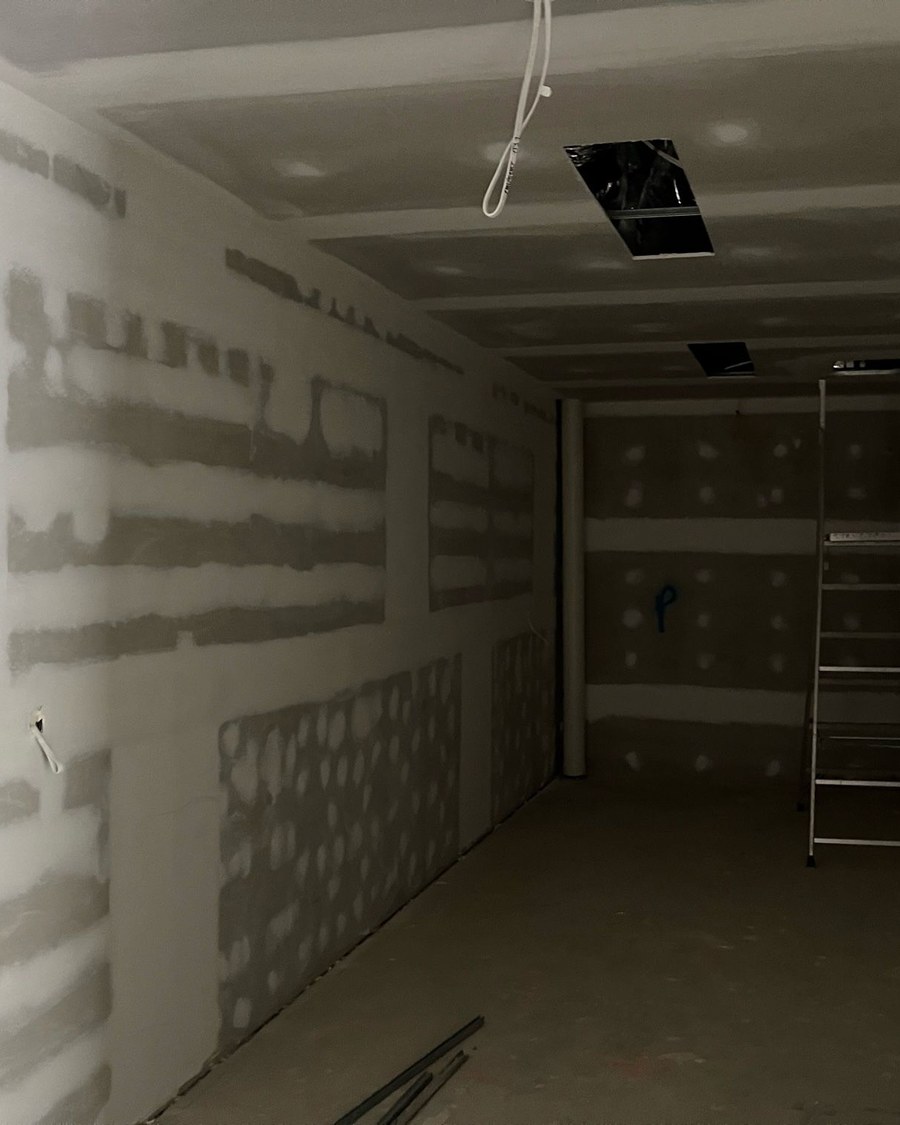
Gyprock & plasterboard
Not every sheet is the same board
Gyprock is what most people in Sydney call plasterboard. Which board belongs on a wall or ceiling depends on the room it is in and what the plans call for, and getting it wrong is expensive to undo once the joints are set.
-
Standard plasterboard
The everyday board for living areas, bedrooms and hallways. Different thicknesses suit different batten and stud spacings, and ceilings are not automatically the same board as the walls below them.
Gyprock and plasterboard -
Moisture-resistant board
Used in bathrooms, laundries and other wet areas. It is not waterproof on its own, it is board designed to cope with the humidity those rooms actually get. A standard sheet put in a shower wall is a repair waiting to happen.
Wall plastering and repairs -
Fire-rated and acoustic systems
Where a plan or a strata specification calls for a fire-rated or acoustic system, the board, the framing, the fixings and the joint treatment are all part of that system. Tell us what the specification says before the sheets are ordered and we will work to it.
Commercial plastering -
How flat is flat enough
A wall in a hallway and a wall washed by a downlight or a window are judged very differently. Raking light finds every joint and every fixing, which is why the last sand matters more than any other step and why a skim is sometimes the honest answer.
Skim coating
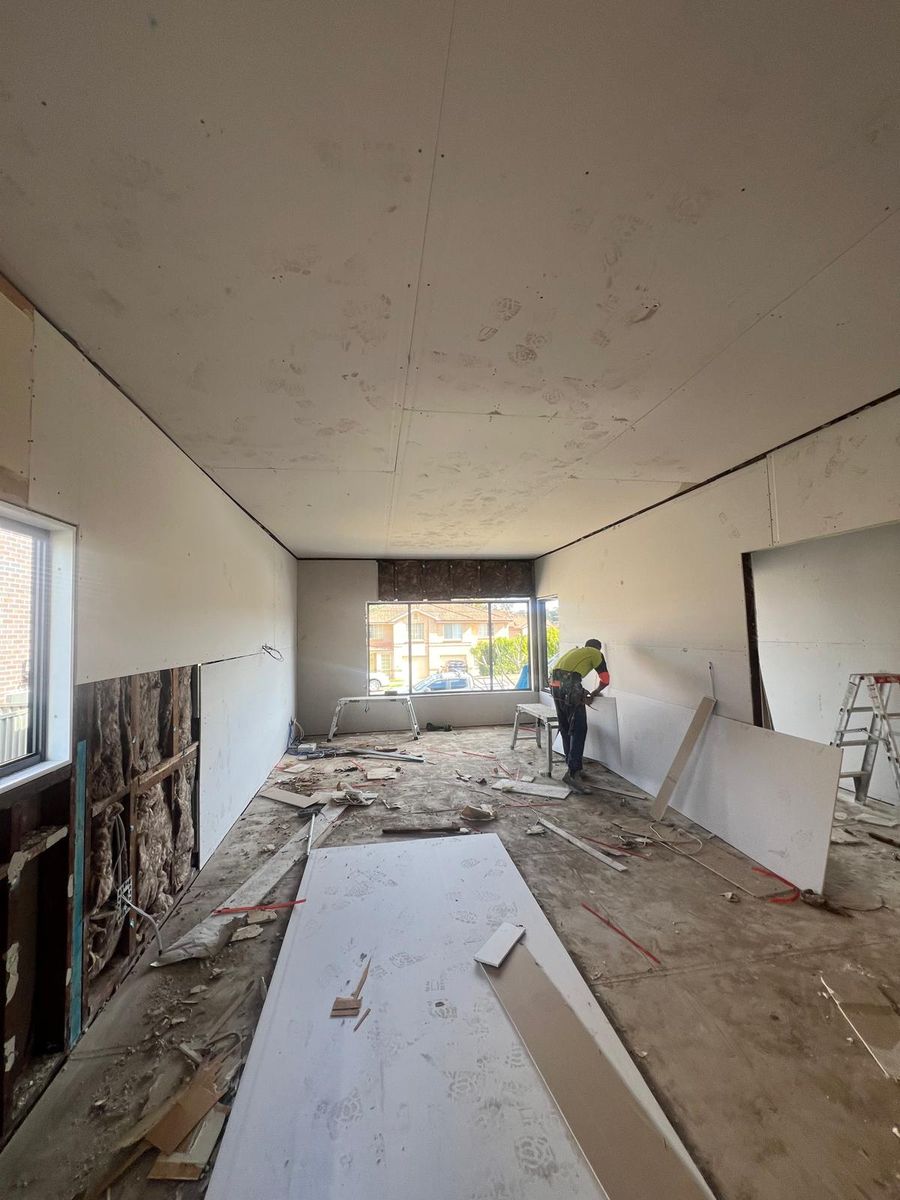
Ask before the sheets are ordered
If a plan or a strata specification calls for a particular system, tell us at quoting stage. Changing the board after the joints are set means taking the wall back off again.
0423 842 125Leaks, burst pipes and overflows
Water-damaged ceilings
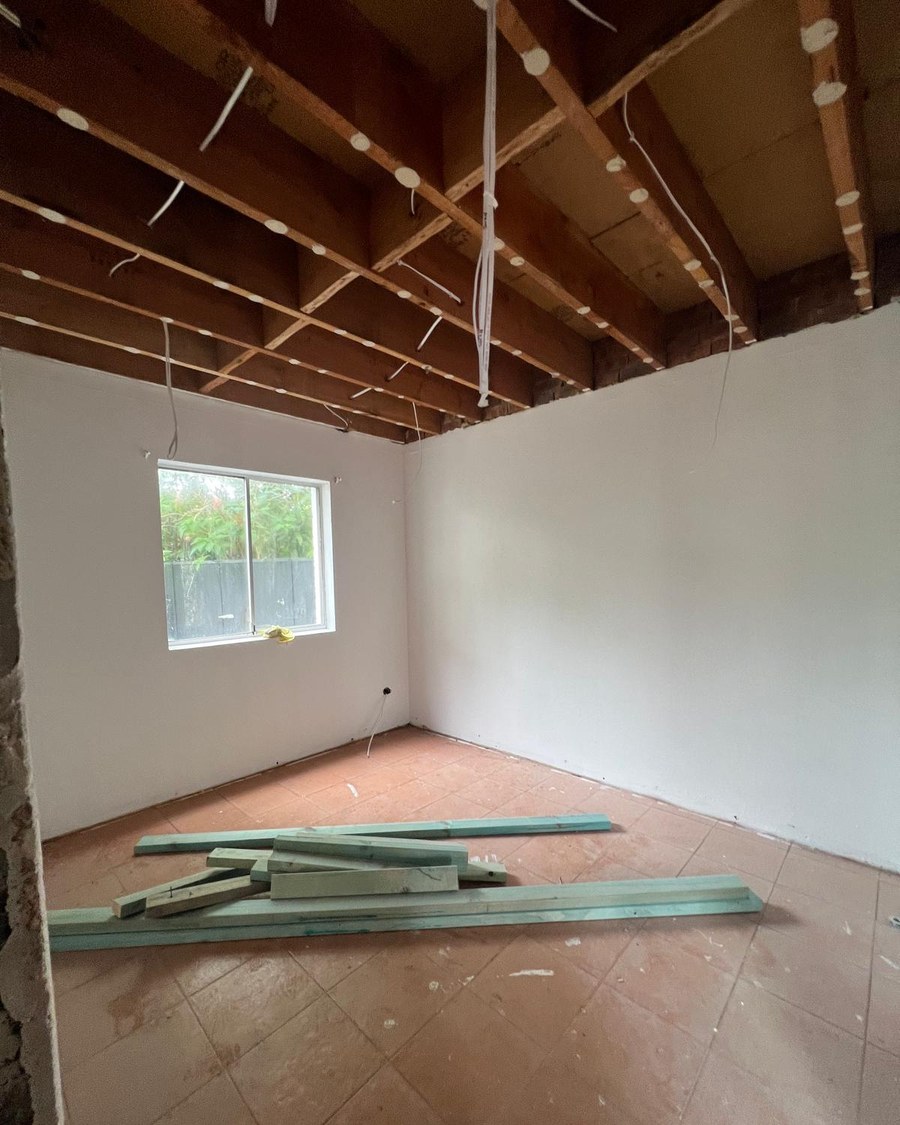
A stained or bulging ceiling after a leak is one of the most common calls we get, and one of the easiest to make worse. Covering it over will not hold. The stain comes back through, and if the plaster has taken on water the sheet can keep sagging.
- Make it safe. If a ceiling is holding water or bulging, stay out of the room and keep it clear until it has been looked at.
- Stop the water. The plumbing or roofing cause has to be resolved first. We do not replaster over an active leak.
- Document it. Photograph the damage before anything is touched or dried out. If you are claiming, insurers usually ask for this.
- Then we rebuild it. Failed plaster out, the area sealed so stains cannot bleed, new sheet where the board has gone, set back flush and sanded ready for paint.
How a job runs
Assess, cut back, sheet, set, sand
The difference between a repair that disappears and one that reappears as a line under the light is almost always in the first two steps. This is the order we work in.
-
01
Assess the cause
A photo of the crack, stain or sag usually tells us more than a long description. We look at what is behind it before quoting on the surface, and if the cause belongs to another trade you hear that first.
-
02
Make safe and cut back
Loose and failed material comes down in a controlled way, the area is protected and the damage is cut back to sound board and firm edges. Nothing useful is ever set over the top of something that has already let go.
-
03
Sheet, patch or re-fix
New sheet where the board has gone, a reinforced patch where it has not, or the existing sheet refixed to the batten. This is the step that decides whether the repair stays flat in two years.
-
04
Tape, set and coat
Joints taped, fixings spotted, then built up in coats with drying time between them. Compound shrinks as it dries, which is why a job rushed into one coat shows every joint later.
-
05
Sand flat and hand over
Sanded back, checked under a raking light, dust cleaned up and the space left usable. The surface is handed over flat and paint ready, whether that is for your painter or for the next trade.
Steps 1 and 2 decide what the job actually isSteps 3 to 5 are the plasteringEvery job is handed over paint ready
Recent work
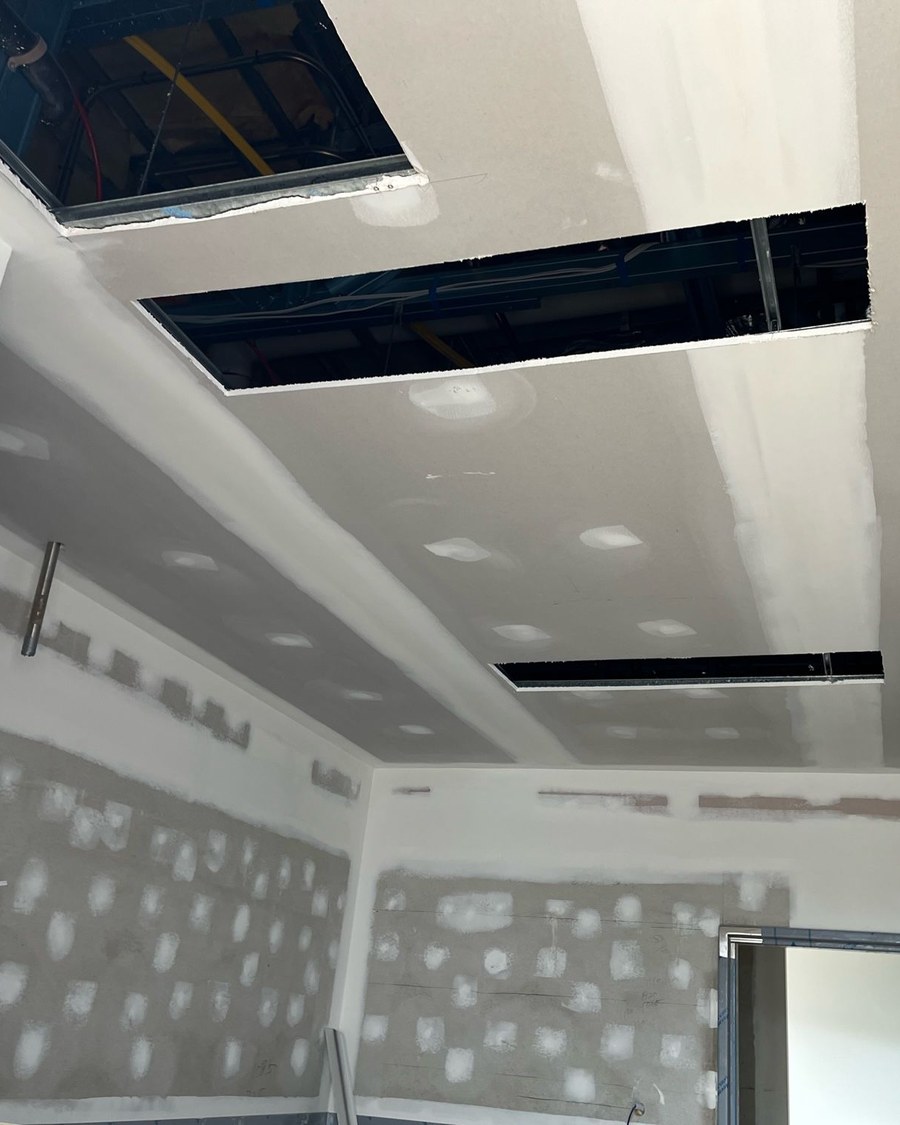
The same ceiling, before and after setting
A raked ceiling in a Sydney home, sheeted around exposed beams and then set. Two photographs of one job, not two different rooms.
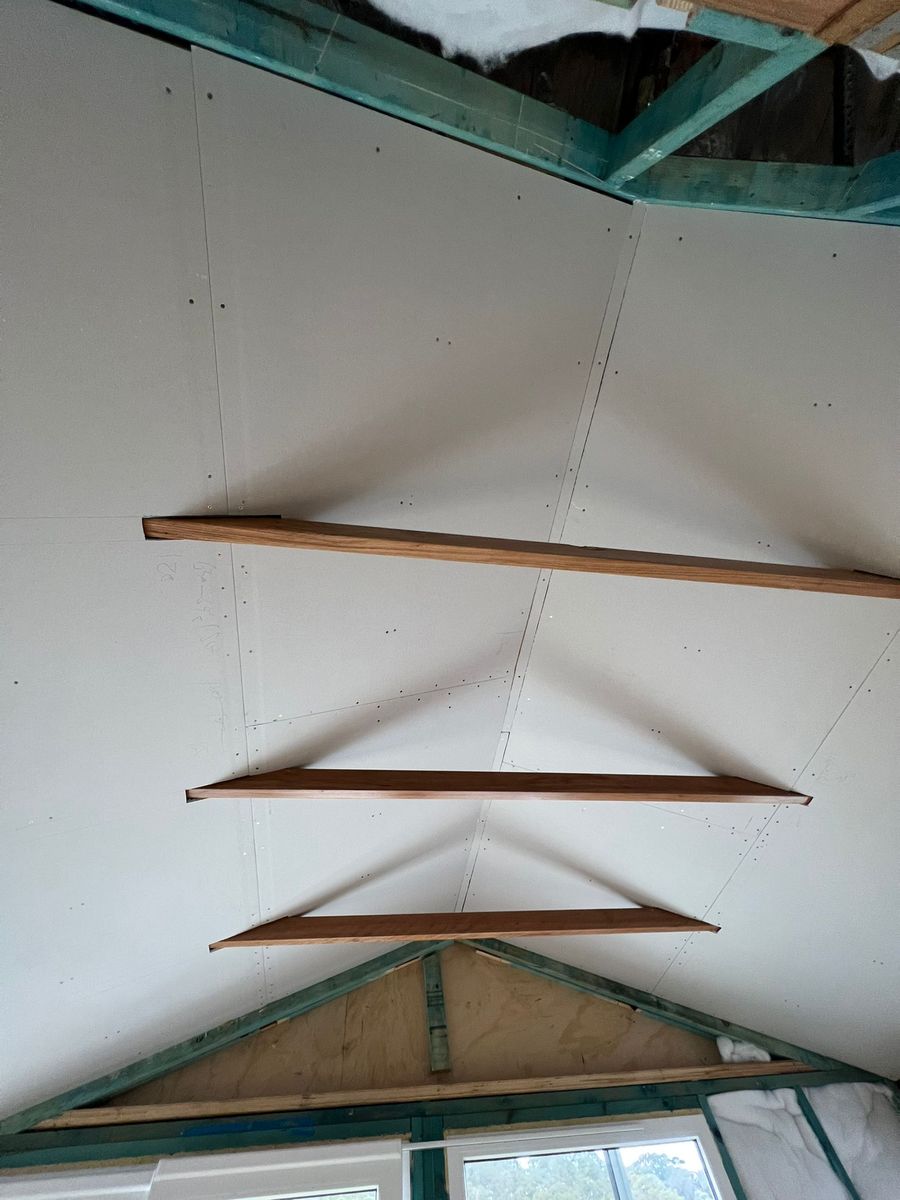
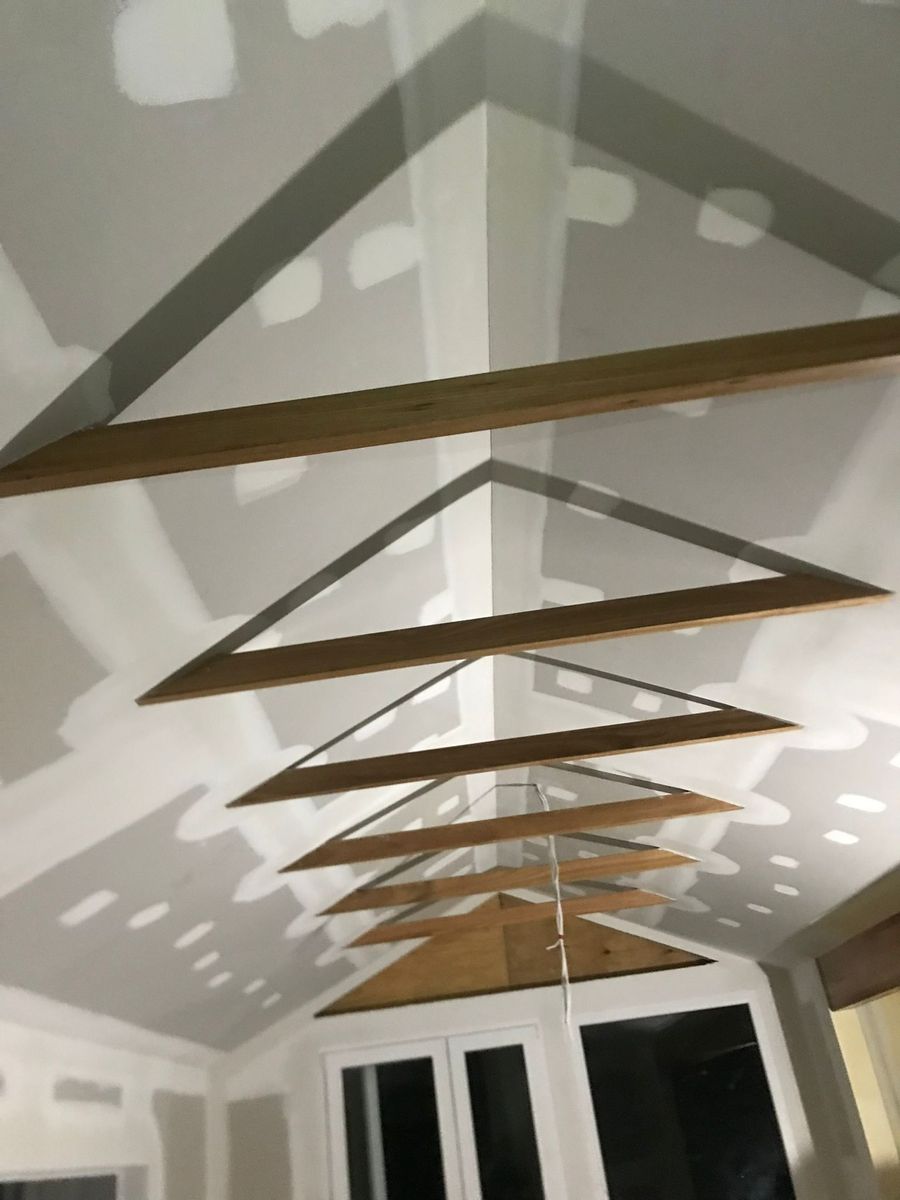
Why it matters. The second photograph is the whole job. Under a ceiling light, a joint that has been rushed shows as a shadow line, and a fixing that has not been spotted properly shows as a dot. Neither can be covered over later.
Where we work
Plastering across Greater Sydney
We cover the whole Sydney basin, from the CBD and the inner suburbs out to Penrith, north to the Northern Beaches and south through the Shire.
Sydney housing stock is not one thing, and neither is its plaster. A Federation home with lath and lime ceilings does not behave like a 1970s brick veneer with adhesive-fixed sheets, and neither behaves like a 2015 apartment.
In the older inner suburbs the ceilings are often the original fibrous plaster or lath, held up with hessian and plaster wads that have had a century to dry out. Those ceilings crack along the same lines every season, and a sheet that has started to drop away from its wads is a different job from a crack in modern board.
Through the middle and outer suburbs it is mostly plasterboard, either screw-fixed to ceiling battens or stuck to brickwork with adhesive daubs. When adhesive lets go the wall sounds hollow before it looks wrong. In newer apartments and townhouses the board is often part of a fire-rated or acoustic system, and a repair there has to go back the way it came out.
Not sure if you are in range? If your suburb is inside Greater Sydney, we almost certainly cover it. Ring and ask rather than guessing from a list.
Where the work is
- Northern Beaches
- Penrith
- Campbelltown
- Blue Mountains
- Liverpool
- Sutherland Shire
- Blacktown
- Parramatta
- Hornsby
- Camden
- Chatswood
- Windsor
These are the areas people search for us by name most often. The full list of Sydney council areas and suburbs we cover is on the Sydney service area page.
Before the quote
What actually changes the price
Two jobs that look the same in a photo can be very different to do. These are the things that move a plastering quote up or down, so you can see where yours is likely to sit.
How much surface is involved
A single patch is priced differently from a full wall, and a full wall differently again from every ceiling in the house.
Whether the cause is fixed
Plastering over an unresolved leak or active movement costs you twice. If the cause is still live, that has to be sorted first.
Patch, re-fix or re-sheet
Cutting back to sound board and setting a reinforced patch is a different amount of work from stripping a ceiling out and sheeting it again.
Access and height
A ceiling you can reach off a step ladder is a different job from a stairwell void or a raked ceiling that needs staging.
Drying and set times
Compound has to dry between coats. A deeper repair needs more coats, which means more visits rather than more hours on one day.
The board the job calls for
Standard, moisture resistant, fire rated or acoustic board all cost differently, and a system specification decides the fixings and the joint treatment as well as the sheet.
Cornice profile and matching
A standard cove run is straightforward. Matching an existing decorative profile so the repair disappears into the original run is not.
Protection, access and timing
Occupied homes, tenanted properties and trading businesses often need staging, protection or out-of-hours access, and that shapes the quote.
Common questions
Questions we get asked most
If yours is not here, ask it. We would rather answer it on the phone than have you guess.
Can you repair a cracked ceiling, or does the whole thing need doing?
Usually a repair is enough, and that is what we would rather do. Cracks that follow a sheet joint or a cornice line get raked out, reinforced, taped and re-set so the join does not open again. The exception is a ceiling that has been patched repeatedly over the years, because every one of those repairs sits at a slightly different level. Under a ceiling light it shows as shadowing and no further patching will fix it. That is the point where a skim coat over the whole ceiling, or re-sheeting, is the cheaper answer in the long run, and we will tell you when we think you have reached it.
Can damaged plasterboard be patched, or does it have to be replaced?
If the board around the damage is still sound and still properly fixed, a patch is the right answer. The damage is cut back to firm edges, a new piece goes in, the joins are reinforced and set, then sanded flush. Replacement is the answer when the board itself has stopped working: it has taken on water, it is crumbling, it has come away from the frame, or it has been cut about so many times there is not enough sound material left to fix a patch to. We will tell you which one you have when we look at it.
Do you repair water-damaged ceilings?
Yes, once the water is stopped. Replastering over an active leak wastes your money, because the new plaster will stain and can fail again. Get the plumber or roofer to it first. In the meantime, photograph the damage before anything is cleaned up or dried out, since insurers usually ask for this. If a ceiling is bulging or feels heavy, keep the room clear and call us to look at it rather than pushing on it. Once the source is resolved, the failed plaster comes out, the area is sealed so the stain cannot bleed through, and the ceiling is rebuilt and set back flush.
What causes a sagging ceiling?
Almost always the fixing rather than the sheet. In older homes the original plaster ceilings are held up by plaster and hessian wads that dry out and let go over decades. In newer homes the sheet is screwed to battens and glued with adhesive daubs, and the adhesive can release, often after a period of heat or moisture. Water through a ceiling will do it to either. A sagging sheet is worth acting on quickly, because once it has started to come away it does not stop, and a full sheet coming down is dangerous. There is more on how we deal with it on the sagging ceiling repairs page.
Do you install Gyprock and plasterboard, or only repair it?
Both. We sheet new walls and ceilings for renovations, extensions and fit-outs, re-sheet rooms where the old board has failed, and line walls over existing framing or brickwork. The sheeting is only half of it. Joints are taped and built up in coats, fixings are spotted, and the whole surface is sanded flat, because a well-sheeted wall with rushed joints still looks like a rushed wall once the light hits it.
Can you match existing cornice?
In most cases, yes. Standard cove profiles are readily available and a repair or a new run will sit in with the rest of the house. Older decorative and ornamental profiles are harder, and honesty is worth more than optimism here: sometimes the closest available profile is very close, and sometimes it is not close enough and running the repair through a whole room is the better answer. Send us a photograph of the section and a straight-on shot of the profile and we will tell you which situation you are in.
Will the surface be ready for my painter?
Yes, that is how every job is handed over. The repair or the new sheeting is set, sanded flat and checked under a raking light, the dust is cleaned up and the surface is left paint ready. We do not paint, so there is no argument about where the plastering ends: your painter gets a flat surface and can start on it. If your painter has a particular preference for how the surface is left before they prime, tell us and we will work to it.
How long will the work take, and do I need to move out?
Most repairs are not a single visit, because compound has to dry between coats. A typical crack or hole repair is a short visit to cut back and set, then a return visit to finish and sand. Re-sheeting a room, or a ceiling that has come down, runs longer. You almost never need to move out, but the room being worked in should be cleared and will be out of use for the day. We will tell you before we start which rooms are affected and for how long.
Do you work across Sydney, and on strata buildings?
We cover Greater Sydney, from the CBD and the inner suburbs out to Penrith, north to the Northern Beaches and south through the Shire. We work in individual apartments and in strata common areas such as corridors, lobbies and car park ceilings. Strata work usually needs access arranged through the building manager or the committee, and sometimes needs to happen outside normal hours. Tell us it is a strata property when you enquire and we will factor that in rather than discovering it on the day.
Is there anything you do not do?
Quite a few things, and we would rather be clear about them. We do not paint. We do not do external rendering or cladding, tiling, roofing, plumbing, electrical or structural work. We do not provide engineering advice or sign off on movement, and if what you are describing sounds structural we will tell you to get that assessed before any plastering happens. We also will not do a quick cosmetic fill over a problem that will come straight back through it, because that is not a repair.
Get it looked at
Tell us what is happening with your walls or ceilings
Send a few details or ring us. If it is ours, we will tell you what it needs. If it is not, we will tell you that too.