

Camden council
Most Camden homes are new. That changes what goes wrong.
Out here the usual call is not a sixty year old ceiling letting go. It is a house that is five years old, or one, and already showing lines above the doors.
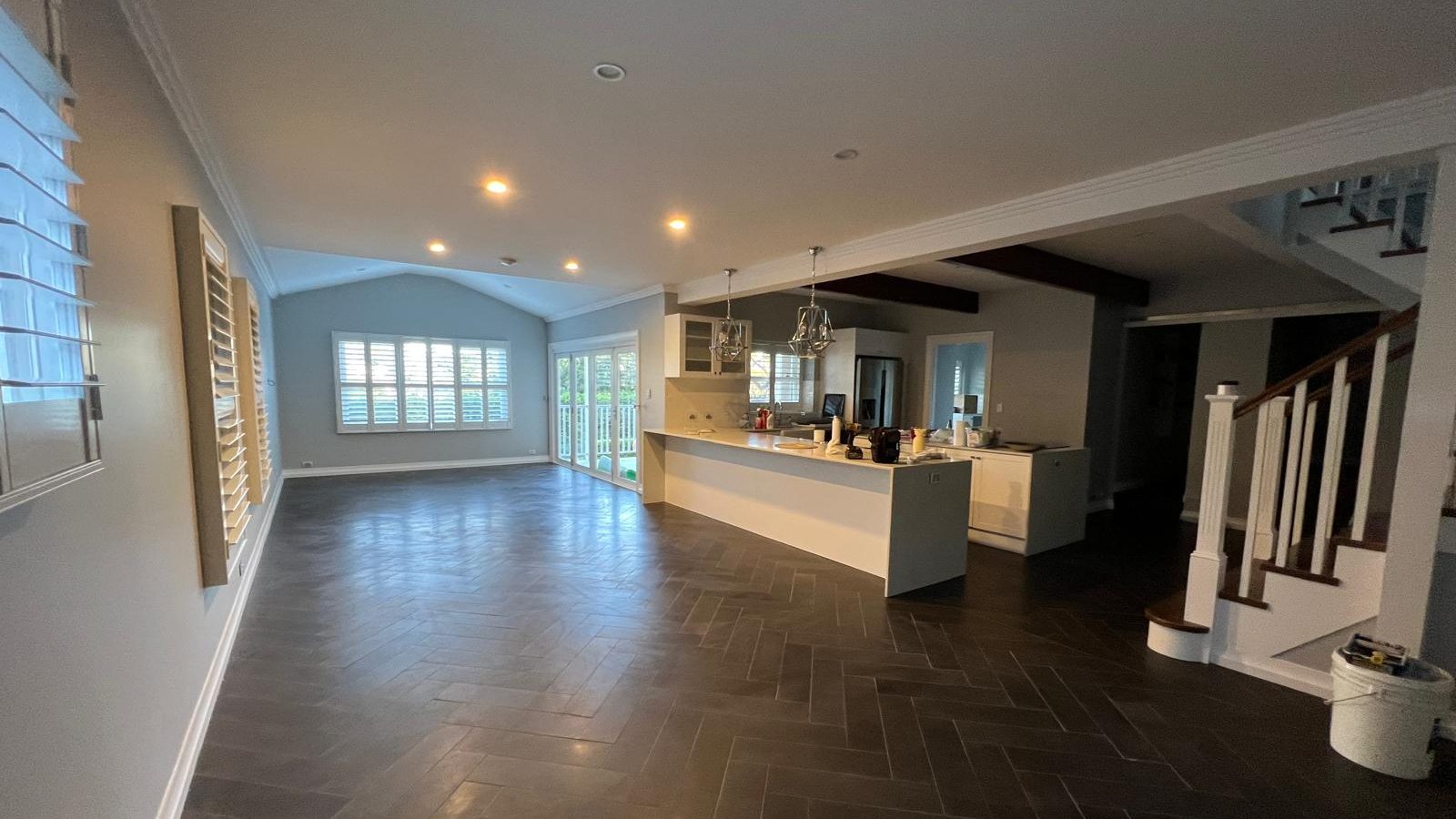
Oran Park, Gregory Hills, Spring Farm, Catherine Field, Mount Annan and Harrington Park are estates built mostly in the last twenty years, a good share of them in the last five. The framing is new, the ceilings are high, the walls are long and flat, and square set is common in place of cornice.
New does not mean settled. A house dries out and moves for its first couple of seasons, and that movement finds the joints. Alongside that sits the older Camden, the town centre and the land around Cobbitty and Grasmere, where the linings are nothing like the estates at all.
- New-build defects understood
- Square set and cornice
- Photo quote to start
Straight answer on cause
New-house cracking, a poor original set and a real structural problem look similar and are not. You get told which.
Licensed contractor
NSW contractor licence 244708C, with insurance details available if a builder or a committee asks.
Coats, not thick fills
Setting compound shrinks as it dries. Depth is built up over visits so the repair does not read as a line later.
Finished to the light
Checked with a light held flat along the wall before we call it done, because that is how downlights will judge it.
The area
Camden area coverage
- Council area
- Camden Council, NSW
- Postcodes covered
- 2556, 2557, 2567 and 2570
- Common work here
- New-build defect repairs, skim coating, garage and alfresco linings, cornice and square set
- Nearest covered areas
- Campbelltown, Wollondilly, Liverpool, Penrith
By age
Roughly when it was built, and what the plaster tends to need
Age is the single most useful thing you can tell us about a house in this council, because the four groups below fail in four different ways.
| How old | Where it usually is | What the plaster normally needs |
|---|---|---|
| Under three years | Oran Park, Gregory Hills, Catherine Field, Spring Farm | First-season joint lines above doors and windows, fixing pops, corner bead cracks as the frame dries out |
| Five to fifteen years | Mount Annan, Harrington Park, Currans Hill, Narellan Vale | Knocks and holes, tired walls before sale, garage and alfresco spaces being lined out |
| 1980s and 1990s | Camden South, Elderslie, Narellan | Ceiling joint cracking, screw pops, damaged cornice runs, patches sitting off the plane |
| Older and rural residential | Camden town centre, Cobbitty, Grasmere | Solid plaster and older lining materials, cornice matching, whole-room skims rather than patches |
New-estate work
What a new house does in its first few years
Three calls make up most of the new-estate work in this council. None of them mean the house is falling down.
Lines above the doors and windows
Timber framing gives up moisture for a year or two after it is built, and the structure takes up its load. Both show at the weakest point in a wall, which is the head of an opening. A fine straight line there is the most ordinary thing a new house does.
Walls that look wavy under downlights
Not damage, a finish. Long flat walls with lights washing down them show every dip in the original set. Feathering the joints wider or skimming the whole wall brings it to one plane, which is what the lighting is asking for.
Rooms the build never finished
Garages, alfresco areas, voids over stairs and space under a first floor get closed in later. From a plasterer's side that is framing check, sheet, tape, set and sand, plus a junction with the existing house that has to be detailed so it does not crack.
The other Camden
The town centre is not the same job as the estates
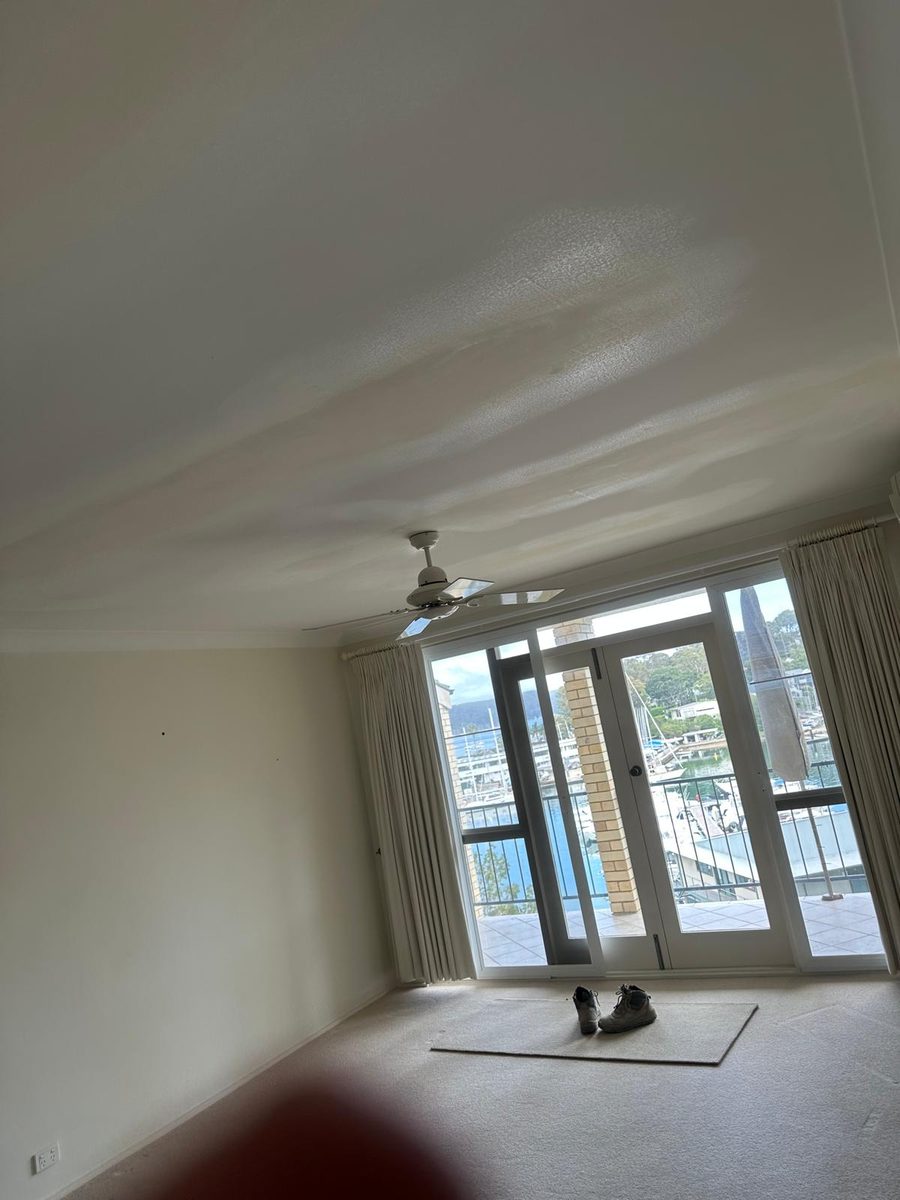
A few minutes from Oran Park the housing changes completely. Around the Camden town centre, Cobbitty and Grasmere there are cottages and older houses where nothing behind the paint is modern plasterboard.
Solid plaster over brick, and older sheet linings on timber, do not repair the way a new wall does. They are harder, they are thicker, and cutting them back needs care because the material around the damage can let go as well. Patching them is slower, and on a wall with a lot of history a full skim coat is usually the tidier answer.
Cornice is the other difference. An older profile is rarely something you can buy off a rack, so a damaged run either gets matched or gets replaced end to end. Which one is right depends on how much of the original is intact, and that is a decision to make at the quote rather than halfway through.
Pricing
What actually changes a price out here
Six things account for most of the difference between one quote and the next in this council.
Ceiling height
Estate houses are commonly 2.7 metres downstairs and often higher again in an entry or a void. Everything above comfortable reach needs staging and takes longer.
Patch, feather or skim the wall
Three different amounts of work. Which one you need depends on how flat the wall has to be under the lighting you have, not on how bad the mark looks.
Square set or cornice
A square-set internal corner has to be dead straight along its whole length because there is no profile to hide it. It takes more setting-out time than running cornice does.
How many rooms and how spread out
One wall in one room is a small job. Touching up a whole two-storey house before sale is a staged run with a sanding day and a clean-down at the end.
Whether it is still a warranty matter
If the house is new enough that the builder is the right person to fix it, we will say so. Paying us for something covered elsewhere is money wasted.
Occupied or empty
An empty house runs quickly. A family living in it gets worked room by room, protected each morning and cleaned down each evening.
If the house is new, photograph the cracking before you do anything
On a recently built house the first question is not how to repair it but who should be repairing it. Take dated photos of each crack, note where it is, and raise it with your builder. Defects that are still the builder's responsibility are far better dealt with through them than paid for twice.
If that route is closed, or the work simply was not finished well and nobody is arguing about it, we will quote the repair on its merits. What we will not do is patch cracking that is still moving and let you believe it is finished.
Where to go next
The pages that suit this council best
Each one covers the work itself, how it is scoped and what moves the price.
- Skim coating for long walls that read wavy under downlights or have been patched too many times
- Wall plastering and repairs for knocks, holes, corner damage and tired rooms before a sale
- Ceiling repairs for joint lines, fixing pops and the access cuts other trades leave behind
- Square set and shadowline where the house has no cornice and the junctions have to be dead straight
- Cornice for damaged runs, joins after a wall comes out and older profiles that need matching
- Renovation plastering for garages, alfresco areas and voids being turned into rooms
- Partition walls and framing where a large room is being divided or a study is going into a void
- New home and builder plastering for work packaged up at the build stage rather than after handover
Also covered
Camden questions
New houses, wavy walls and second-stage rooms
Five questions the new-estate housing here raises repeatedly.
Our house is eighteen months old and fine lines have appeared above the doors. Is something wrong?
Almost certainly not. New framing loses moisture for a year or two and the house takes up its load over the same period. The head of a door or window opening is the weakest point in a wall, so that is where the movement shows first.
The repair is ordinary: rake out, reinforce, set in coats, sand flush. Before paying anyone, check whether it is still something your builder should be attending to. If it is, that is the cheaper path.
The walls look wavy under our downlights. Can that be fixed without re-sheeting?
Yes, and re-sheeting is almost never the answer. What you are seeing is the original set: joints finished a little narrow, so there is a shallow dip either side of them that raking light exaggerates.
Feathering the joints out much wider fixes a wall with a couple of visible lines. Where the whole wall reads unevenly, a full skim over the face brings it to one plane. That is described on the skim coating page.
We want the garage turned into a room. What does the plastering involve?
Framing first, then lining. A garage usually has masonry or exposed frame, no ceiling battens and a floor that steps down, so the space has to be framed or furred out before board goes anywhere. Wet areas and any shared wall with the house have their own lining requirements.
After that it is sheet, tape, set, dry, set again and sand, then paint ready. Renovation plastering covers the sequence and where the plasterer fits between the other trades.
Do you work for builders on new houses out here?
Yes. Builder work is quoted by area and by stage rather than by the room, and it runs to the site program: sheeting once the frame and services are signed off, then setting, then sanding ahead of the painters.
What matters most on those jobs is the handover standard being agreed in writing before anyone starts, particularly on square set and on long walls that will carry downlights. New home and builder plastering sets out how that is scoped.
Our place is in the old part of Camden and the walls are not plasterboard. Can they still be patched?
Usually yes. Solid plaster over brick, and older sheet linings, can be cut back and made good, but they behave differently: the material is harder and thicker, and sound-looking plaster next to the damage can be loose.
Tap around the area with a knuckle. A hollow, drummy sound means the plaster has let go of the brick behind it, and that section has to come off rather than be filled. Once there is a lot of that on one wall, a skim over the whole face is better value than a run of patches.
Camden quotes
Tell us how old the house is
Age, suburb and a photo taken with the light running along the wall will get you a realistic price and an honest answer about whether it is ours to fix.