

Cheltenham 2119
The plaster in a Cheltenham house is usually original, and worth keeping
Large Federation and interwar houses on generous blocks between the bushland and the rail line, most of them still carrying the cornice runs, roses and archways they were built with.
Cheltenham is small and almost entirely detached houses. There is very little unit stock, so nearly every job here is a house with a family in it, usually a substantial one on a big block with mature trees over the driveway, between Beecroft and Pennant Hills.
What that means for plastering is that the interesting part is rarely the damage. It is the detail around it: a run cornice with a profile nobody sells, a ceiling rose in the middle of the room, an archway with mouldings, and ceilings high enough to need staging. Cheltenham sits in Hornsby Shire, and the council page covers the shire from the station out to the bush blocks.
- Postcode 2119
- Detached period housing
- Original detail kept where it can be
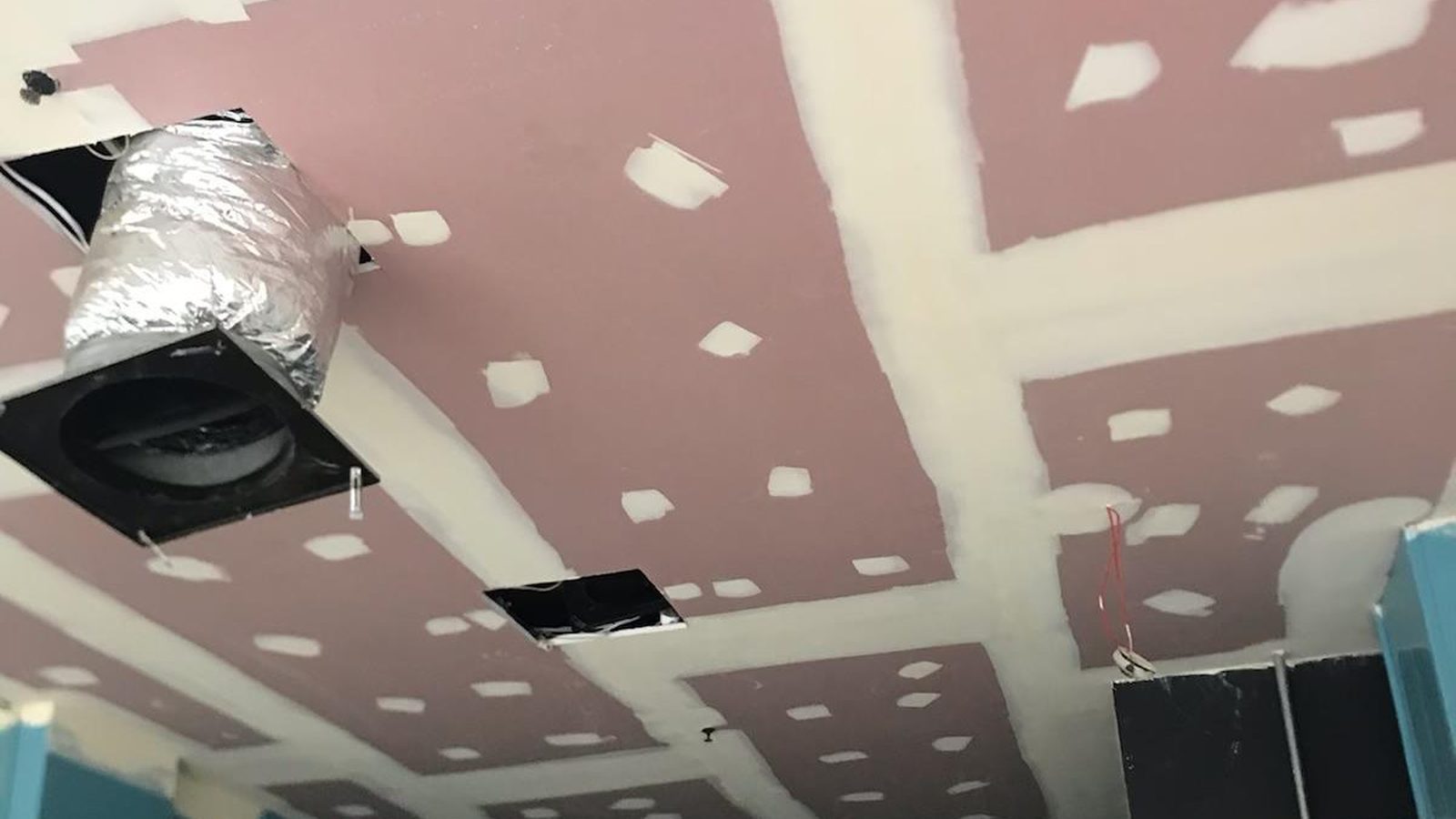
Detail recorded before anything moves
Profiles, roses and arch mouldings get photographed and measured before a section comes out.
Matched, not approximated
A replacement run is taken from the original profile rather than the nearest thing off a rack.
Staged for a high ceiling
Rooms over three metres get proper staging, because a repair checked from a ladder is a repair that shows later.
Planned around the family
Whole-house work runs room by room so you keep a kitchen, a bathroom and somewhere to sit.
Coverage
Cheltenham in short
- Suburb
- Cheltenham, NSW 2119
- Council area
- Hornsby Shire
- Housing we mostly see
- Large Federation and interwar houses, detached, on big blocks
- Neighbouring areas we cover
- Beecroft, North Epping, Pennant Hills, Thornleigh, Epping
The detail
Four things in these houses you cannot buy back
Once a length of original plaster detail is knocked off and binned, matching it becomes a fabrication job rather than a repair.
Run cornice profiles
Deep profiles that were run in place, often with a slightly different reveal room to room. Matching one means taking a clean section as a pattern, not finding something close.
Ceiling roses and centrepieces
Nearly always sound even when the ceiling around them has failed. They can be worked around, or taken down carefully and refitted once the plane behind them is right.
Arches, corbels and reveals
The moulded edge of an archway chips the moment furniture goes past it. Small losses are repairable in place if the profile is still readable somewhere on the run.
Ceilings over three metres
Height changes the staging, the number of coats you can do in a visit and how the work is checked. It is the main reason a big room takes longer than its area suggests.
Whole house work
Replastering a big house with the family still in it
Most of the larger jobs here are renovations rather than repairs, and in a house this size the sequence matters more than the hours.
- Walk it once, in order. We go room by room and agree which are original and staying that way, which are being re-lined, and which are only being made good after another trade.
- Protect the detail first. Cornice runs, roses and arch mouldings in rooms that are not being touched get covered before any board comes down the hallway. The damage on these jobs almost always happens in transit.
- Work in blocks. Two or three rooms at a time, closed off and taken through to sanded and clean before the next block opens. That contains the dust and keeps the house usable.
- Let the coats dry. Compound shrinks as it dries, so the build-up runs across short visits rather than one long push. On a whole house that drying time sets the calendar.
- Check under a raking light. Each room gets looked at with the light across the plane before it is called done, because on a wide ceiling a small step reads clearly once the room is painted.
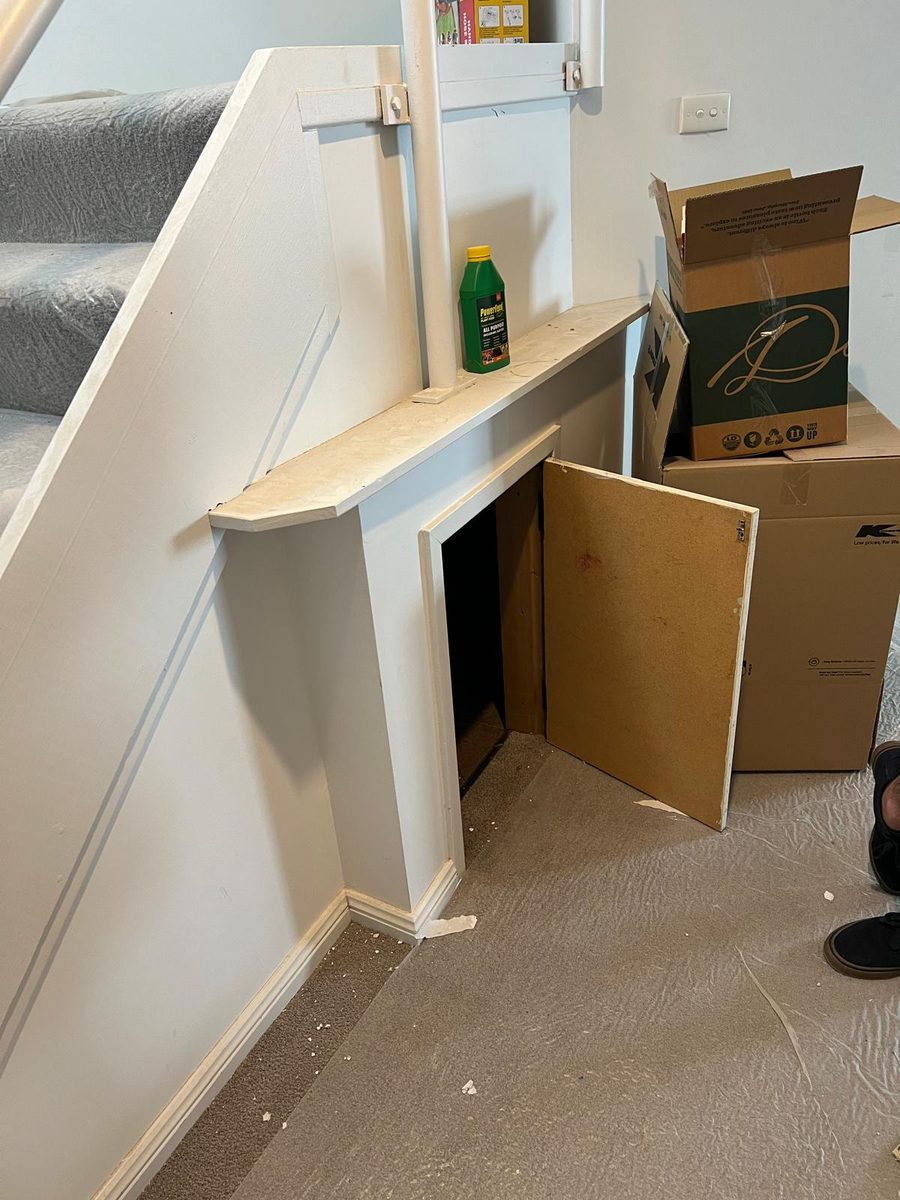
Before the quote
What we look at in a house like this before pricing it
Six things, none of them the size of the hole. On a big older house these are what actually separate one quote from another.
| What we check | Why it matters here | What it changes |
|---|---|---|
| Ceiling height | Rooms of this era often run well over standard | Staging, how much gets done per visit, how it is checked |
| Whether the cornice is original | A run profile has to be matched rather than bought | Whether a length is repaired in place or replicated |
| Original ceiling or a later replacement | Lath, fibrous sheet and modern board all fail differently | Repair, overlay or take down and re-line |
| Roof space and insulation above | Older roof spaces run hot and the framing moves with it | Whether refixing is needed before anything is set |
| Who else is working in the house | Renovations here usually involve several trades | The order of visits and who makes good after whom |
| Driveway, trees and turning room | Long drives under mature trees limit what can get close | Delivery, where board is stacked, how far it is carried |
Where to go next
Service pages that suit a period house
- Ornate plaster restoration for matching, replicating and repairing decorative plaster and moulded detail
- Cornice for repairing a damaged run, matching a profile or fitting a new one in a re-lined room
- Ceiling repairs for cracking along joints and cornice lines, lifting fixings and older patches
- Ceiling replacement where an original ceiling has stopped doing its job and has to come out
- Skim coating to bring a ceiling carrying decades of separate repairs back to one flat plane
- Renovation plastering for multi-room work, extension tie-ins and making good after other trades
- Vermiculite and textured ceilings where an older sprayed coating needs assessing before it is disturbed
- Square set and shadowline where a new part of the house is meant to read as modern rather than period
Asked in older houses
Cheltenham questions
If yours is not here, ask it. We would rather answer it on the phone than have you guess.
Can a length of ornate cornice be matched, or does the whole run have to come off?
A length can usually be matched. The method is to take a clean section of the original as a pattern, either in place or as a removed piece, and reproduce the profile from it so the new work reads continuously with what is already there. A whole run only comes off when most of it has already failed.
What makes it harder is when the profile has been painted over so many times that the detail has filled in, or when a previous repair used a modern stock cornice next to the original. Both are workable, they just have to be allowed for. That work sits on the ornate plaster restoration page.
A gap has opened between the cornice and the ceiling in two rooms. Is that the cornice or the ceiling?
Usually the ceiling. A gap that runs along the top edge of the cornice generally means the ceiling sheet or lath has moved down slightly while the cornice, fixed to the wall, has stayed where it was. The cornice is the messenger rather than the problem.
So we look at the fixings and the frame above before filling anything. If the ceiling is letting go, filling the gap just moves it along and it reopens in a season. If the ceiling is sound and the movement was seasonal, the junction gets raked out, reinforced and re-set properly.
Our ceilings are over three metres. Does that change how the work is done?
It changes the staging and the timetable more than the method. Platforms go in rather than ladders, which takes floor space and puts the room out of use while we are in it, and each coat covers a bigger area so drying time matters more.
It also changes how the work is checked. A wide, high ceiling shows a small step in the plane clearly once light is across it, so the final look happens from the floor rather than up close from the platform.
Do we need approval to replaster inside an older house here?
Ordinary internal repair work is not usually something a plasterer needs approvals for, but we are not the right people to rule on it. If the property is heritage listed, or sits in a conservation area, what you can do inside as well as outside is a matter for the council or a heritage adviser, and worth a call before work is booked.
What we can do is work in a way that keeps options open: record the detail before anything comes off, keep original material where it can be kept, and avoid removing anything that cannot be replaced while the question is still open.
Half our ceilings are original and half were replaced with plasterboard. Should the rest be done too?
Not automatically. An original ceiling that is well fixed, flat and not cracking is doing its job and there is no reason to take it out. The honest test is how much repair it has already had and whether the plane still reads as one surface under a light.
Where a ceiling has been patched half a dozen times at slightly different levels, the choice is between another patch, a full skim to bring it back to one plane, or replacement. We will tell you which of the three we think it is and why, including when the answer is to leave it alone.
Cheltenham
Photograph the room and the cornice
One shot of the damage, one along the cornice run, and a note on the ceiling height. That is normally enough to say whether it is a repair, a match or a re-line.