
Strata plastering
Work orders, resident access, common-area protection and evidence photos for managers and committees.
Strata work
Plastering Gyprock Ceilings
Canterbury-Bankstown
A very large share of the homes here are flats in three-storey blocks built fifty or sixty years ago, which means most repairs run through a manager, a lot line and a set of stairs.
Campsie, Lakemba, Punchbowl, Belmore and Roselands carry street after street of walk-up blocks from the 1960s and 1970s. Concrete slab floors and ceilings, brick party walls, small rooms, three storeys and no lift. The plastering in them is not difficult work, but almost none of it is arranged by the person living in the room.
Then there is the other half of the council. Revesby, Padstow and Panania are largely detached brick from the same era or earlier, Earlwood older again, and Bankstown itself is a proper commercial centre with shops and offices. Three quite different approvals, three different ways in.
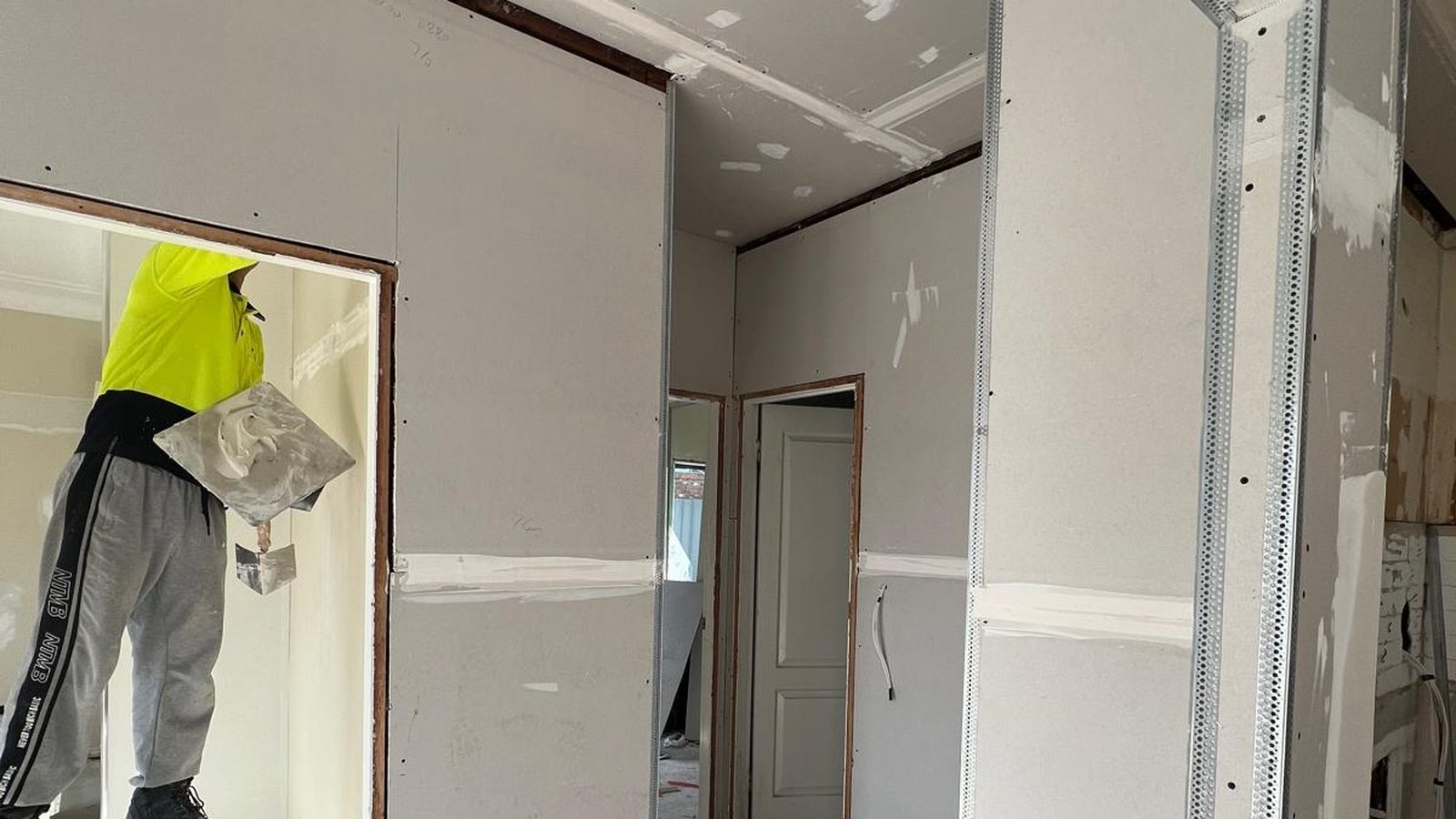
Written scopes a manager can forward
Quoted so it can go straight to an owner, a committee or an agent without being rewritten.
Evidence photos before and after
Photographed before we start and again at hand-over, which is what an insurer or a manager asks for.
Common areas protected
Stairs, landings and corridors covered, because the route in belongs to everyone in the block.
Licensed for the paperwork
Contractor licence 244708C, on quotes for owners, committees, agents and tenants alike.
Inside a walk-up
Unit repairs surprise people because a flat is built nothing like a house. Very little of it is timber, and that changes what can be cut, fixed or chased.
| Element | What it usually is | What that changes |
|---|---|---|
| The ceiling | The underside of the concrete slab above, set or lined direct | No cavity, so nothing can be run above it and fixings are drilled, not screwed to timber |
| Walls between units | Solid brick, often with plaster straight onto it | Damage is a chip out of a hard surface, rebuilt in coats as solid plaster rather than patched with board |
| Walls inside the flat | Sometimes brick, sometimes later stud and board | A knuckle rap tells you which, and the two are different repairs |
| Corridors and stairwells | Common property, usually set walls and a lined ceiling | Approval comes through the manager, not the resident, and access hours apply |
| Bathroom and laundry walls | Original tiled masonry, often opened up in a later refit | Any new lining there has to suit a wet area and the trades that follow |
How it runs
In a managed building the plastering is the short part. Getting the job properly instructed is what decides whether it happens once or three times.
Unit number, which room, and whether the surface is inside the flat or in a common area. That decides who has to approve it.
An itemised quote with the extent, the method and the visits, worded so a manager or an owner can approve it as it stands.
If water is still coming from above, the ceiling gets repaired twice. Plumbing and waterproofing come before plaster, every time.
Keys, resident availability, permitted hours and where the truck can stand, agreed before the first visit.
Cut back, reinforced, built up in coats, sanded and cleaned, with photographs at hand-over for the file.
Instruction Repair
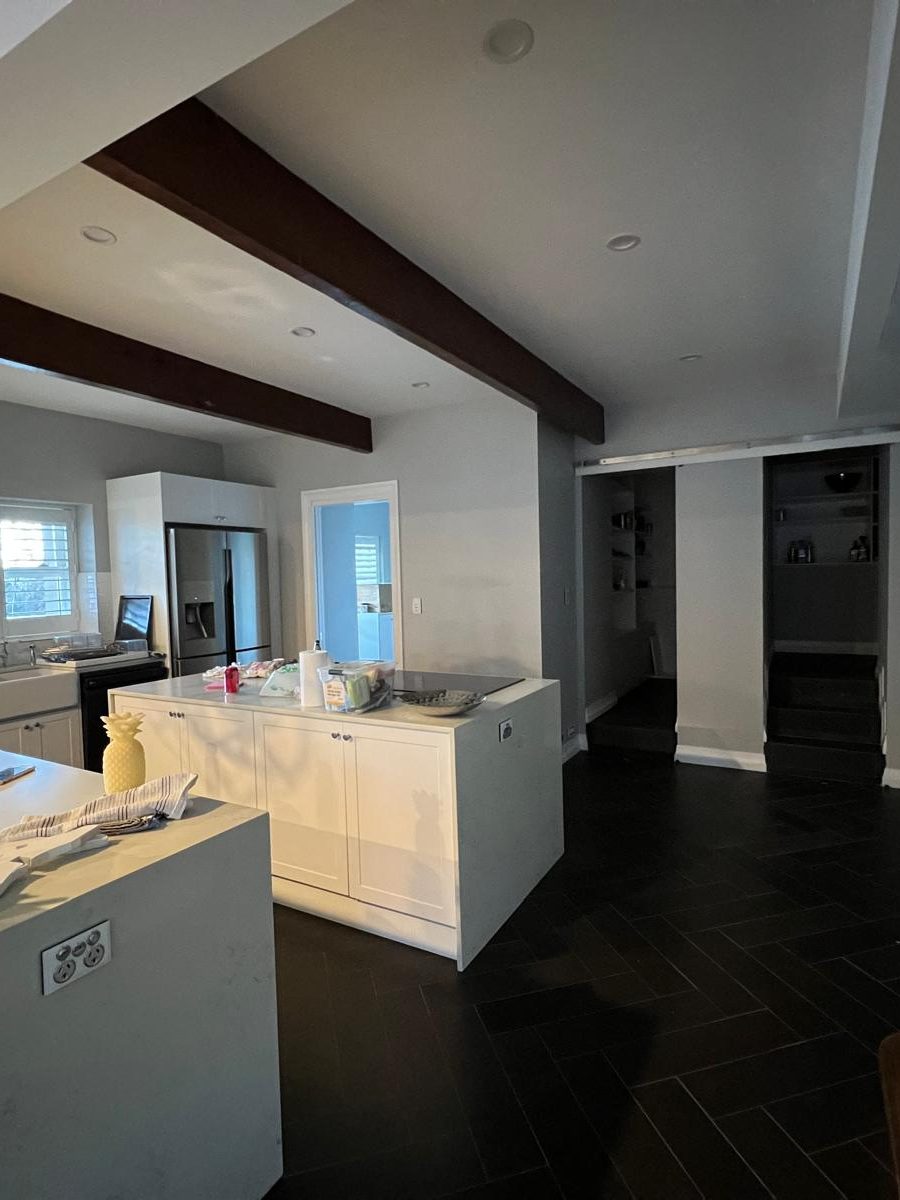
The common one
In a block of this age the single most common plaster call is a ceiling stain in one unit caused by something in another. It is worth knowing how that job actually sequences.
Scope
Units, houses and commercial tenancies. The right-hand list is not work we refuse. It needs to be settled by someone else before plaster is the answer.
Where the job is not ours yet, we say so at the quote and tell you who it belongs to first.
A number of buildings from this period have ceilings with a sprayed or heavily textured coating. If nobody can tell you what the coating is, suspect material must be assessed by a competent person before it is scraped, sanded, drilled or disturbed in any way. That applies to a resident with a roller as much as to a trade.
We do not offer removal of that material. Once it has been assessed, the covering and re-lining options are explained on the vermiculite and textured ceiling page.
Before the number
In managed buildings the access and the approval move the figure as much as the plaster does.
Board, compound and waste all go up and down the same stairwell by hand. A top-floor flat in a walk-up is a different day from a ground-floor one.
Around Campsie and Bankstown there is often nowhere to unload for long, so that gets planned rather than gambled on.
Buildings limit when noisy work can happen. Losing the first and last hour of a day changes how many visits it takes.
The same repair is approved differently depending on which side of that line it falls, and that affects lead time more than price.
An empty flat between tenancies is fast. A lived-in unit means staging, protection and a clean-up after each visit.
Repeating one repair through several identical flats is more efficient per unit than doing one, and it is worth asking for a price that way.
Where to start
Work orders, resident access, common-area protection and evidence photos for managers and committees.
Strata workReinstatement after a leak has been stopped and the space has dried out properly.
Water damageCracking, loose fixings, old patches and access cuts in units and detached homes alike.
Ceiling repairsTenancies around the Bankstown centre reinstated to lease condition at handback.
Make good
Asked in the blocks
If yours is not here, ask it. We would rather answer it on the phone than have you guess.
It depends where the failure is, not where the stain is. A failure inside the upstairs lot is usually that owner's, while a failure in common pipework or a common membrane usually sits with the owners corporation.
What helps either way is a clear report: dated photographs, the extent of the affected area and a written scope for the reinstatement. We can provide that so whoever is responsible has something to act on.
Broadly, the structure and the surfaces that form the building tend to be common property, and what an owner has added inside the lot tends to be theirs. We are plasterers, not strata managers, so we will not tell you who is liable or who pays. Which side a particular wall or ceiling falls on is a question for the strata plan and the manager.
We do not decide that line, but we do write the scope so it is obvious what is being repaired and where, which is usually what the manager needs to allocate it. That process is described on the strata plastering page.
Yes, and it is fair that it does. Every sheet, every bucket and all the waste goes up and back down three flights by hand, and that is real time.
It also changes the materials. Where a full sheet cannot turn a stair landing, we plan smaller boards and more joins, which means a little more setting. Telling us the floor and the stair layout up front keeps that out of a variation.
Yes, and most unit work happens exactly that way. A patch and re-set in one room is a couple of short visits with the rest of the flat usable. The tenant needs the dates, not an explanation of plastering.
The practical constraints are noise hours, where dust can be contained and where waste goes. All of that is agreed before the first visit rather than negotiated on the landing.
That is the sensible way to do it. Repeating one method down a corridor or through a stack of identical flats is more efficient than pricing each one separately, and the set-up and protection only happen once.
For that we want the number of locations, a photo of a typical one and the building's access hours. The quote then comes back itemised, so a committee can approve the whole run or stage it over two budgets.
Yes. Partition changes, ceiling reinstatement after services have been moved, and tenancies brought back to condition at the end of a lease are all regular work in that area.
The difference is trading hours and building access. Work often has to happen after hours or in stages, and that gets built into the commercial programme from the start rather than discovered halfway through.
Get it instructed
Tell us which room, whether it is inside the lot or in a common area, and whether anything is still wet. That is enough for a written scope somebody can approve.