
Water damaged ceilings
Reinstating a ceiling once the leak is stopped and the space is dry, including when the board has to be replaced.
Water damage
Plastering Gyprock Ceilings
Strathfield
A great deal of the plaster work in this council starts one floor up: water that has come through a bathroom, a balcony or a slab and landed on somebody else's ceiling.
Strathfield, Homebush and Homebush West carry a large and still growing apartment population around the stations, and stacked living changes what goes wrong. In a house, a leak damages your ceiling. In a unit, it damages the one below, and the repair involves at least two owners and usually a strata manager before a trowel comes out.
The rest of the council is a different building altogether. The conservation streets hold large older houses on generous blocks, with tall rooms, deep cornice and decorative ceilings that were never meant to be patched with a scraper. Belfield and Strathfield South add solid interwar and post-war brick, much of it rented.
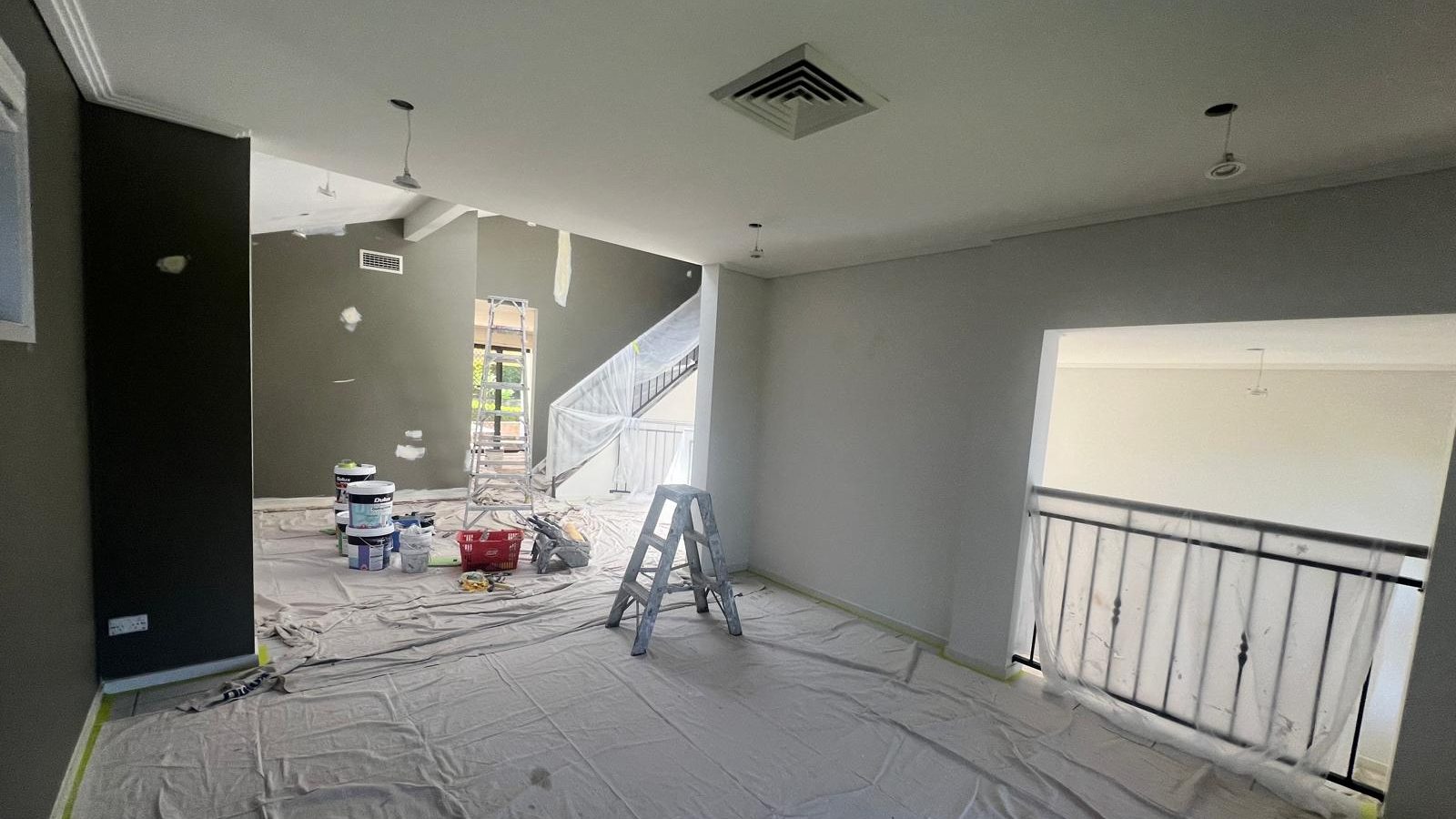
Cause before cover-up
A ceiling that has taken water gets checked for what is above it before anything is re-set.
Closed once it is dry
New board goes back when the space has actually dried, not while it is still holding moisture.
Scopes you can forward
Owners, agents and strata managers get the scope in writing, in a form that can be passed straight on.
Tall rooms handled properly
Staging for the high ceilings in the older houses, rather than a ladder and a long reach.
Compound will go onto damp board and it will look fine for a fortnight. Then the stain comes back through the paint, the joints move and you pay for the same ceiling twice. Fresh plaster over trapped moisture also gives mould somewhere quiet to sit.
The order is always the same: stop the water, open it up enough to dry it, confirm it is dry, then reinstate. If you are mid-claim, keep the photographs and the scope, because that documentation is what makes insurance plaster repairs straightforward later.
Reading it from below
Almost every ceiling stain we are called to in an apartment has a source somewhere other than the room you are standing in. Working out where saves a repair that will not hold.
| What you can see | Where it usually starts | Who has to act before we do |
|---|---|---|
| A brown ring under a wet area upstairs | Failed shower waterproofing or a leaking waste connection in the unit above | A plumber, and often a waterproofer after them |
| Staining down a wall below a balcony | Membrane or drainage failure on the terrace above rather than anything internal | The owner above, or strata where the balcony is common property |
| A damp band near the ceiling on an outside wall | Roof, gutter, parapet or flashing, not plumbing | A roofer |
| Bubbling paint with firm board behind it | Moisture has moved through and has since stopped | Nobody, once it is confirmed dry. That is a surface repair |
| Board that feels soft or has dropped at a joint | Water sat in the sheet long enough that it has lost strength | Stop the water first. That sheet gets replaced rather than patched |
The sequence
This is the order the work has to run in. Skipping a step is the single most common reason a repaired ceiling fails again within a year.
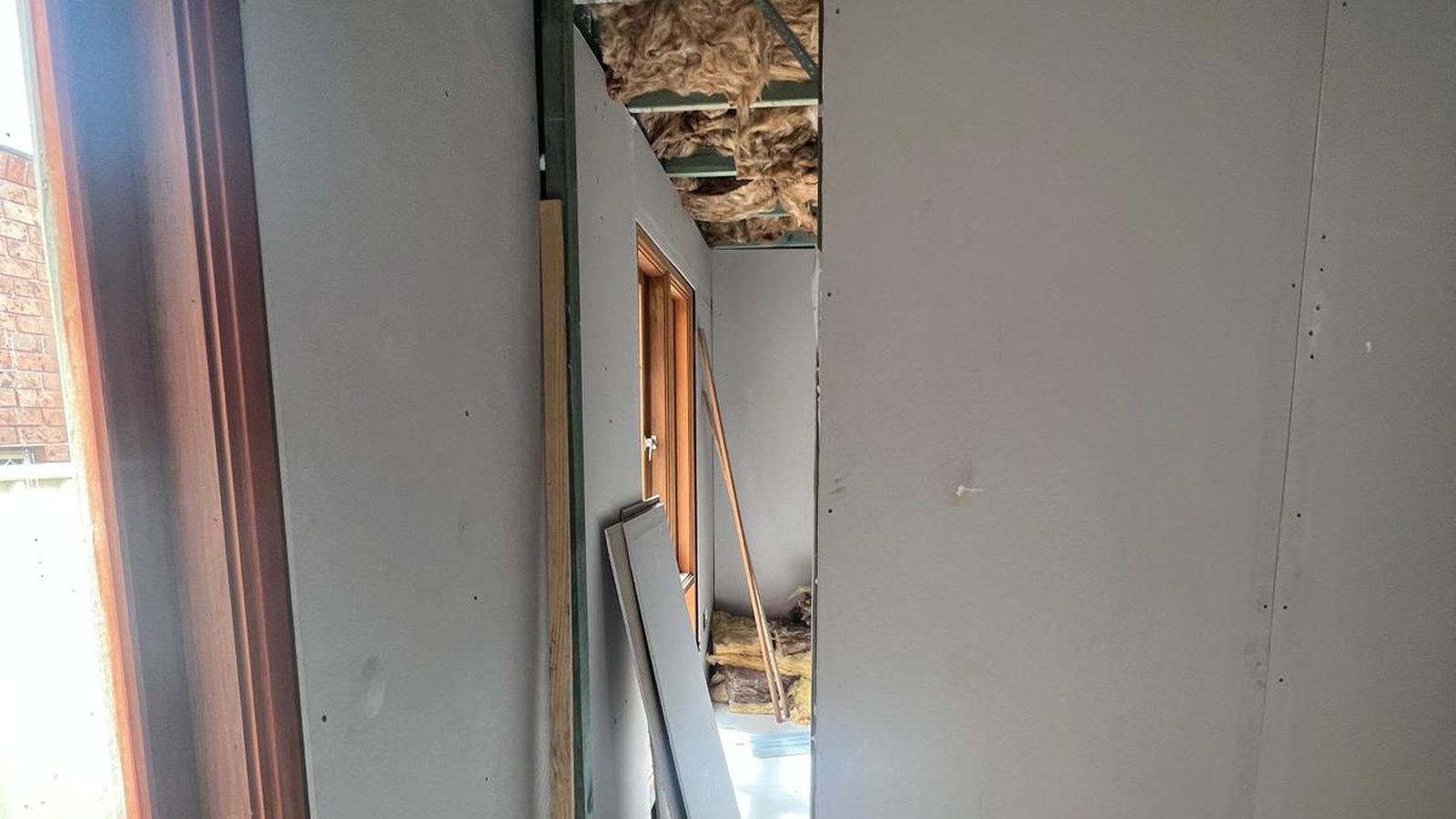
Who calls
Different callers, different approval paths, different paperwork. The plastering is often similar. Everything around it is not.
Tall rooms, deep cornice, ceiling roses and decorative work in the conservation streets. Repairs here get assessed as restoration before anyone reaches for a scraper.
Strathfield, Homebush and Homebush West. Ceiling damage from above, shrinkage cracking in newer blocks, and damage from moving furniture in and out.
A short window with the place empty, a list of damage and a date the next tenant moves in. Everything is priced around that date rather than around convenience.
Corridors, lobbies, stairwells and ceilings in shared areas, usually needing a written scope and a schedule that works around residents.
Walls coming out, rooms joined, new linings meeting old plaster, and cornice that has to be continued rather than approximated.
Belfield, Strathfield South and Homebush West see steady small-scale rebuilding. Standard new build linings, set to a consistent finish, to a programme.
Before the number
Two jobs with the same damage can price very differently here, and it is usually one of these that explains the gap.
An owner deciding on the spot is one thing. A repair that needs a strata resolution, an insurer's scope or an owner above to act has a timeline of its own.
Drying is not billable time, but it is real time. A ceiling that has to sit open for days is a different schedule to one that can be reinstated on the second visit.
The tall rooms in the older houses need staging, and everything takes longer at height. A three metre ceiling is not a taller version of a standard one.
Plain cornice is quick. An original run with a rose, enrichment or a deep profile is matched and rebuilt, which is slower and priced as its own work.
Lift bookings, dock hours, resident notice periods and protection of common areas all sit in the plan for any apartment job.
One patch prices differently to a full ceiling, and a full ceiling differently again to every ceiling on the floor below a failed balcony.
Go deeper
Reinstating a ceiling once the leak is stopped and the space is dry, including when the board has to be replaced.
Water damageCommon property and unit repairs, scoped and reported the way a strata manager or committee needs to see them.
Strata workWhat an insurer usually wants documented, how a plaster scope is written, and where claims commonly come unstuck.
Insurance workDecorative cornice, roses and enrichment in older rooms, assessed before anything is cleaned, cut or filled.
Restoration
Asked here
If yours is not here, ask it. We would rather answer it on the phone than have you guess.
That depends on where the failure is, and it is worth establishing before anybody spends money. Damage inside your unit from a fault inside another unit is usually between the two owners and their insurers. A failure in common property, such as a shared pipe or a balcony membrane, generally goes to the strata manager.
What we can do either way is look at the ceiling, write a scope of the plaster work and put it in a form you can forward to an owner, an agent, a manager or an insurer. What we cannot do is repair it while water is still coming through.
Long enough to be genuinely dry, which is usually days rather than hours and sometimes considerably longer where insulation has held water. A closed ceiling cavity dries slowly, so part of the ceiling often has to come out to let it happen at all.
Rushing it is a false saving. Plaster set onto damp board shrinks unevenly, the stain works back through the paint and the joints move. It is cheaper to leave a ceiling open for a week than to do the work twice.
Often, if we know the date early. A vacant property is the quickest kind of job to protect and to sand, so a list of holes, knocks and tired walls in an empty unit moves fast. The limit is not labour, it is drying time between coats.
Tell us the handover date at the quote, not after the booking. If the list is too long for the window we will say which items can be done properly in the time and which ones need a longer run, rather than rushing all of it.
Usually it can, but it gets looked at before anything is touched. Original decorative plaster is often lime-based and set directly onto lath or into a moulded run, and it does not respond to modern filler or a sanding block the way plasterboard does.
The work is matching a profile, taking a mould where a section is missing and rebuilding in a compatible material. That is restoration rather than repair, and it is priced on what survives. Scraping paint off enrichment before it is assessed usually costs more than it saves.
Yes, and for common property it is generally the right way around. We can attend, look at the damage, write the scope and send it to the manager directly so the committee has something specific to approve rather than a verbal estimate.
For work inside a lot, the owner still makes the call. We will tell you plainly if what you are describing looks like common property, because that changes who pays and who books it.
It changes the setup rather than the plastering. Above a certain height a step platform stops being safe or practical, so the room needs proper staging, and moving that staging between positions is a real part of the day.
It also changes the finish standard. Tall rooms usually have long uninterrupted wall planes and more natural light across them, which shows any unevenness. Those walls get more attention at the sanding stage, not less.
Get a scope
Owner, tenant, agent, strata manager or insurer, the plaster work is the same but the paperwork is not. Tell us which one you are and we will write it to suit.