
Wall plastering and repairs
Holes, impact damage, cracking and failed joins in walls, patched back and set flush ready for paint.
Wall repairs
Plastering Gyprock Ceilings
Cumberland City
Auburn, Merrylands, Granville, Lidcombe and Guildford turn over quickly, so a lot of the work here is one wall or one ceiling that has to be right before somebody new moves in.
A large share of this council is rented, and that shapes the work more than anything about the buildings does. Scopes are small and specific, they get booked by an agent or a strata manager rather than the person living there, and the date matters as much as the finish. One ceiling, one hallway, a bathroom wall, a set of patches before a repaint.
The buildings themselves are mixed and heavily reworked. Walk-up blocks from the 1960s and 1970s sit beside newer apartments around the stations at Merrylands, Granville and Lidcombe, and the houses at Guildford, Merrylands West, South Granville, Berala and Pendle Hill have often been extended and re-lined more than once. What is behind a wall here is rarely what the front of it suggests.
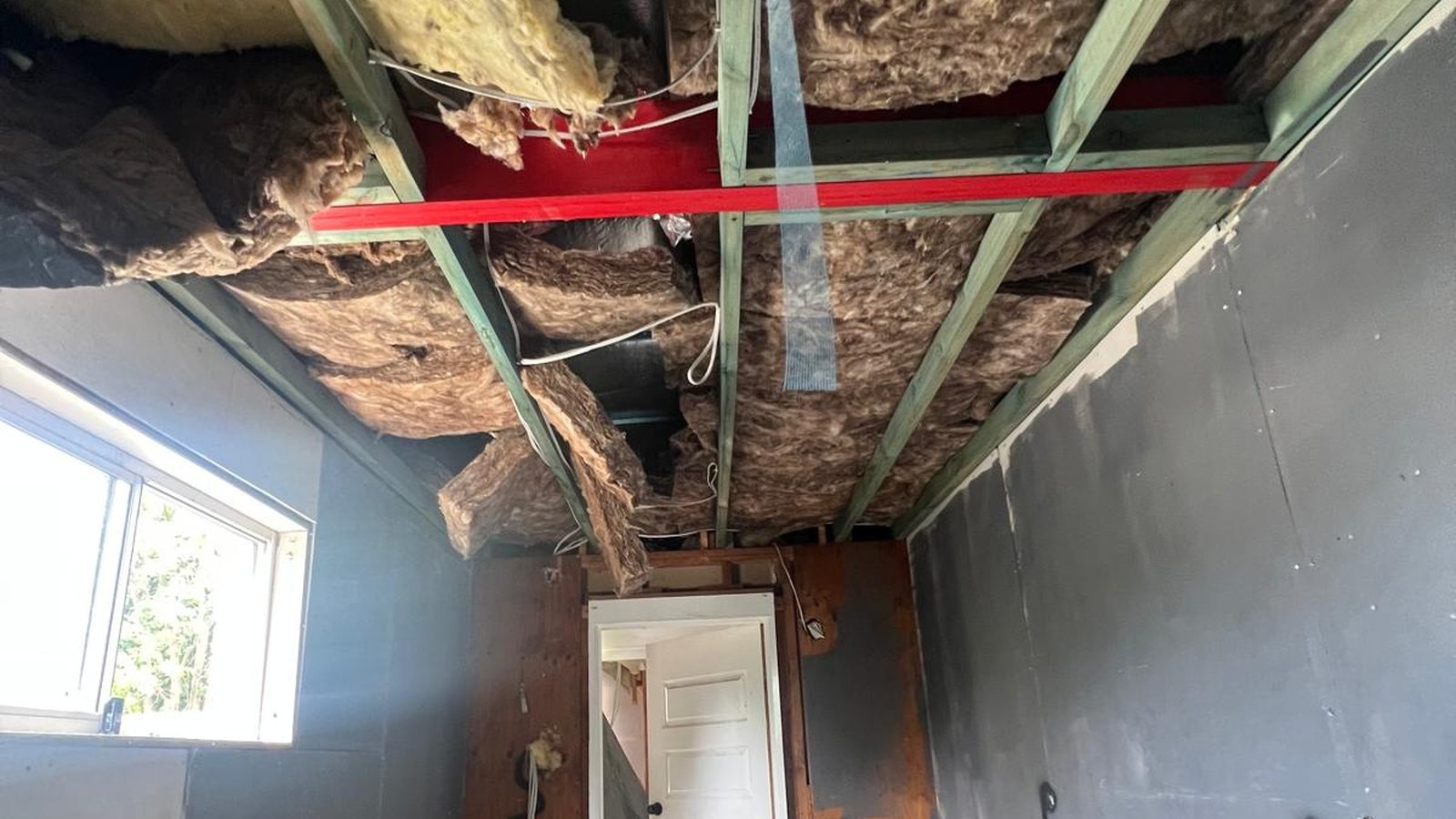
Opened up before it is quoted
We find out what the wall is actually made of rather than assume plasterboard.
One room jobs are normal work
A single hallway or one bathroom wall is a job we take, not a favour.
Agent and strata friendly quoting
Scope written so it can be approved by whoever is paying for it.
Suspect sheeting left untouched
Old fibro or unknown coatings get assessed by a competent person first.
Scope
Most of what comes in here is repair and reinstatement rather than new construction. The right hand column is not work we avoid, it is work that needs its own assessment before anybody quotes it.
Nobody has to know which column their job belongs in before they ring. Sorting that out is what the quote is for.
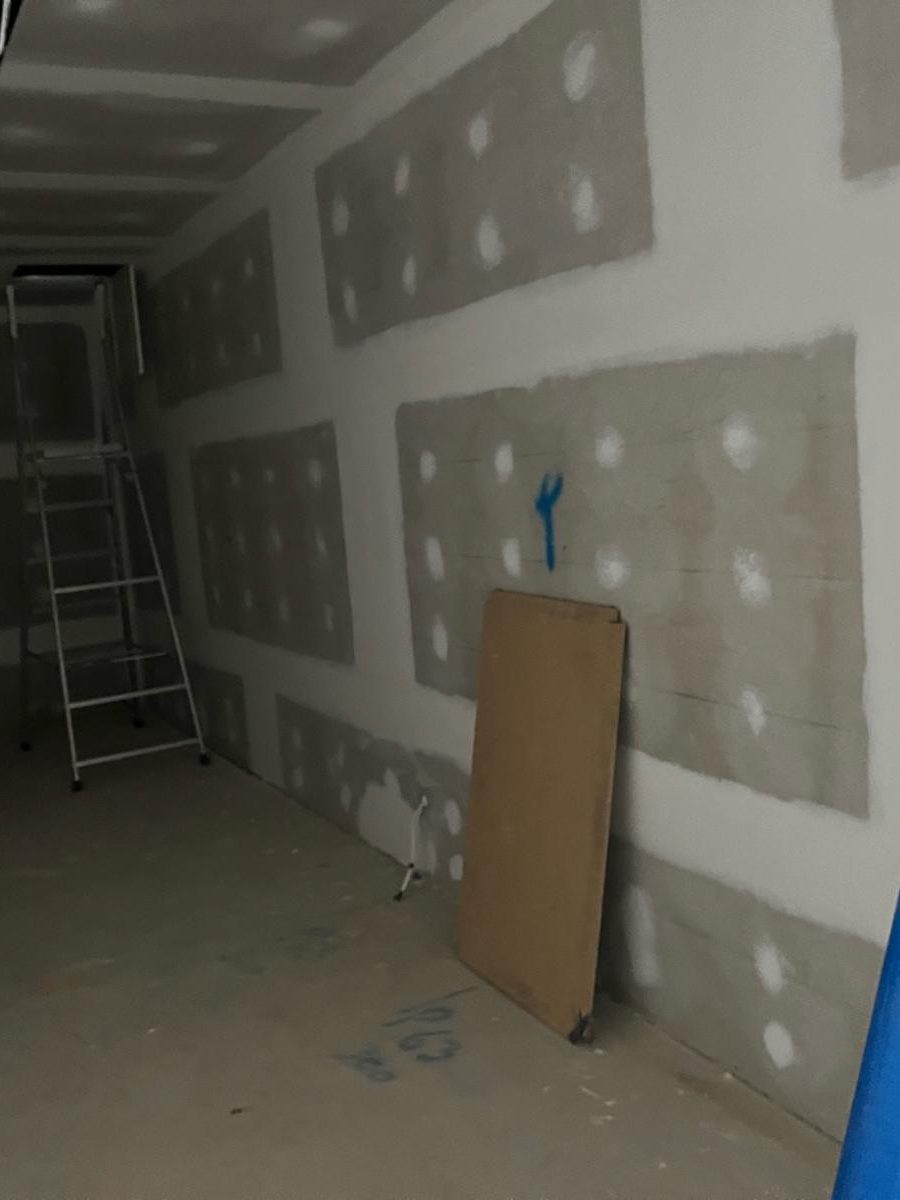
Behind the paint
In a council where houses have been extended twice and units refitted between owners, the same painted wall can be four different materials in four different rooms.
The original part of an older house here is often brick with a hard plaster or render coat straight onto it, or fibrous sheeting in the back rooms and the sleepout. The extension behind it is usually plasterboard on timber, and the bathroom might be a third thing again. Those materials patch differently, take compound differently and need different fixings, so the first thing we do is establish what is there.
Where that check turns up older fibro sheeting, or a sprayed or trowelled ceiling coating of unknown age, work stops at that point. Suspect material has to be assessed by a competent person before it is disturbed in any way, and that includes drilling, cutting, sanding and scraping. What the options are afterwards is set out on the vermiculite and textured ceilings page.
Where it is ordinary plasterboard, it is ordinary wall repair work: cut back to firm edges and a fixing, reinforce, set in coats and sand flush. Where a hard plaster coat has let go of the brick behind it, that is solid plastering and it is a different repair with a different drying time.
Unit, house or townhouse
| What it is | The work that comes up most | Sort this out first |
|---|---|---|
| A 1960s or 1970s walk-up unit | Ceiling and wall cracking, patching between tenants, water damage reinstated | Whether the wall is inside the lot or common property, and who is approving it |
| A newer apartment near a station | Shrinkage cracking cut out and re-set, square set edges matched, impact damage | Building access hours, lift protection and the strata sign-off in front of it |
| An older fibro or brick cottage | Wall repairs, ceilings refixed or re-sheeted, cornice reinstated | What the sheeting and any ceiling coating actually are, before anything is cut |
| A house extended once or twice | New linings joined to old, junction cracking, whole rooms brought back flat | Where the old work stops and the new starts, because that is where it moves |
Plenty of older housing in this council still carries original fibrous sheeting in the back rooms and the wet areas, and plenty of ceilings carry a sprayed or trowelled coating that nobody has ever identified. Suspect material must be assessed by a competent person before it is disturbed. That means before it is drilled, cut, sanded, scraped or wet down, not after.
Tell us at the quote if the house is older, or if a ceiling has a texture you cannot account for, and we will treat it that way from the start. What the choices look like once the material is known is covered on the vermiculite and textured ceilings page. Where removal turns out to be the answer, that is licensed work carried out by others.
Before the quote
Small scopes are not automatically cheap scopes. These are the things that actually move a Cumberland quote.
A wall we can cut into straight away is quick. A wall that needs the sheeting identified first has a step in front of it.
Six small holes in one room and one hole in six rooms are very different jobs, because each room has to be protected, set and sanded on its own.
Patching before a repaint is one standard. Bringing a wall or ceiling carrying years of separate repairs back to one plane is a skim, and it is priced as one.
An owner deciding on the spot moves fast. An agent, an owners corporation or a strata manager adds a step, and it is better allowed for than discovered.
Walk-up blocks have stairs, no lift and little parking, and full sheet lengths still have to get up there. Newer blocks have a lift and a booking system.
A bathroom or laundry needs the right board and the right treatment behind the tile, which is wet area lining rather than ordinary sheeting.
Where enquiries land
If you are not sure which one yours is, describe it and we will place it.
Holes, impact damage, cracking and failed joins in walls, patched back and set flush ready for paint.
Wall repairsWork on common property in walk-up and newer blocks, quoted so a committee or manager can approve it.
Strata workCeilings reinstated once the leak has been stopped and the space has properly dried out.
Water damageNew linings where a room has been reframed, a wall removed or an extension joined to the original house.
Renovation work
Around Cumberland
If yours is not here, ask it. We would rather answer it on the phone than have you guess.
Yes. A lot of what we do in this council is exactly that, and it is quoted as its own job rather than treated as a call-out squeezed onto the end of something bigger.
The one thing worth knowing is that compound has to dry between coats, so even a small repair is often two short visits rather than one. If there is a repaint booked, tell us the painter's date at the quote and we will work back from it.
Send photos of every patch and tell us the date the place has to be ready. An empty unit is the easiest kind of site there is, so the work itself is usually straightforward.
What we will not do is compress the coats to hit a date. Rushing the build-up is the reason repairs shrink and show as a line under fresh paint a month later. If the timeline is genuinely tight, say so early and we will tell you honestly whether it fits.
That depends on where the boundary sits, and it is worth establishing before anyone books a plasterer. Broadly, what is inside your own lot tends to sit with the owner, while a structural wall, the ceiling between two lots and anything in a stairwell or entry tends to be common property. We are plasterers, not strata managers, so we will not tell you who is liable; that is a question for the strata plan and the manager.
We quote in a form that can be handed to a strata manager or put in front of a committee, describing the scope and how access would be handled. We will not start work on common property on a verbal go-ahead from one resident.
Because the old part and the new part are not moving together. An addition built on different footings, or framed differently from the original house, will move at its own rate, and the junction between the two takes up that difference. A crack there is the building telling you where the seam is.
A reinforced and set joint will hold longer than filler does, but if the movement is significant the junction is better detailed to allow for it than fought. If the crack shows in the brickwork outside on the same line, get a builder or an engineer to look before more plastering is paid for.
Before. The wall and ceiling linings go in once the framing, plumbing rough-in and any wall reinforcement are done, and they have to be the right board for a wet area rather than ordinary sheeting. The tiler and the waterproofer come after that.
The order matters because a bathroom is the least forgiving room in the house to rework. Which boards suit which surfaces, and where waterproofing sits in the sequence, is on the wet area linings page.
Get it quoted
That is enough for us to price it properly, work back from the painter or the tenancy date, and tell you if anything on the list needs assessing before it can be touched.