
Skim coating
One flat plane again across a wall or ceiling carrying years of separate repairs at slightly different levels.
Skim coating
Plastering Gyprock Ceilings
Inner West council
This is the one part of Sydney where you cannot assume what is behind the paint, and the wrong assumption turns a half-day patch into a room that has to be redone.
A Victorian terrace in Newtown, a Federation cottage in Haberfield, a worker's semi in Marrickville and a warehouse conversion in Rozelle can all be within a few streets of each other, and none of them is lined the same way. Lath and plaster ceilings, hard plaster straight onto brick, later gyprock over the top of both, and sometimes all three in one house.
So the first job on any Inner West quote is finding out what is actually there. That decides whether something is patched, refixed, overlaid or taken off, and it decides the price far more than the size of the damage does.
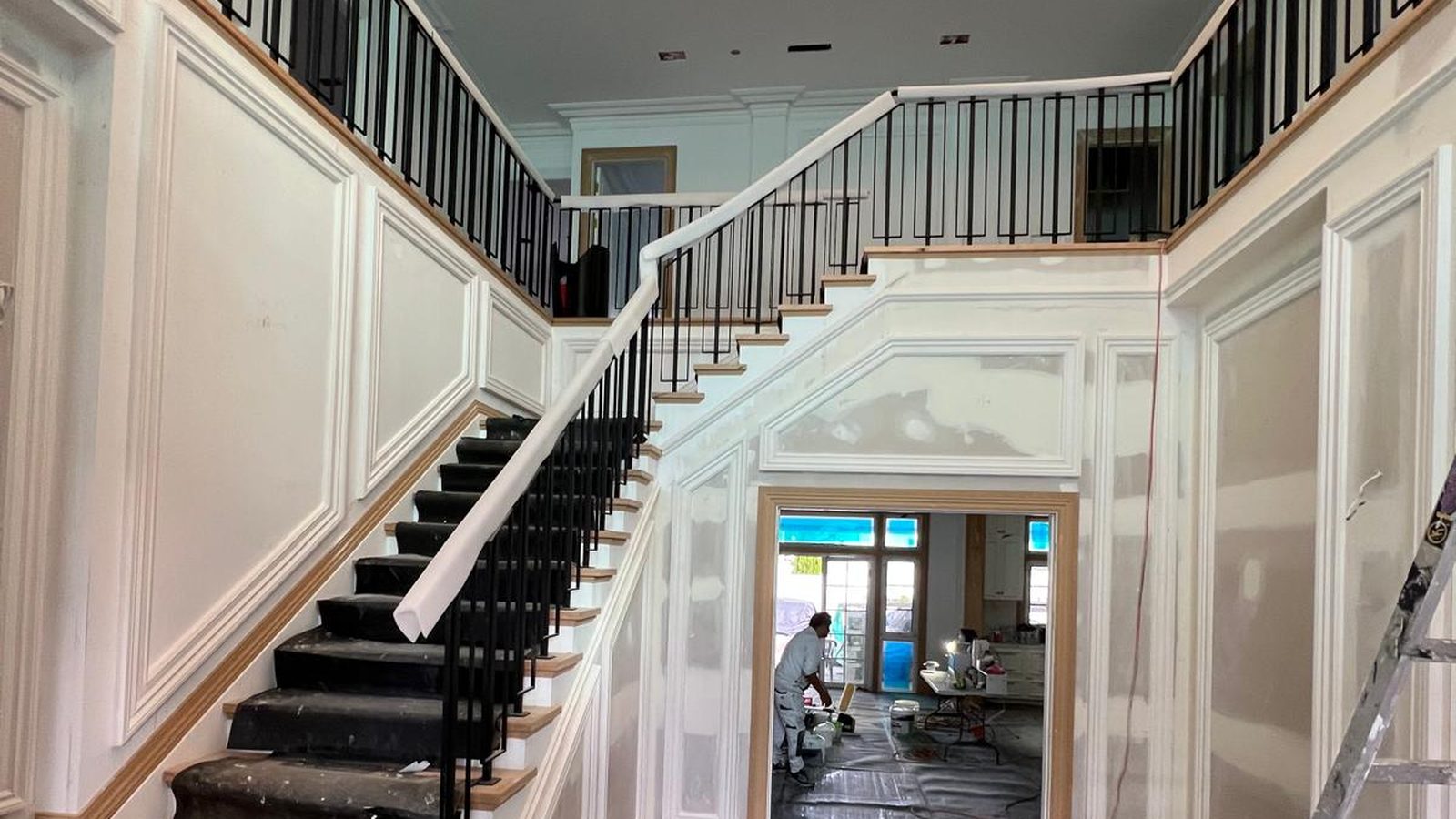
We identify the lining first
Lath, hard plaster and modern sheet each fail differently and each get a different repair.
Old detail kept where it can be
Ceiling roses, arches and original cornice runs are worth saving. We work around them, not through them.
Planned for narrow streets
Unloading, parking and carrying sheets down a terrace hallway are worked out before the day, not on it.
Told straight if it is structural
Cracking that is really movement in the building gets said out loud before anyone fills it.
Coverage
First question
Old terraces and semis move, and the plaster is usually just the thing that shows it. Sometimes it is not, and in an attached house that is worth knowing before anything gets filled.
What is behind the paint
Knowing which of these you are standing in tells you most of what the job will be.
High ceilings, lath and plaster above, hard plaster on the brick walls, and often an ornate cornice and ceiling rose worth keeping. Repairs have to respect a surface that was never dead flat.
Common through Ashfield, Summer Hill, Dulwich Hill and Haberfield. Fibrous plaster sheet ceilings with timber battens, and solid plaster walls that chip rather than dent.
Marrickville, Lilyfield and Rozelle. Big volumes, exposed brick and steel, and linings that were added later. Bulkheads, service runs and acoustic separation matter more than cornice here.
Modern framing and plasterboard meeting a hundred-year-old room at a doorway. The whole job is the transition between the two planes.
Pricing it
In the Inner West, the things that move a quote are mostly not the plaster itself.
Patching modern sheet is a known quantity. Working into lath or hard plaster means matching a thicker, softer, less regular surface, and that takes longer.
Narrow one-way streets, permit parking, no driveway and a long hallway all add time at both ends of the day, every day of the job.
In a terrace you sometimes cannot physically get a full sheet to the back room. Cutting down means more joints, and more joints means more setting.
A three metre Victorian ceiling needs staging rather than a platform, and it puts every joint in a place where light will cross it.
Working around a ceiling rose, an arch or a moulded cornice run is careful, slow work compared with a plain plasterboard ceiling.
An empty terrace is quick to protect and quick to work in. An occupied one with one bathroom and a narrow stair is staged differently.
The Inner West ceiling question
Almost every terrace and cottage here still has at least one original lath and plaster ceiling. When it starts misbehaving there are three real options, and the right one depends on how much of the plane is still keyed to the timber above.
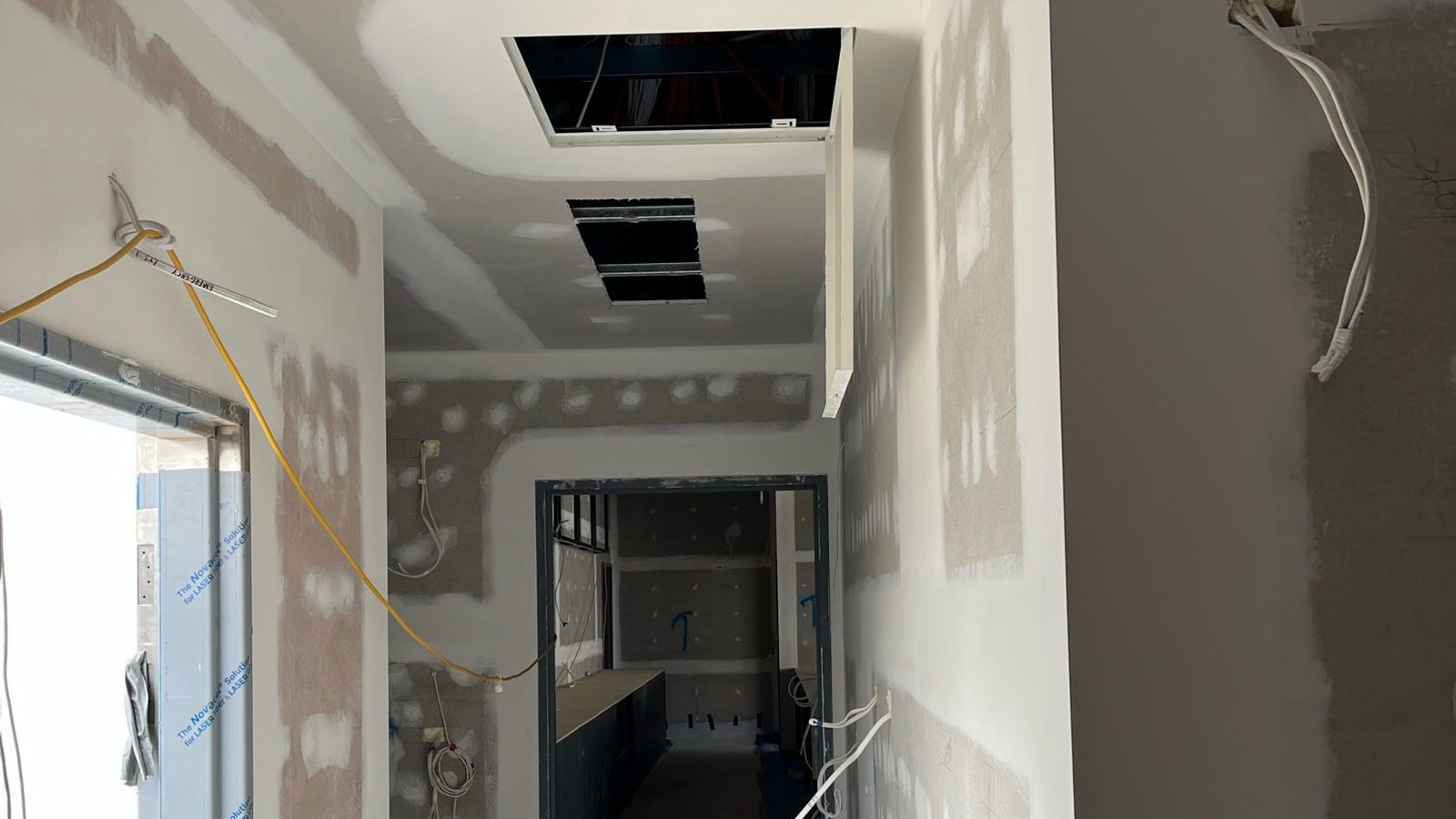
Old ceilings in this part of Sydney can carry a century of dust above them, and some later ceilings in Sydney houses carry sprayed or textured coatings that should be identified before they are disturbed rather than after. If a ceiling has a rough sprayed surface, leave it alone and ask. That is covered on the vermiculite and textured ceiling page.
The same goes for a ceiling that is visibly bellying. Keep people and furniture out from under it and get it looked at rather than testing how far it will go.
Where to start
Four pages that between them cover the great majority of what we are called to here.
One flat plane again across a wall or ceiling carrying years of separate repairs at slightly different levels.
Skim coatingCracking along joints and cornice lines, loose sections and the holes another trade cut to get above the ceiling.
Ceiling repairsWhat is involved in patching or recoating hard plaster on masonry rather than treating it as sheet.
Solid plasteringHow decorative cornice, ceiling roses and mouldings are assessed, matched and made good.
Ornate work
The Inner West backs onto several areas we also cover, all listed under our NSW coverage.
Inner West questions
Six we are asked constantly in terraces, semis and conversions around here.
Tap it. Plasterboard sounds hollow and consistent, and the fixings usually show as faint rows once you look along the surface. Lath and plaster sounds duller and denser, and if you look closely at an old ceiling you can sometimes see very slight ripples running one way where the timber laths sit behind it.
The other giveaway is the edge. Where a light fitting or a vent has been cut in, plasterboard gives a clean paper-faced edge around ten to thirteen millimetres thick. Lath and plaster gives a thicker, crumbly edge with timber behind it.
Sometimes, and sometimes not. Attached houses move against each other, and a fine, stable crack along a party wall that opens and closes slightly with the seasons is ordinary and can be raked out, reinforced and re-set.
What is worth taking seriously is a crack that is stepping through the brickwork, widening over a single season, or appearing at the same time as doors starting to bind. That is a builder or an engineer question first. We would rather tell you that than fill it and watch it reopen.
It is worked out at the quote. We need somewhere to unload sheet and compound, and full sheets cannot go far by hand down a narrow terrace hallway, so the delivery point and the timing get planned before the first day.
In practice it often means an earlier start, a shorter unloading window, and sometimes cutting sheet down so it can be carried in. That affects the quote, which is why we would rather see the street than guess at it.
Often yes, and it is usually worth it. A rose and a run of moulded cornice are what make the room read as original, and losing them is the kind of thing you cannot undo.
Whether they can stay depends on how they are fixed and how sound they are. Sometimes the ceiling around them can be replaced while the detail is supported and kept in place. Sometimes a section has to be taken off, repaired and reinstated, which is the work described on the ornate and heritage restoration page.
Whether approvals are needed for internal work is a question for your council or your heritage adviser, not for us, and we would not tell you otherwise. Plenty of internal maintenance is ordinary repair work, but we are not the right people to advise on what needs consent.
What we can say is that where original fabric is involved, it is better to repair and match than to strip and replace. If you tell us the house is in a conservation area we will scope the job that way, with the original detail kept wherever it is sound.
Most of it, but the framing is the job rather than the plastering. Lining masonry means framing off it or fixing furring channel to it, and in a tall space that framing also has to carry whatever services and lighting are going in.
Two things usually come up in conversions. Bulkheads to hide ducts and services, which sit on the bulkheads and pelmets page, and sound between spaces, which is acoustic walls and ceilings. Both are decided before sheeting, not after.
Inner West quotes
Terrace, semi, cottage or conversion, and whether the ceiling is lath or sheet. With that plus a photo we can usually tell you what you are dealing with before anyone comes out.