
Renovation plastering
Multi-room re-lining, extension tie-ins and surfaces made good after other trades, in a house you are still living in.
Renovation work
Plastering Gyprock Ceilings
Mosman
One suburb, one postcode, and almost no apartment towers. Mosman is houses, and older houses at that, which means the plastering here is nearly always work on a building that already exists.
Take away the flats and what is left is a suburb of detached houses on small blocks, most of them Federation or interwar, sitting on land that falls steeply toward the water on three sides. Very few of them have been left alone. Rooms have been opened up, verandahs enclosed, attics converted and kitchens moved.
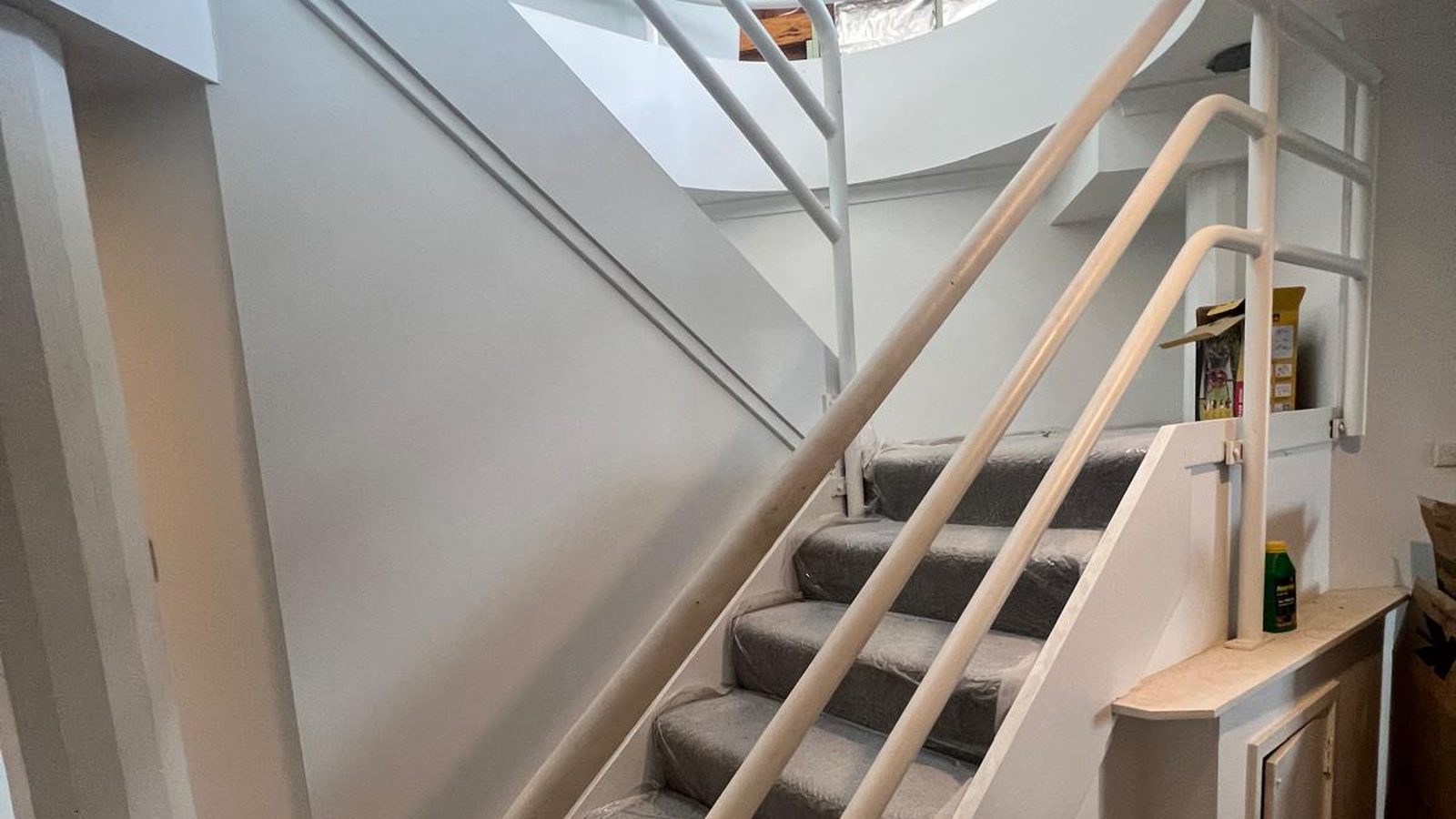
That is the plastering picture here. Not new estates and not unit repairs, but existing houses being changed: new linings meeting hundred-year-old plaster, original cornice and ceiling roses that have to survive the job, and access that is usually a set of stairs rather than a driveway.
Existing buildings first
The work here is almost always inside a house that is already standing and often still lived in.
Original detail is not disposable
Cornice, roses and mouldings are identified and protected before anything gets cut.
Staged with the other trades
Plaster sits between the electrician, the waterproofer and the painter. The sequence gets agreed early.
Held under NSW licence 244708C
The contractor licence the plastering work on this page is carried out under.
The sequence
On a renovation, plastering is not one visit. It is a set of stages spread through the build, and knowing where they fall stops the job stalling while everyone waits for someone else.
We look at what is there: whether the existing ceilings are plasterboard, hard plaster or lath, what the cornice profile is, and which original detail you want kept. That decides how carefully the strip-out has to be done.
Framing checked for line and for anything the sheets will need to fix to. Noggings, battens and backing for future fixings go in now, because adding them later means cutting the lining open again.
Wiring, plumbing and insulation have to be finished before the board goes on. Sheeting over services that have not been inspected is the most expensive shortcut on a renovation.
Ceilings first, then walls, then the junctions. Joints taped and built up in coats with drying time between them, which is why this stage runs over days rather than in one hit.
Cornice fitted or the square set detail formed, then everything sanded and checked under a raking light. The room is handed over paint ready and cleaned up.
Assessment and preparation Lining and finish
Older stock
A lot of the houses here still have their original ceilings, or parts of them. That is worth knowing before a renovation starts, because the decisions are different from a modern house.
In the oldest Mosman houses the ceiling is often lath and plaster: thin timber strips nailed across the joists with plaster pushed through them from below. It is heavy, it is brittle, and once the keys holding it to the laths have broken it will not be repaired back into a sound ceiling. The test is not how it looks, it is whether it has come away.
Above and alongside those, a great many ceilings carry ornamental work: a run of deep cornice, a moulded rose where the light hangs, sometimes a panelled or coffered section in a front room. That work can be repaired, matched and replicated, but it is a separate trade discipline from sheeting a ceiling, and it needs to be scoped and quoted as one.
The practical risk is the same in both cases. Once a builder starts opening up walls nearby, vibration travels, and original plaster that has held for decades can let go in a week. Boxing it in before the noisy work starts is cheaper than replicating it afterwards.
Know your surface
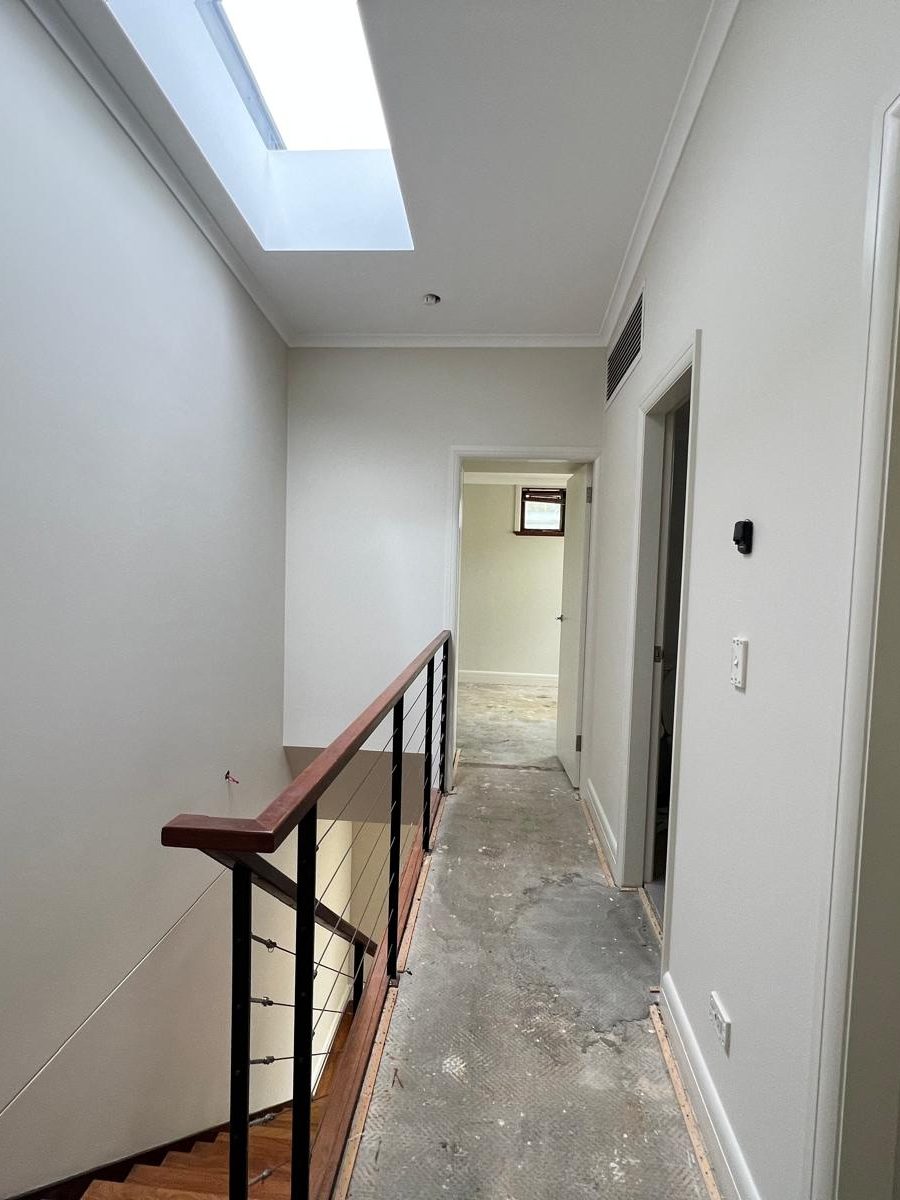
Tap a wall with a knuckle and press a ceiling gently near a corner. Between them you can usually tell what era of lining you are dealing with, and that decides the repair.
| What you find | What it usually is | What it means for the work |
|---|---|---|
| Solid, dull sound, no give at all | Hard plaster applied over brick | Repaired as solid plaster, not patched like a board |
| Hollow, slight flex, fixings in rows | Plasterboard on battens or studs | The straightforward case, handled as a ceiling repair or a wall patch |
| Hollow but heavy, fine cracking in a net pattern | Lath and plaster | Assess whether it is still keyed to the laths. Often replaced rather than repaired |
| A deep moulded cornice with ornament in it | Original fibrous or run plaster | Matching the profile is specialist work and is scoped separately from the general plastering |
| A flat ceiling that shadows under a downlight | Many separate repairs at slightly different levels | A full skim across the plane will usually beat another patch |
Quote inputs
The work itself is standard. The site is usually not, and that is where the difference between two similar looking quotes comes from.
Many houses here sit below the street or above it, reached by stairs. Every sheet, bucket and trestle goes up or down those stairs by hand.
Narrow streets on a fall, often with no off-street space. Unloading may have to happen in stages.
Original floors, joinery and cornice in an occupied period house take real time to cover properly.
Working around a cornice run and a ceiling rose is slower than working in a room that is being stripped bare. It is usually worth it.
Period houses here often have high ceilings. The same floor area is a different job from three metres up.
Removing a wall between two rooms leaves a scar across both ceilings. Bringing them into one plane is often a skim rather than a patch.
Most renovations here happen with the family still in the house. That means staging, dust control and working room by room.
Where to start
These four cover most of what a renovation or repair in this suburb turns out to be. Each page explains the job, how it is scoped and what affects the price.
Multi-room re-lining, extension tie-ins and surfaces made good after other trades, in a house you are still living in.
Renovation workTaking out an old ceiling that has stopped doing its job, re-lining it and reinstating the cornice.
ReplacementFitting, repairing and matching a cornice run, including working out what the existing profile actually is.
CorniceBringing a wall or ceiling carrying decades of separate repairs back to one flat plane.
Skim coating
Coverage across the lower North Shore and beyond is indexed on the NSW areas page.
Asked in Mosman
Most of these come up when a renovation is being planned. The earlier they are asked, the cheaper the answers tend to be.
Often, yes, and it is worth deciding early rather than halfway through the demolition. If the cornice is sound and the wall below it is not being removed, it can usually be protected, worked around and made good where it has been knocked.
Where a wall comes out entirely, the run is interrupted and the two remaining ends have to be joined by something that matches. That is replication work rather than fitting a standard profile, and it sits on the ornate plaster restoration page. Tell us before the wall goes, because a good photograph and a clean section of the original profile make the match far more likely.
It comes down to whether the ceiling is still attached. A plasterboard ceiling that is sound and fixed can be patched, refixed or skimmed almost indefinitely. A lath and plaster ceiling that has lost its keys is holding itself up by habit, and no amount of filling changes that.
We check it by looking at the back where there is access, by the way it moves under gentle hand pressure, and by the pattern of the cracking. If it is coming out, the scope is on the ceiling replacement page. If it has visibly dropped, treat it as urgent and keep people out from under it.
You end up with a strip across the ceiling where the wall used to be, and two ceilings that were never one plane now trying to read as one. The strip itself is straightforward to line. Making the whole ceiling look like it was always a single room is the real job.
Nine times out of ten the answer is a skim across the combined ceiling rather than a patch along the line. The same applies to the cornice, which will now run past a point where it used to stop. Both of those belong in the quote before the wall comes out, not after.
Yes, and it is the normal arrangement here. We work room by room, seal off what we are working in, protect floors and anything that cannot be moved, and clean up at the end of each visit rather than at the end of the job.
Sanding is the stage that generates dust, so we plan it and tell you when it is happening. If a room has to stay usable throughout, say so at the quote.
No. Our work is interior plastering: linings, ceilings, setting, cornice and the finishes that go on inside the building. External render on masonry walls is a different trade with different materials and different weather constraints.
Interior solid plaster on brick is a different matter and we do cover it, which is what you are more likely to be dealing with inside a period house here. That work is explained on the solid plastering page.
As early as you can, and then again properly once the framing is up. Plastering sits at a pinch point: it cannot start until the services are in and signed off, and the painter, the tiler and the joiner cannot start until it is finished and dry.
The part people underestimate is the drying time between coats. That does not compress, and building it into the program from the start is the difference between a smooth finish and a rushed one.
Mosman
Pictures of the ceilings, any cornice you want kept and how the house is reached from the street. That is usually enough to price the work and flag anything that needs deciding early.