
Strata and property maintenance
How common property plaster work is scoped, quoted and scheduled around residents and building access.
Strata work
Plastering Gyprock Ceilings
Willoughby City
A tower ceiling in the Chatswood core and a hallway in a house at Northbridge are both plastering, and almost nothing about how the two jobs get organised is the same.
Willoughby is a small council with a very mixed built form. The commercial and residential core is offices, retail and apartment towers, so a lot of that work is strata common property, tenancy fit-out and make good. It runs to building hours, dock bookings and a lift that three other trades also want.
Around that core sit Artarmon, Naremburn, Willoughby, North Willoughby, Willoughby East, Northbridge, Castlecrag, Castle Cove, Middle Cove and Chatswood West, which are mostly detached houses, a lot of them on steep ground. That work is ceilings, wall repairs, cornice and renovation linings, done with the furniture still in the room.
Building rules settled first
Work hours, dock access and lift bookings are sorted before a date gets offered.
One trade across both sides
Common property and tenancy work in the towers, house repairs in the streets around them.
Occupied space stays usable
Corridors, lobbies and offices protected, then cleaned at the end of every shift.
Priced against a written scope
Commercial and strata work is quoted from an agreed scope rather than a guess off a photo.
Coverage
Who organises it
In a council with this much apartment and commercial floor space, the first question is rarely what the plaster needs. It is who we should be talking to, because that decides how the job gets quoted and approved.
| Where the plaster has failed | Who normally arranges it | What the work usually involves |
|---|---|---|
| A corridor, lobby, stair or car park ceiling in an apartment building | The owners corporation, through the strata or building manager | Repairs staged around residents, with access hours and protection agreed in advance |
| Inside a lot: a unit ceiling or wall | Usually the lot owner, though the building manager confirms where the boundary sits | A short repair in an occupied home, booked against the building's work hours |
| A tenancy in an office or retail building | The tenant, or the building owner, depending on the lease | Fitout linings, bulkheads, or making good at the end of a lease against a written scope |
| A common area ceiling after a leak from above | The owners corporation, usually after a plumber has stopped it | Reinstatement once the space has dried, which is water-damaged ceilings |
| A house in Artarmon, Naremburn, Northbridge or Castle Cove | The owner directly, or their builder on a renovation | Ceiling and wall repairs, cornice, or new linings sequenced with the other trades |
Before the quote
Very little of this is about the square metres. In a dense council the building and the block decide most of it.
A job that can run through a normal day is one price. A job restricted to evenings, weekends or a narrow window set by the building is another.
Sheets are long. Getting them from a dock to the twelfth floor, or up a flight of external stairs on a steep block, takes real time before any plastering starts.
An empty tenancy is quick. An office that has to keep trading, or a corridor residents use at night, is staged, protected and cleaned every shift.
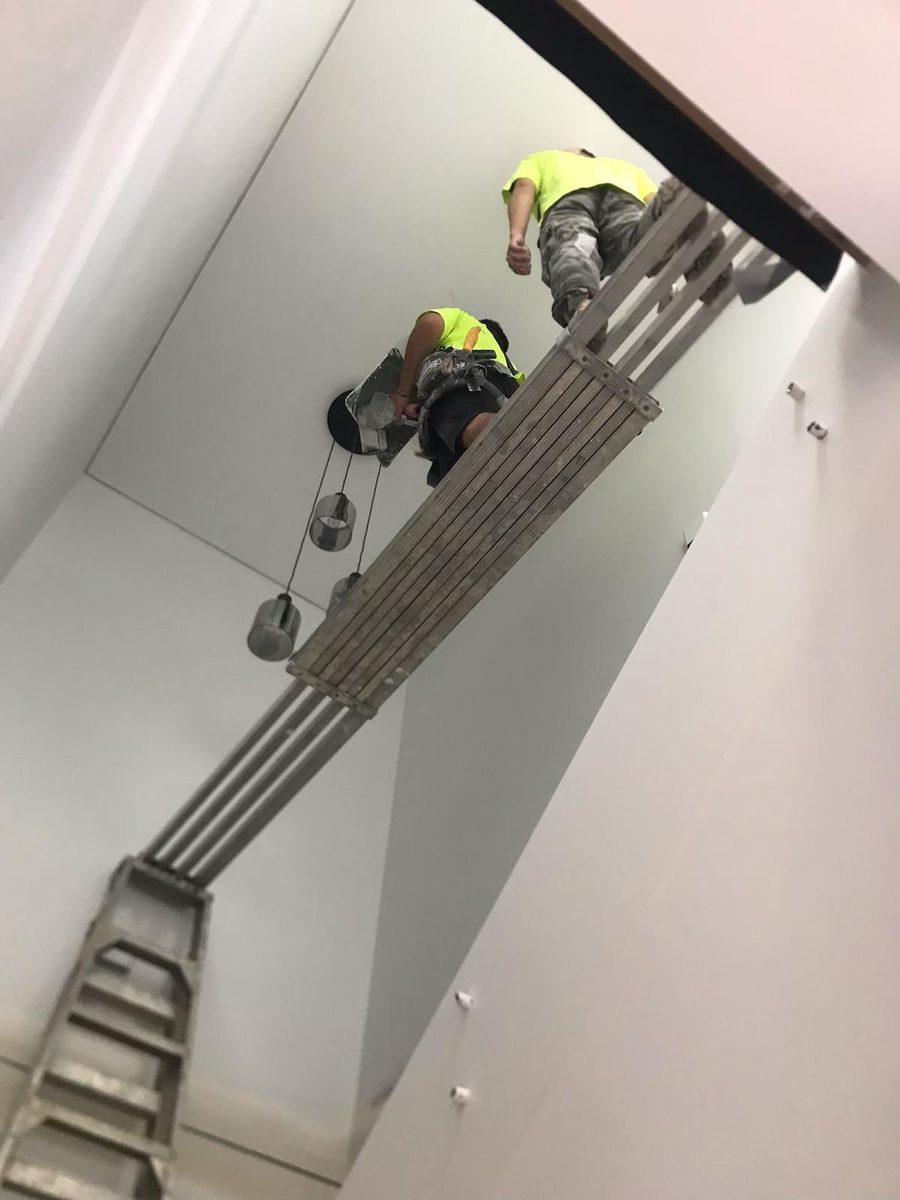
A residential ceiling is reached off a platform. A commercial ceiling with services above it needs staging and coordination with whoever owns those services.
If a wall or ceiling is a fire-rated or acoustic element, the system and the documentation matter, not just the finish. That work is explained on fire-rated walls and ceilings and acoustic walls and ceilings.
Northbridge, Castlecrag, Castle Cove and Middle Cove are steep and narrow. Where the vehicle can sit changes the day more than most people expect.
A new patch in a long corridor has to disappear into what is already there. Long flat runs under even lighting are unforgiving, and that takes extra setting and sanding.
Twenty identical patches in one building are priced differently from one patch in one unit, because the setting up happens once.
Occupied buildings
Most of the commercial and strata work here happens around people who have not gone anywhere. That is normal, and it is planned for rather than worked around on the day.
The streets around the core
The detached half of this council is older than the towers and it brings a different set of jobs entirely. Chatswood itself has its own page at Chatswood.
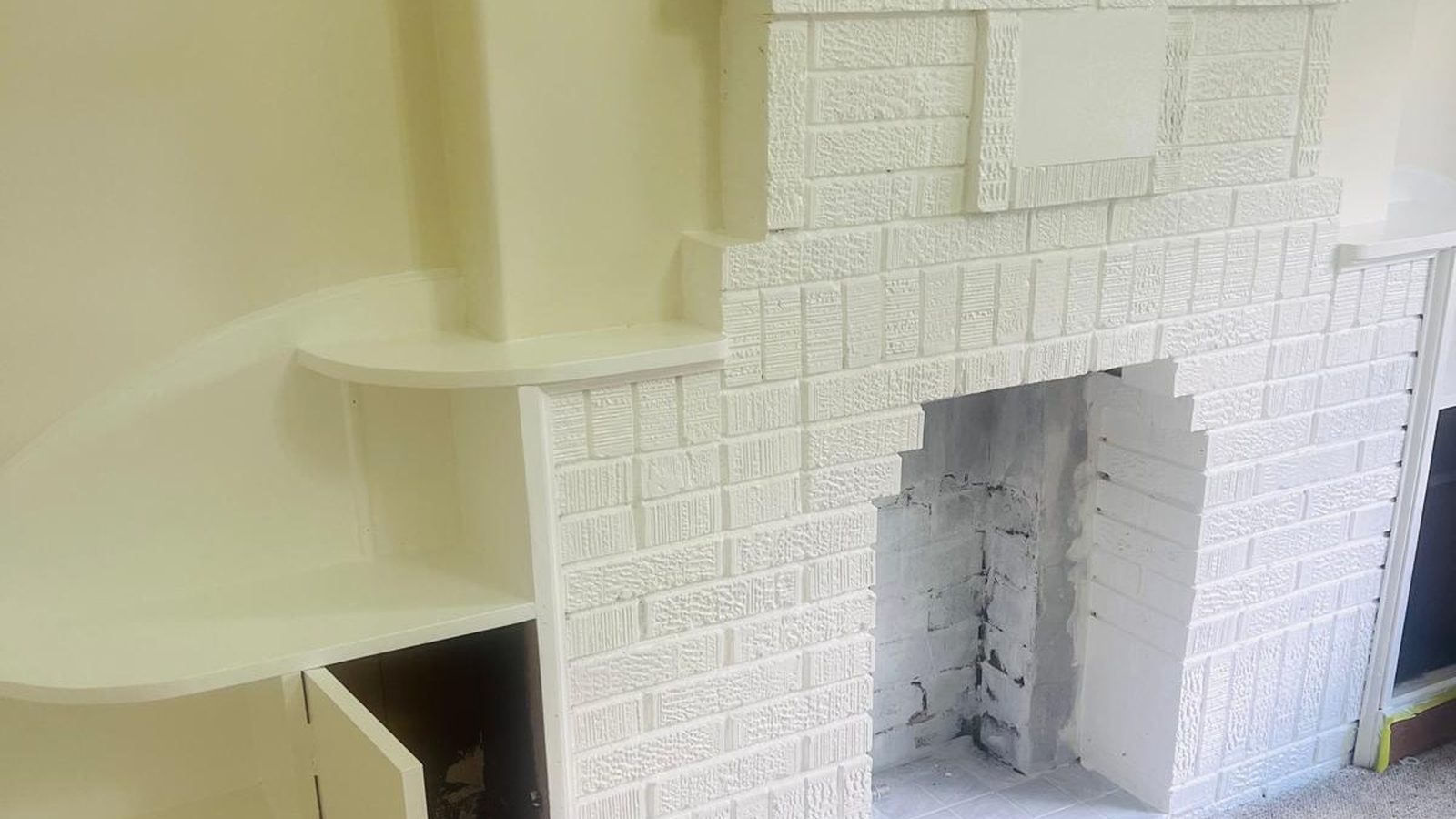
Tight blocks, older linings and a long history of small alterations. The common jobs are cracking at the old and new join, tired wall lining in hallways, and cornice that stops halfway through a run because a wall came out decades ago.
Houses stepped down the slope, often with the living areas upstairs and long external stairs from the street. Raked and double-height ceilings are common here, which means staging, longer sets and a plane that shows every imperfection.
Mostly plasterboard, so the faults are the ordinary ones: joint cracking, screw pops, damage around fittings and ceilings carrying too many separate patches. A lot of it is renovation lining rather than repair.
Where to start
Four pages that between them cover most of what comes in from this council, from either side of the split.
How common property plaster work is scoped, quoted and scheduled around residents and building access.
Strata workWalls, ceilings and bulkheads in offices, retail and other commercial space, and how that work is programmed.
CommercialJoint cracking, screw pops, access cuts and old patches that read as shadows under a downlight.
Ceiling repairsHoles, knocks, loose joins and non-structural cracking in gyprock and older wall linings.
Wall repairs
Local questions
Half of these come from strata committees and building managers, and half from owners in the streets around them.
Normally the strata or building manager, because a corridor ceiling is usually common property and the owners corporation arranges the repair. If you are an owner who has noticed it, the quickest thing you can do is report it to them and send us photos at the same time so a scope can be put together.
Where the boundary between common property and a lot actually sits is for the scheme to confirm, not for us. We will quote whichever side we are asked to, and we will put the scope in writing so there is no argument later about what was included.
It often has to. Many buildings in the commercial core restrict noisy work to set hours, and some tenancies can only be touched at night or over a weekend. That is worked into the program rather than treated as a surprise.
It does change the price, so it is better raised at the quote than discovered mid-job. Tell us the building's rules when you first make contact and the number you get back will actually hold.
It depends entirely on what the lease says, which is why it starts with reading the make good clause rather than looking at the walls. Typically it covers removing what the tenancy added, reinstating linings and ceilings, and handing the space back in a defined condition.
The practical part is agreeing a written scope with the building owner before anything is demolished, so the work is measured against something. How that is scoped and staged is set out on the commercial make good page.
Yes, and it is one of the bigger variables in this council. Plasterboard sheets are long and awkward, and carrying them up two flights of external stairs from a narrow street is time that happens before any plastering starts.
It helps to mention it when you send photos, along with whether there is a driveway, how many stairs there are and whether the work is on the upper or lower level. That way the quote reflects the real access rather than being revised on the day.
Yes. A single patch is a short visit, though it is still two visits in practice because the compound has to dry between coats. If you have a few small things around the house, it is worth listing them all at once so they can be done on the same trip.
Small repairs in an apartment still need the building's access arranged, so tell us whether there is a lift booking process. That is usually the part that sets the date, not the plastering.
Sometimes, and it is more involved than adding a layer of board. Acoustic performance comes from the whole system: the framing, the isolation, the insulation, the board type and how every junction and penetration is sealed. A single extra sheet over the top of the existing wall rarely does much on its own.
It is worth understanding what is realistic before committing to it, particularly in an apartment where the structure is shared. What that work involves and how it is assessed is explained on the acoustic walls and ceilings page.
Ask for a scope
For strata and commercial work we will start with the access rules and a written scope. For a house, two photos and the address are usually enough to price it.