
Ornate and heritage restoration
How decorative cornice, roses, arches and mouldings are assessed, matched and made good rather than replaced.
Ornate work
Plastering Gyprock Ceilings
Woollahra council
In most of Sydney a repair is judged on whether it is flat. Through Woollahra it is judged on whether you can tell it happened at all, which is a different standard and a different amount of work.
The housing here carries a lot of original detail. Moulded cornice runs with repeating motifs, ceiling roses, arched hallways, panelled ceilings and high walls that were set by hand long before plasterboard existed. Alongside that sit larger interwar and post-war houses through Bellevue Hill, Rose Bay and Vaucluse, and apartments from every decade around Double Bay and Edgecliff.
What they have in common is a finish expectation. A patch that would be accepted anywhere else reads as a repair in a room like this, particularly once modern lighting starts washing along a wall. So the question on almost every quote here is not how to fill it, but how to make the room look untouched.
The room sets the standard
How the repair will read under the lighting in that room is decided before the first coat.
Original detail kept where possible
Cornice runs, roses and arches are assessed for repair before anyone suggests removing them.
Checked under a raking light
A work light held flat along the surface finds what a torch held straight on never will.
Straight about what we do not do
Where a job needs a specialist discipline or another trade first, you hear it at the quote.
The area
What is in the room
Most people call all of it cornice. It is worth knowing which of these you actually have, because they are made differently and they are made good differently.
| What you have | How it was usually made | What making it good involves |
|---|---|---|
| A plain run of cornice | Cast fibrous plaster lengths fixed and jointed on site | Damaged lengths replaced with a matching profile and the joins re-set, which is cornice work |
| Cornice with a repeating motif | A cast profile with enrichment, often specific to the house | The profile identified and matched, or a section taken off, repaired and reinstated |
| A ceiling rose | Cast separately and fixed to the ceiling, usually around a light point | Cleaned back, cracks stabilised and detail reinstated rather than filled flat |
| A moulded arch or corbels in a hallway | Run in place or cast and fitted, often with hand-finished detail | Assessed piece by piece, because the repair has to follow how it was originally formed |
| Walls that were solid plastered | Hard plaster applied to masonry, not sheet on framing | A compatible coat worked back into the surrounding surface, covered on internal solid plastering |
The standard
Nothing about the technique changes. What changes is how far the repair has to be carried past the damage, and how many times it gets checked before anyone calls it finished.
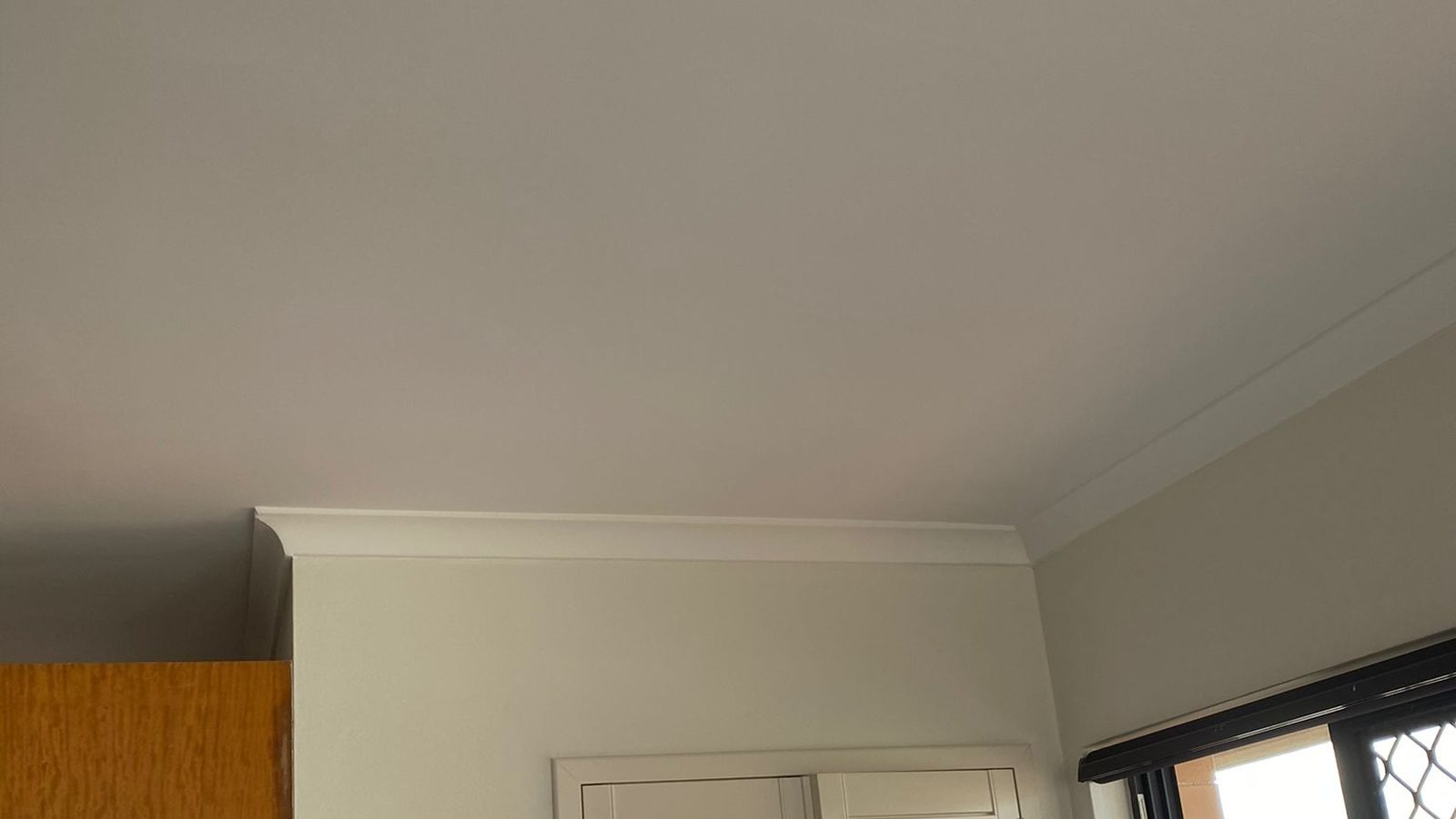
A repair is invisible when the surface either side of it sits on exactly the same plane and catches light the same way. In a room with a central light and a nine-foot ceiling, that is forgiving. In a room with recessed downlights close to a wall, a picture light, or tall windows throwing low sun across a surface in the afternoon, it is not. The light finds every millimetre.
So the repair gets feathered much wider than the damage, built in more coats, and sanded and checked repeatedly with a light held flat against the surface. Where a wall or ceiling carries several old repairs at slightly different levels, the honest answer is usually a full skim across the whole plane rather than a seventh patch that will read like the other six.
The same logic decides the finish detail. If a room is being taken back to a clean modern line, a square set or shadowline finish has to be set out from the first sheet, not added at the end.
Around the council
The council covers a narrow strip of very different buildings. These six come up most.
High ceilings, ornate cornice, roses and arches, hard plaster walls and lath above. Careful repair work with original detail kept wherever it is sound.
Substantial brick homes with deep cornice profiles, picture rails and generous room heights. Staging matters as much as the plaster on a ceiling above three metres.
Exposed positions with weather on the eastern and northern faces. Moisture in external walls shows in the plaster first and has to be traced before it is covered.
Everything from small post-war walk-ups to recent buildings. Mostly plasterboard, with strata rules, booked lifts and restricted work hours around the actual repair.
Older houses being reworked internally. New framing meeting original rooms, and a decision early on about whether the room keeps its cornice or loses it.
Small commercial tenancies through the village strips. Partition framing, bulkheads and a finish standard closer to residential than to a warehouse.
The quote
Very little of it is square metres.
Making a plain wall flat is one job. Making a moulded profile continue through a repair so the eye cannot find the join is a different skill and a different day.
Downlights close to a wall, picture lights and low afternoon sun all raise the standard the surface has to meet, and that means more coats and more checking.
Anything above about three metres needs staging rather than a platform. That is set-up time on every visit, not just the first.
Working in a furnished, finished house with floors and joinery to protect is slower and more careful than working in an empty shell.
A common cornice profile is straightforward. One specific to the house may have to be matched or cast, and that is scoped separately.
On a renovation the linings sit between the rough-in and the painting. If that window moves, the number of visits moves with it.
Where to start
Four starting points. Each page sets out what the work involves, how it is assessed and what to ask before anyone quotes it.
How decorative cornice, roses, arches and mouldings are assessed, matched and made good rather than replaced.
Ornate workMatching, replacing and joining cornice runs, and choosing between keeping a profile and changing the room.
CorniceBringing a wall or ceiling carrying years of separate repairs back to one plane that reads flat under any light.
Skim coatingCracking along joints and cornice lines, screw pops, failed old patches and trade access cuts.
Ceiling repairs
Everything through the eastern suburbs and across the harbour is close from here. The full set is on our NSW coverage page.
Woollahra questions
Six that come up in houses and apartments right across this council area.
Often, and it starts with identifying what the profile actually is. Many older profiles are still produced or have a close modern equivalent, and where that is the case a damaged length is replaced and the joins set so the run reads continuous.
Where the profile is specific to the house, the options are to take a section off, repair it and reinstate it, or to have a matching length made from the original. Both sit on the ornate and heritage restoration page, which explains how that work is assessed and scoped.
The paint is usually the first problem. Decades of coats soften the detail until the moulding reads as a blur, and any repair made on top of that will not match what is underneath.
The work is to stabilise the cracking, carefully take the surface back far enough that the detail is legible again, and reinstate any lost sections to follow the existing pattern. It is slow, careful work and it is quoted on what the rose is and what condition it is in, not by the square metre.
It is, but it has to be decided early. A square set or shadowline finish is a set-out rather than a decoration, so the wall and ceiling junction is built for it from the first sheet rather than having the cornice pulled off at the end.
The other thing worth knowing is that removing cornice exposes how straight the walls and ceiling actually are. In an older house that often means levelling work before the finish can be set out. The detail is on the square set and shadowline page.
Flatter than most people expect, if the light will travel along the surface rather than across the room. A downlight set close to a wall, a wall washer or a picture light will show a variation that nobody would notice under a central pendant.
It is worth telling us the lighting plan at the quote. Where the lighting is demanding, the answer is usually a skim across the whole plane rather than a set of individual repairs, because the eye compares a repair with what is next to it.
It is a separate discipline from plasterboard and setting work, with its own materials, its own preparation and its own finishing. We would rather explain what the job involves than claim anything about it here.
What is covered on the Venetian and polished plaster page is what the work actually requires: the substrate it needs, how many coats are involved, how a sample is agreed and what to ask anybody before they quote it. The same applies to microcement finishes.
Between the rough-in and the painting, and usually with more decisions attached than anyone expects. Cornice or square set, where bulkheads land, how a ceiling is set out and what flatness the lighting demands are all plastering decisions made before the first sheet goes up.
The most useful thing we can be given early is the lighting plan and the joinery details. Once those are known the linings get set out to suit them, which is where most of the expensive rework in a renovation is avoided.
Woollahra quotes
A photo of the damage, one of the whole room, and one of the cornice or ceiling detail. That tells us what has to be matched and how far the repair has to be carried.